Technology
Machines that changed their age, and the most precise equipment of our time. Each is built as a model you can run and take apart.
four halls · 31 plates
Technology
Machines people made, from the steam engine to AI.
Every plate in this layer →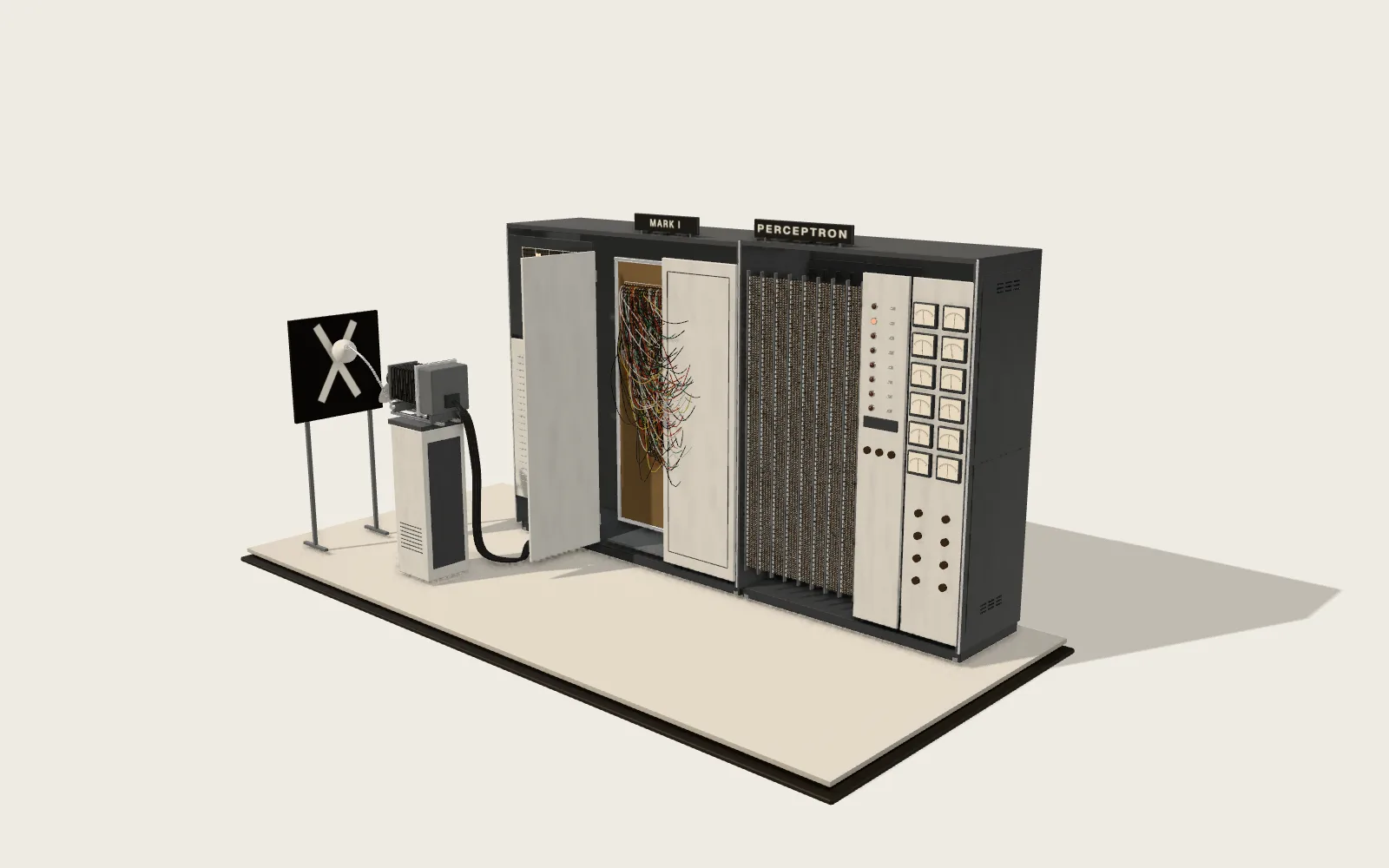
Every plate in this layer 31
- Plate 41 How a Phone Knows Where It Is Chips & InformationGoing further Thirty-odd satellites, 20,200 km up, keep announcing the time. A phone only listens, and from how late each announcement arrives it works out where it is, to within a few metres. Open →
- Plate 42 Light in a Glass Thread Chips & InformationStart here Shine a light into a stream of water and the light bends with the stream. Today the same trick traps the internet in glass threads as fine as a hair and sends it across the Pacific. Open →
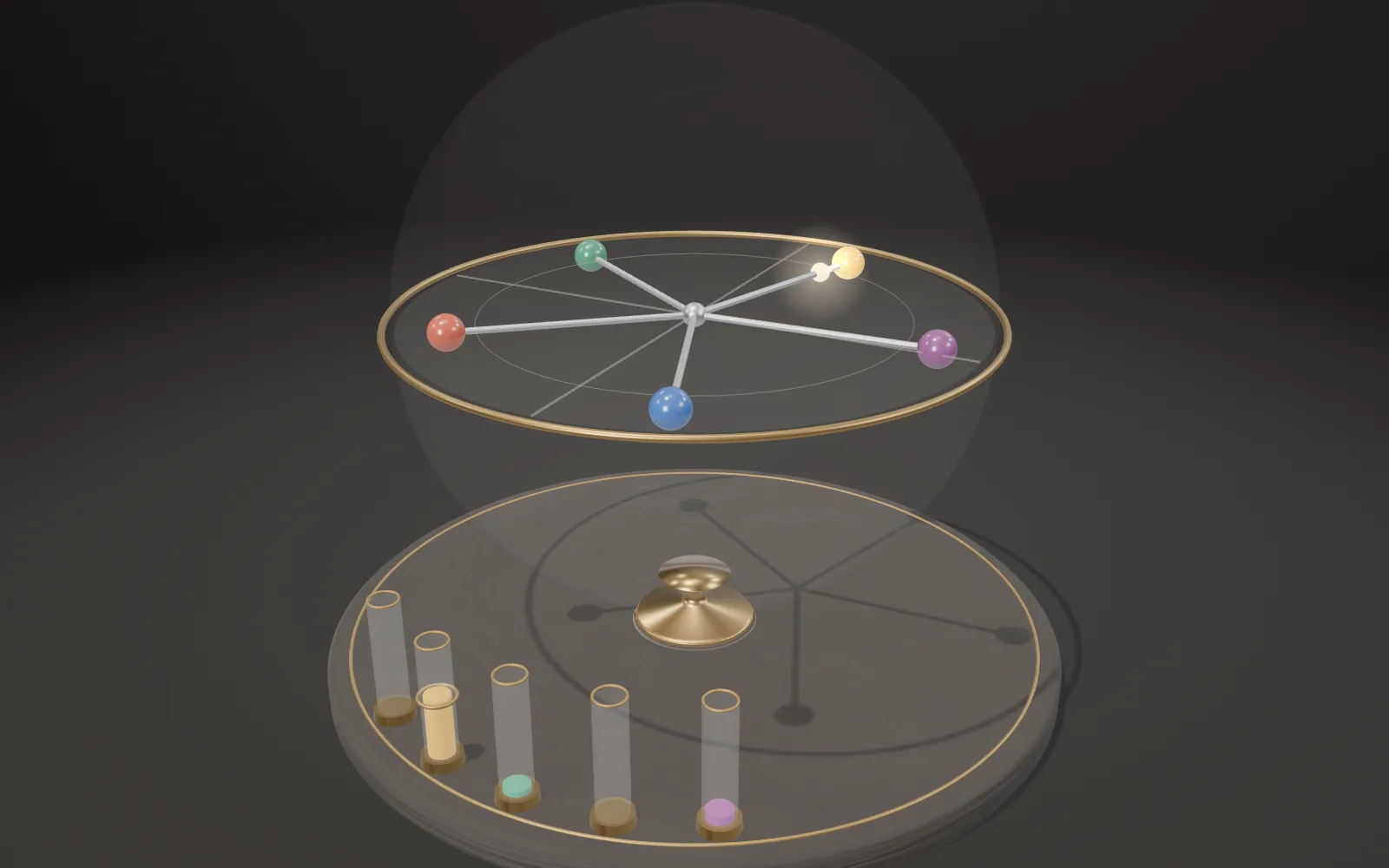
- Plate 43 More Features Than Neurons AIGoing further A single neuron in a neural network often stands for several unrelated things. A model with just two neurons can arrange five features into a pentagon and keep them all. Open →
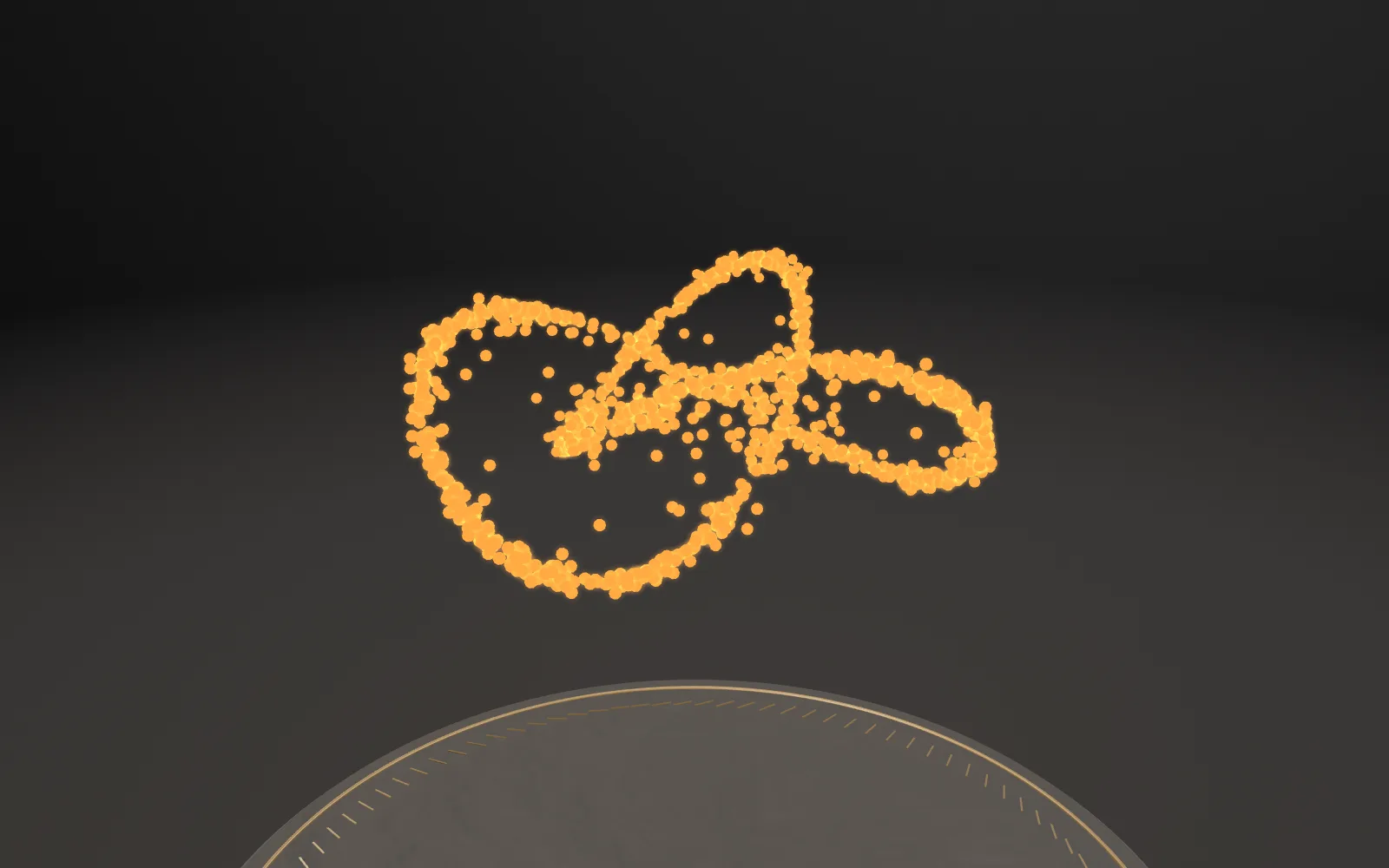
- Plate 44 Pictures Out of Noise AIGoing further Many AI image generators start from random static and remove it, one step at a time. A small network does the same in your browser, and a cloud of dots slowly condenses into a knot. Open →
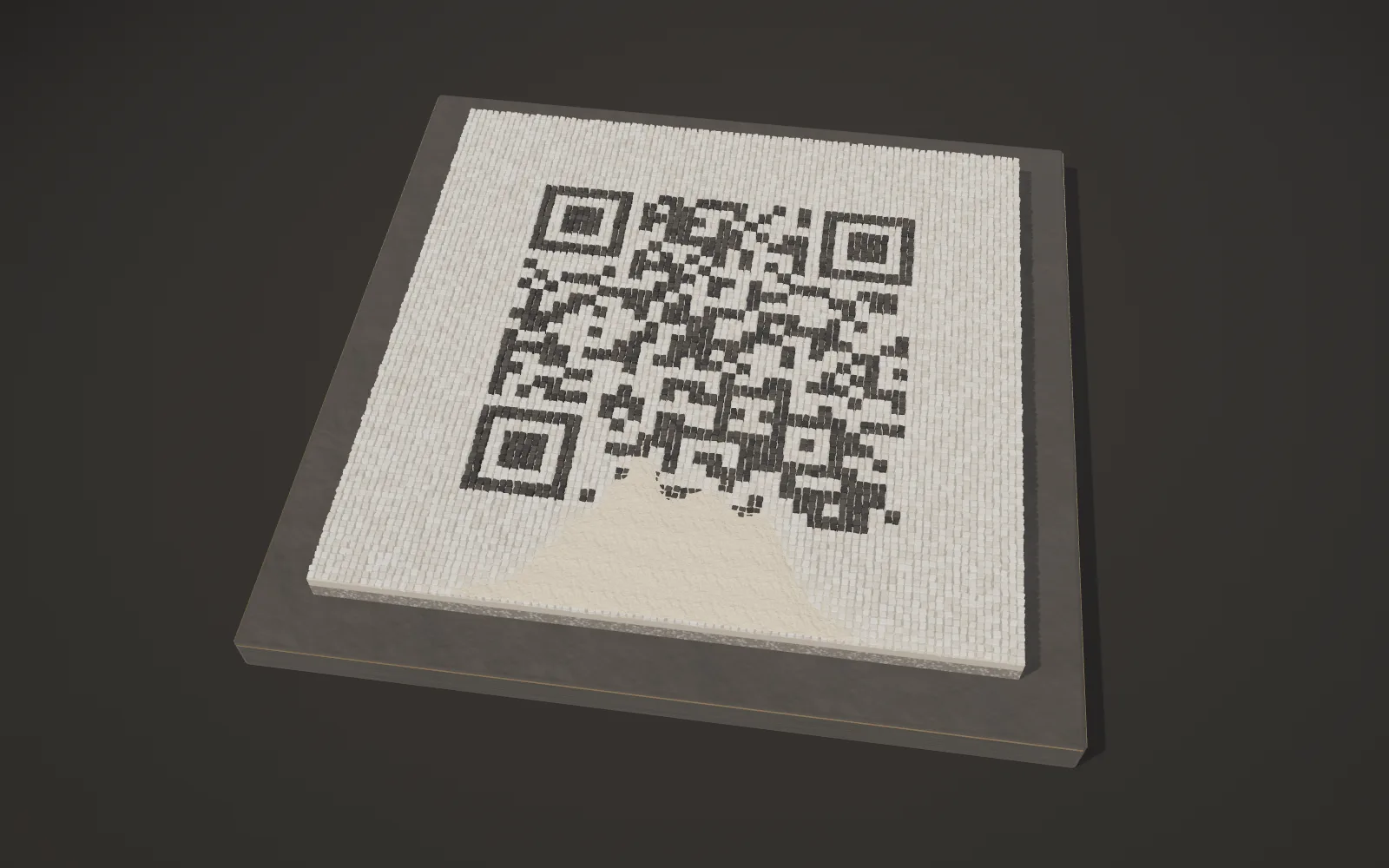
- Plate 45 A Code That Survives Sand Chips & InformationStart here Bury part of a QR code in sand and a phone still reads it. The secret is in its spare bytes, which say nothing at all but can work out what went wrong and how to put it right. Open →
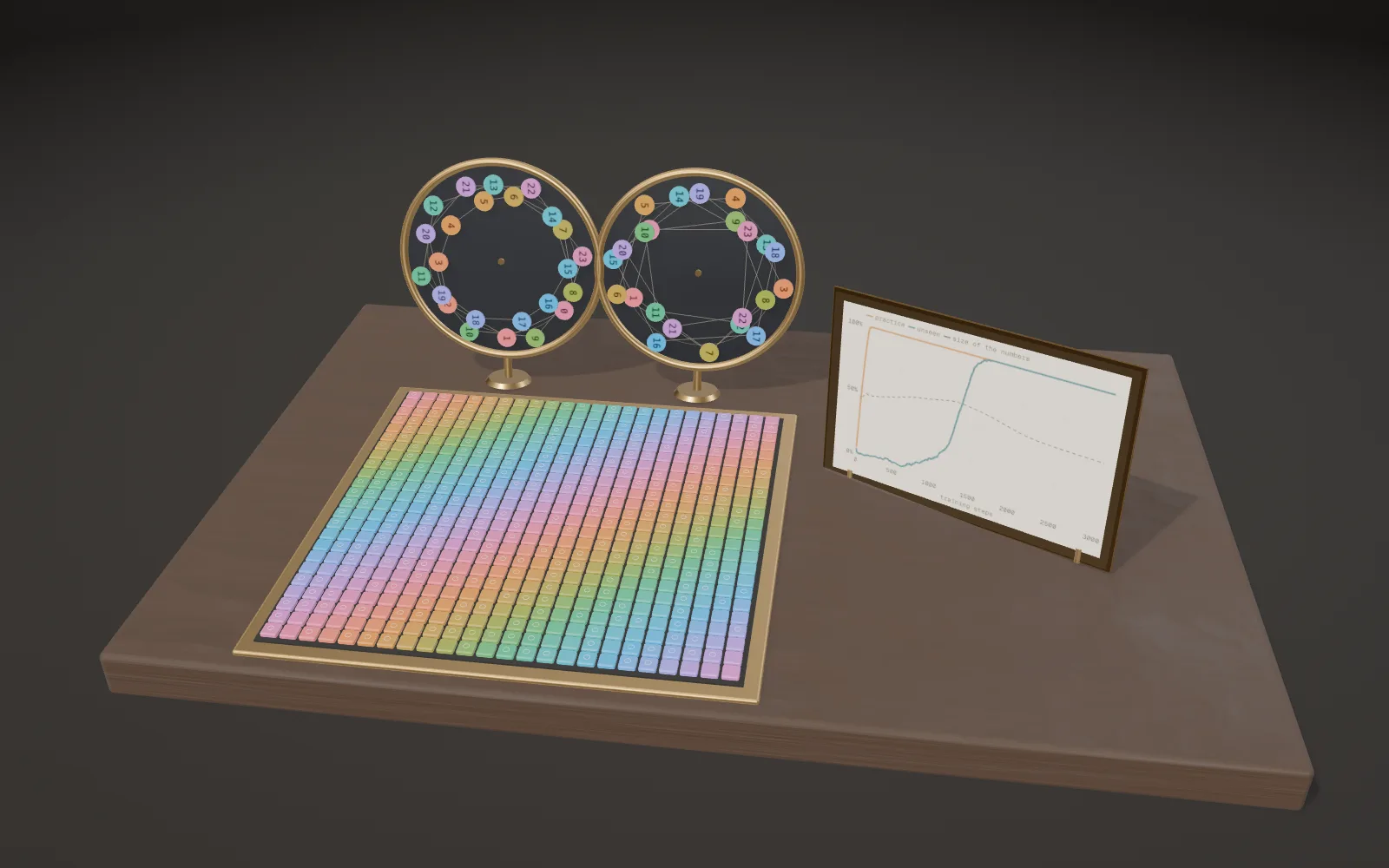
- Plate 46 Learning by Heart, Then Learning the Rule AIGoing further A small neural network learns to add hours on a 24-hour clock. It gets its practice questions right almost at once, by memorising them, and only long afterwards answers questions it has never seen. Inside, it has built clocks. Open →
- Plate C01 Watt’s Steam Engine Classic MachinesStart here An iron vessel standing in cold water saved most of the coal; two spinning balls taught the engine its own pace. Built in Birmingham in 1788, it stands at rest in London today. Open →
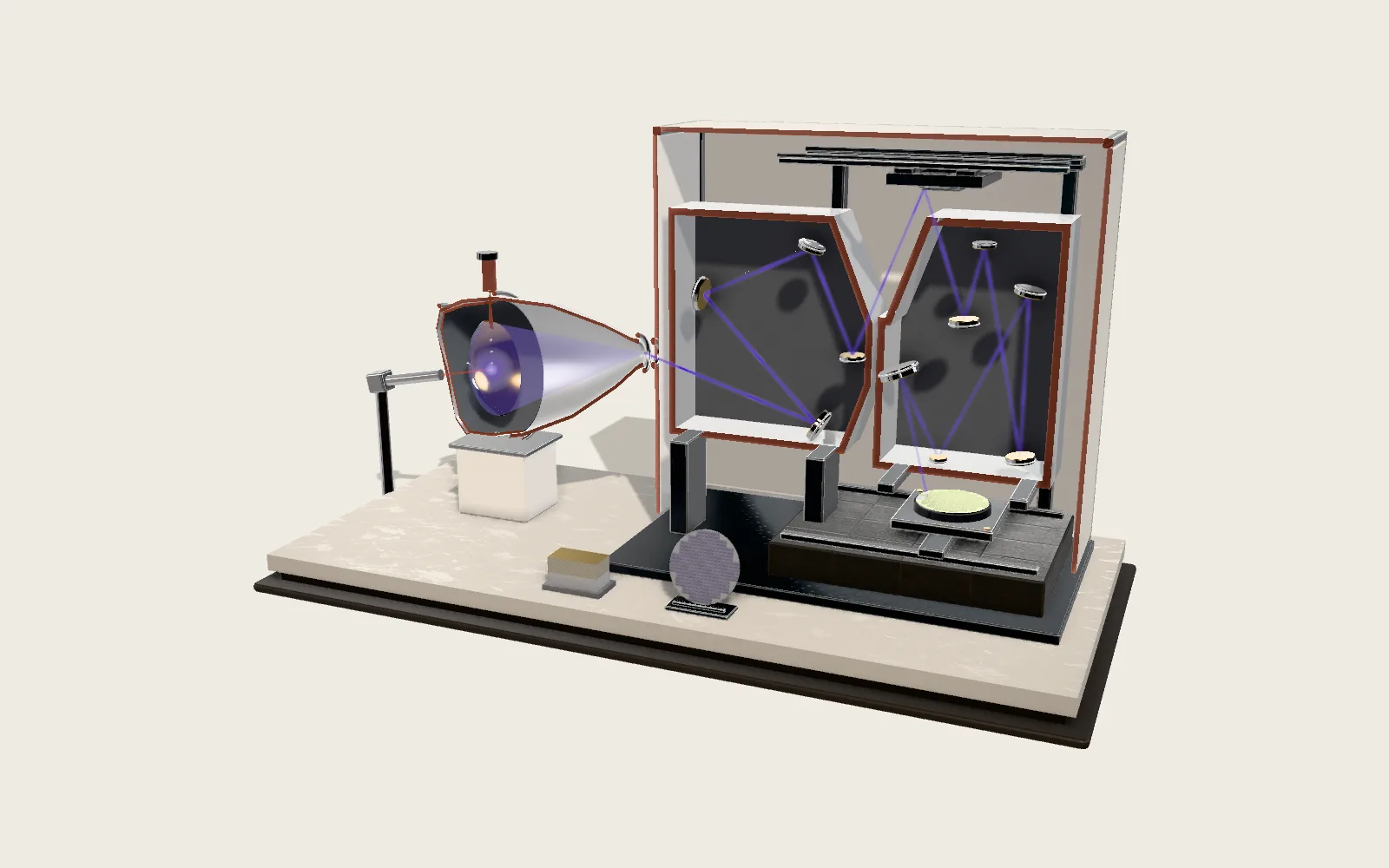
- Plate F01 EUV Lithography Machine Chips & InformationGoing further Light 13.5 nm long prints a chip’s circuits on silicon, four times smaller than the mask. It comes from tin droplets turned to plasma, and travels only by mirrors. Open →
- Plate C02 The SLR Camera Classic MachinesStart here While you frame, a mirror behind the lens sends the light up into a prism. Press the release and the mirror lifts; two cloth curtains cross the film one after the other. Open →
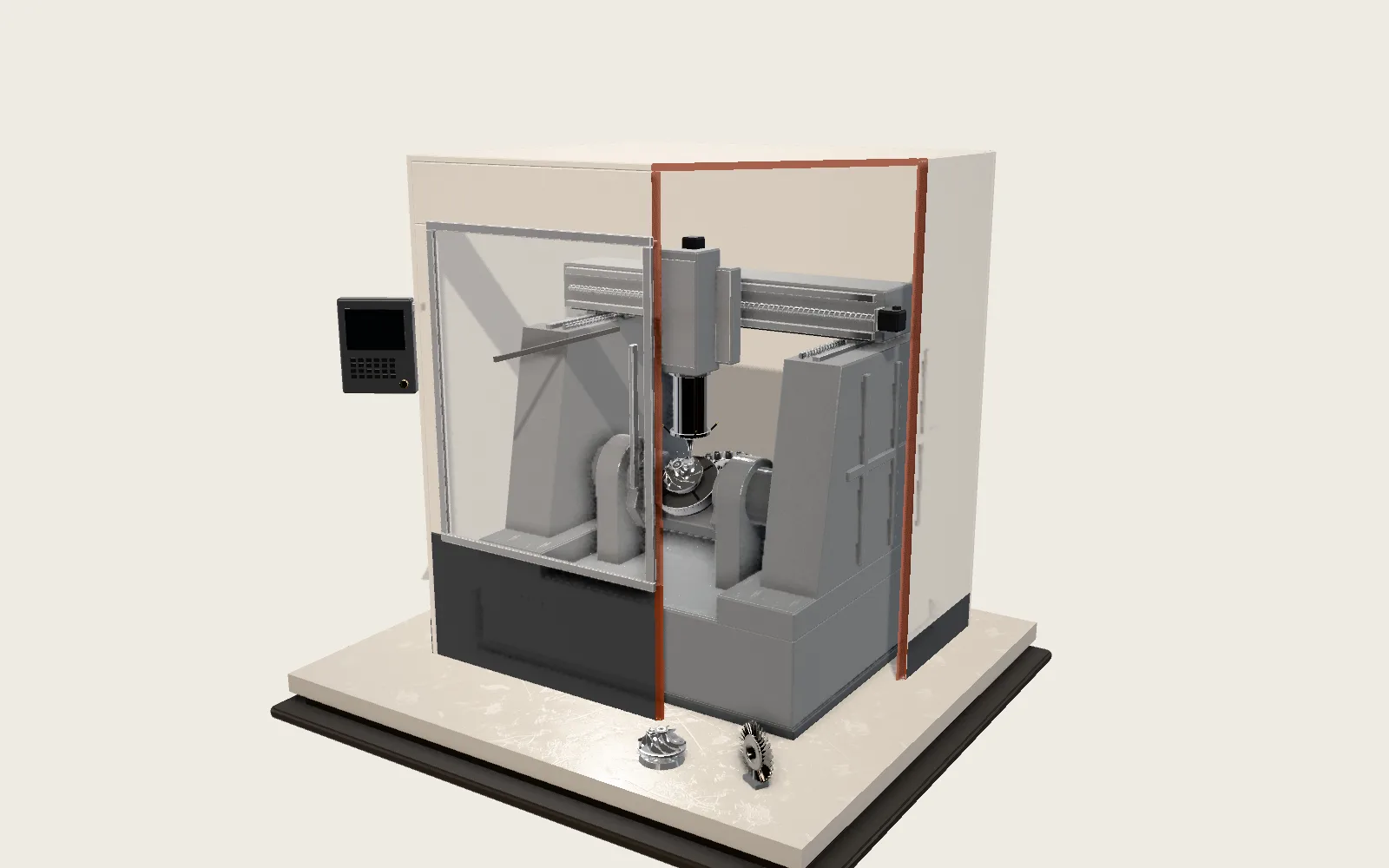
- Plate F02 Five-Axis Machining Centre Energy, Flight & SensingGoing further Three straight axes move the spindle, two rotary axes turn the part, and all five move together to cut an impeller from a solid block of aluminium. Open →
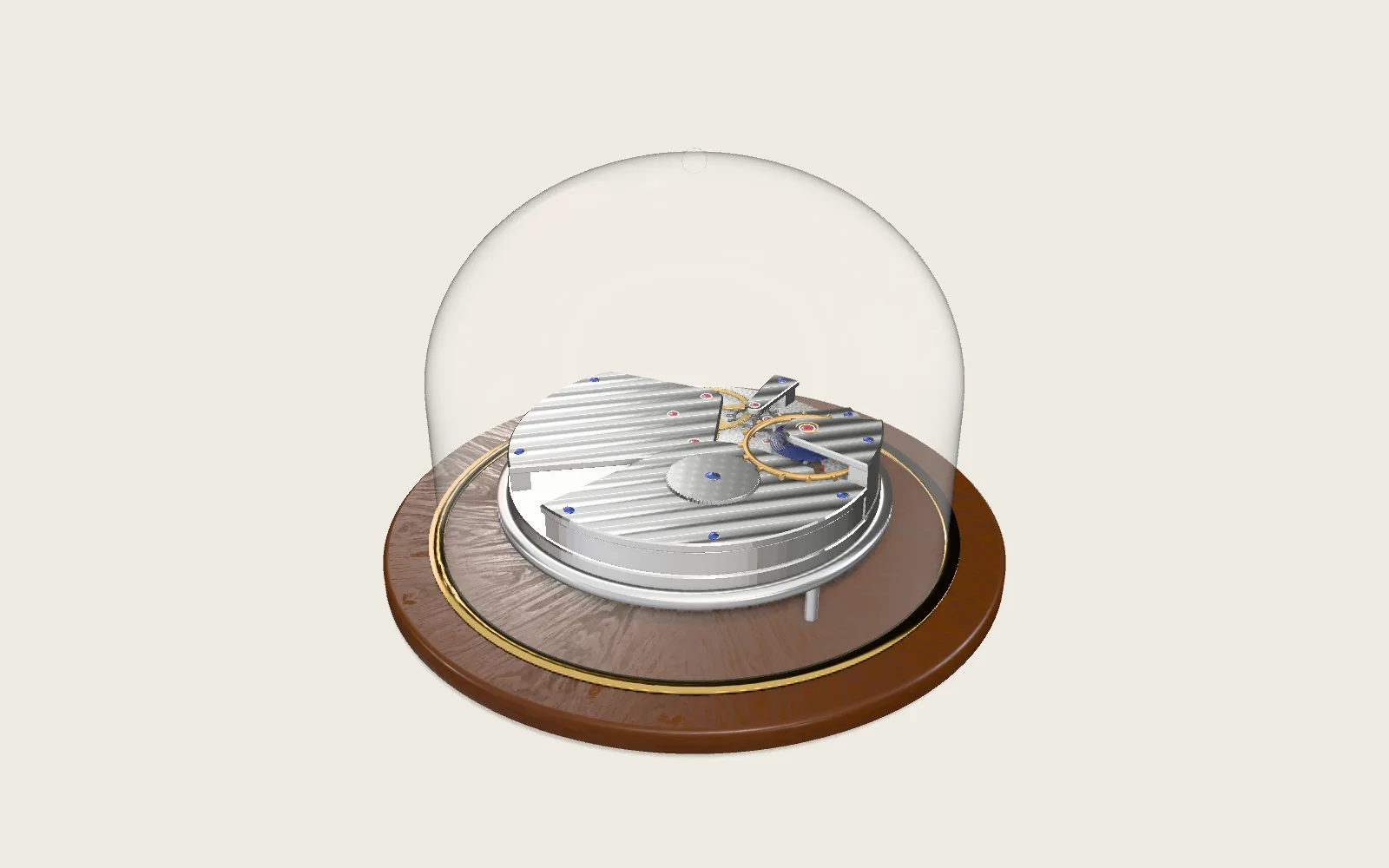
- Plate C03 The Escapement Classic MachinesStart here A spring or a falling weight, let go, gives up its energy all at once. The escapement lets it out in equal small steps, one per beat, timed by something that swings back and forth. Open →
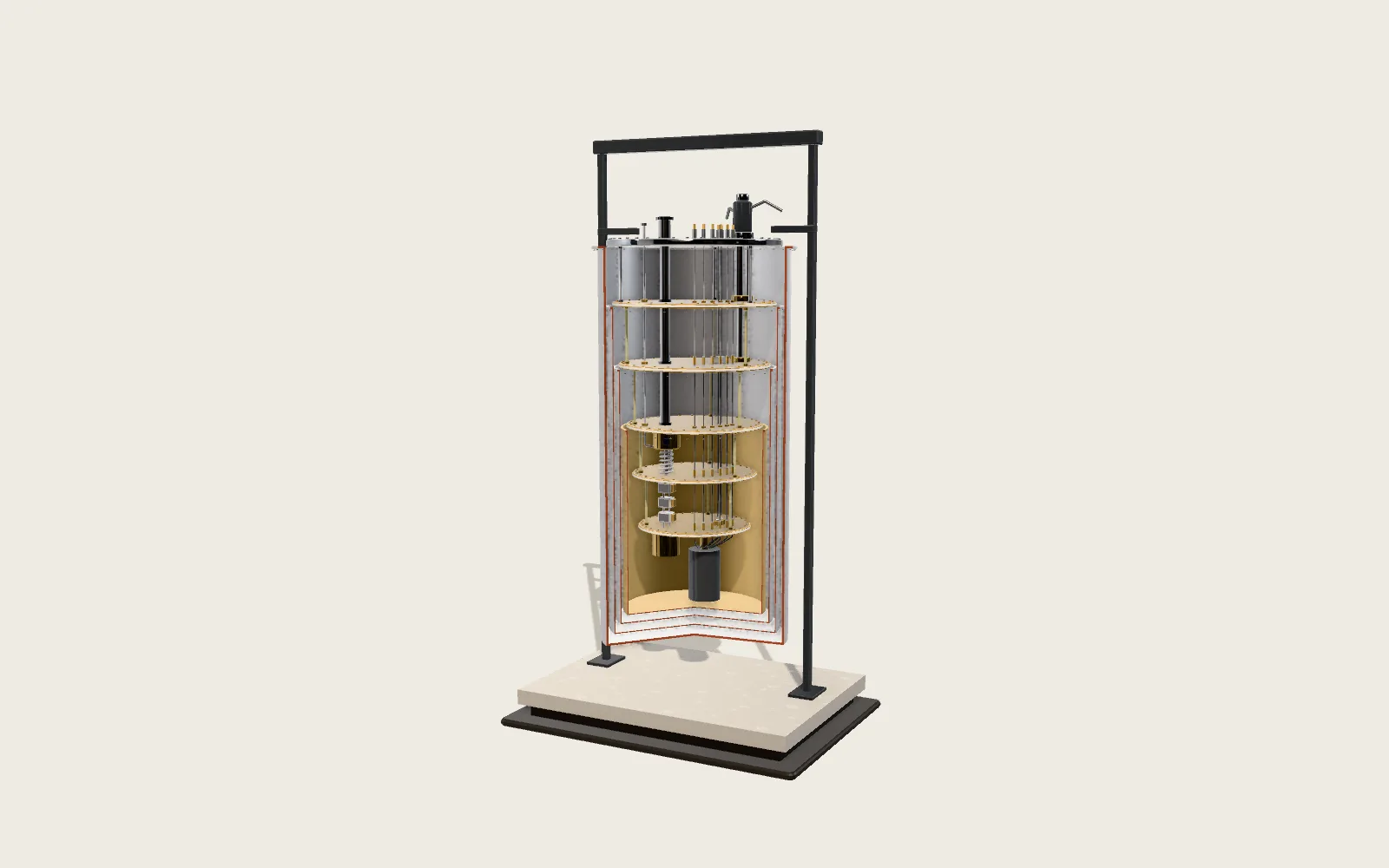
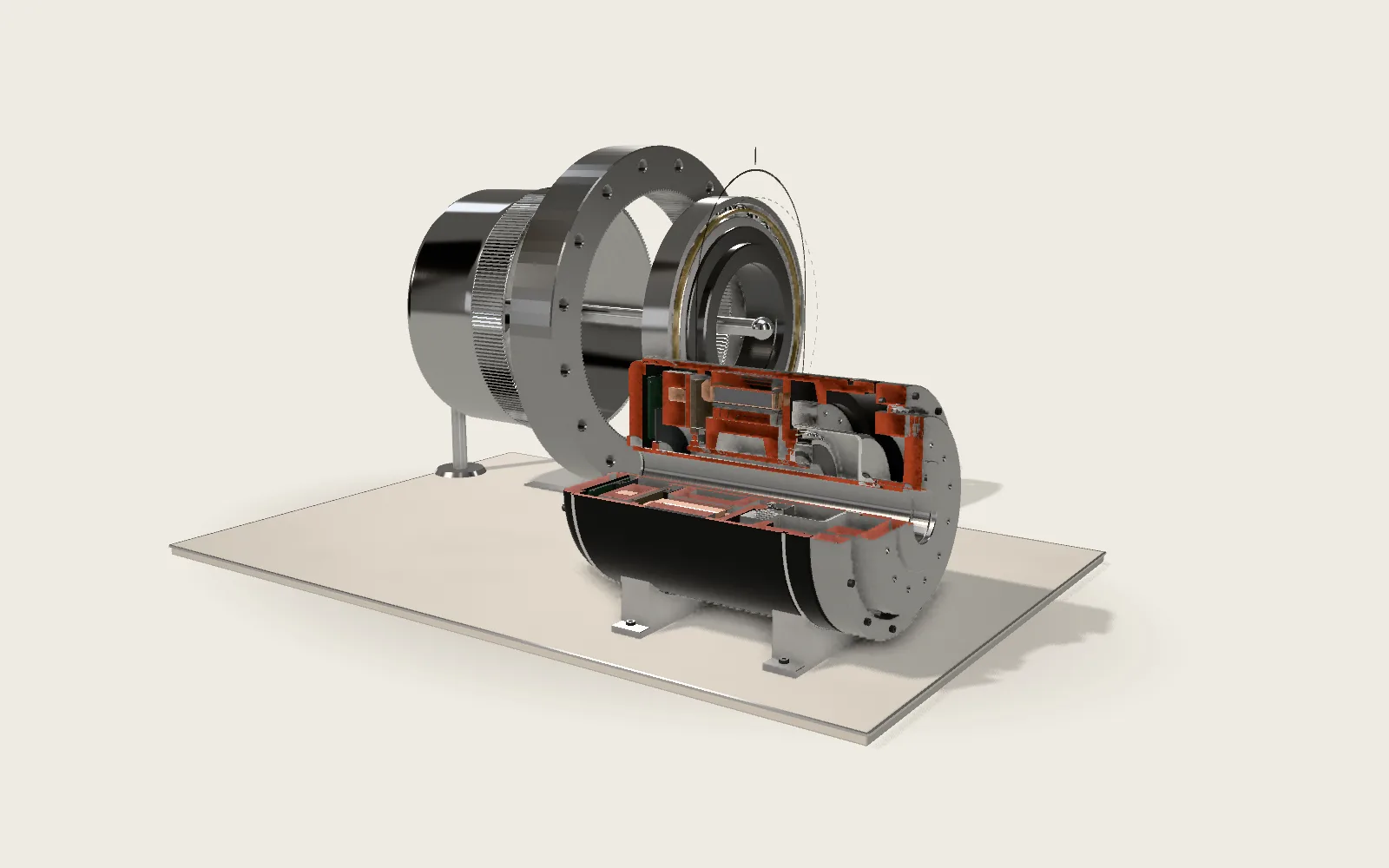
- Plate F05 The Dilution Refrigerator Chips & InformationGoing further A superconducting quantum computer hangs from a gold-plated “chandelier”. Each stage is colder than the one above; the last is about 10 mK, hundreds of times colder than space. Open →
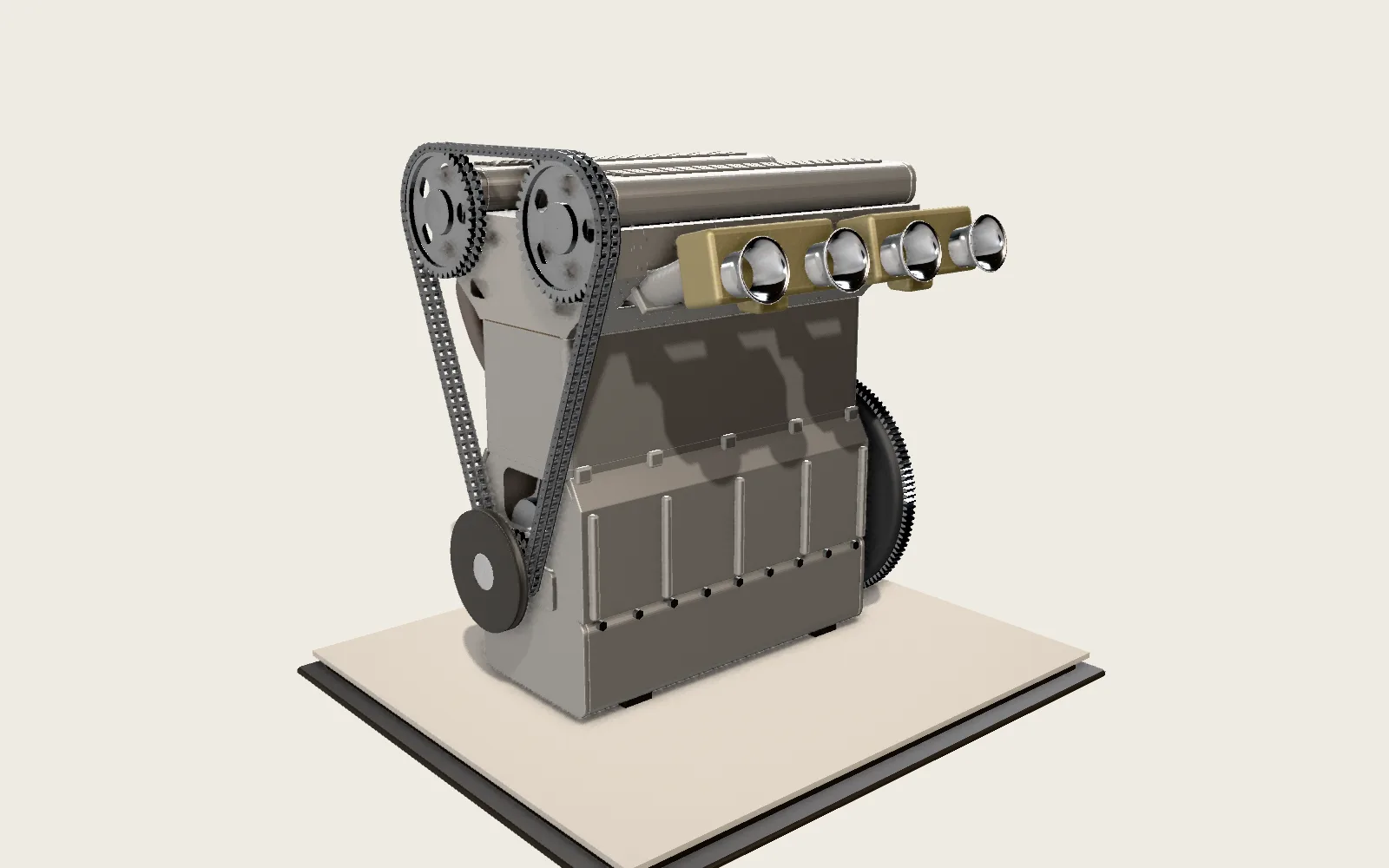
- Plate C04 The Four-Stroke Engine Classic MachinesStart here The fuel burns inside the cylinder. The piston makes four strokes and the crank turns twice; in one of them, the burning gas drives the piston down. Open →
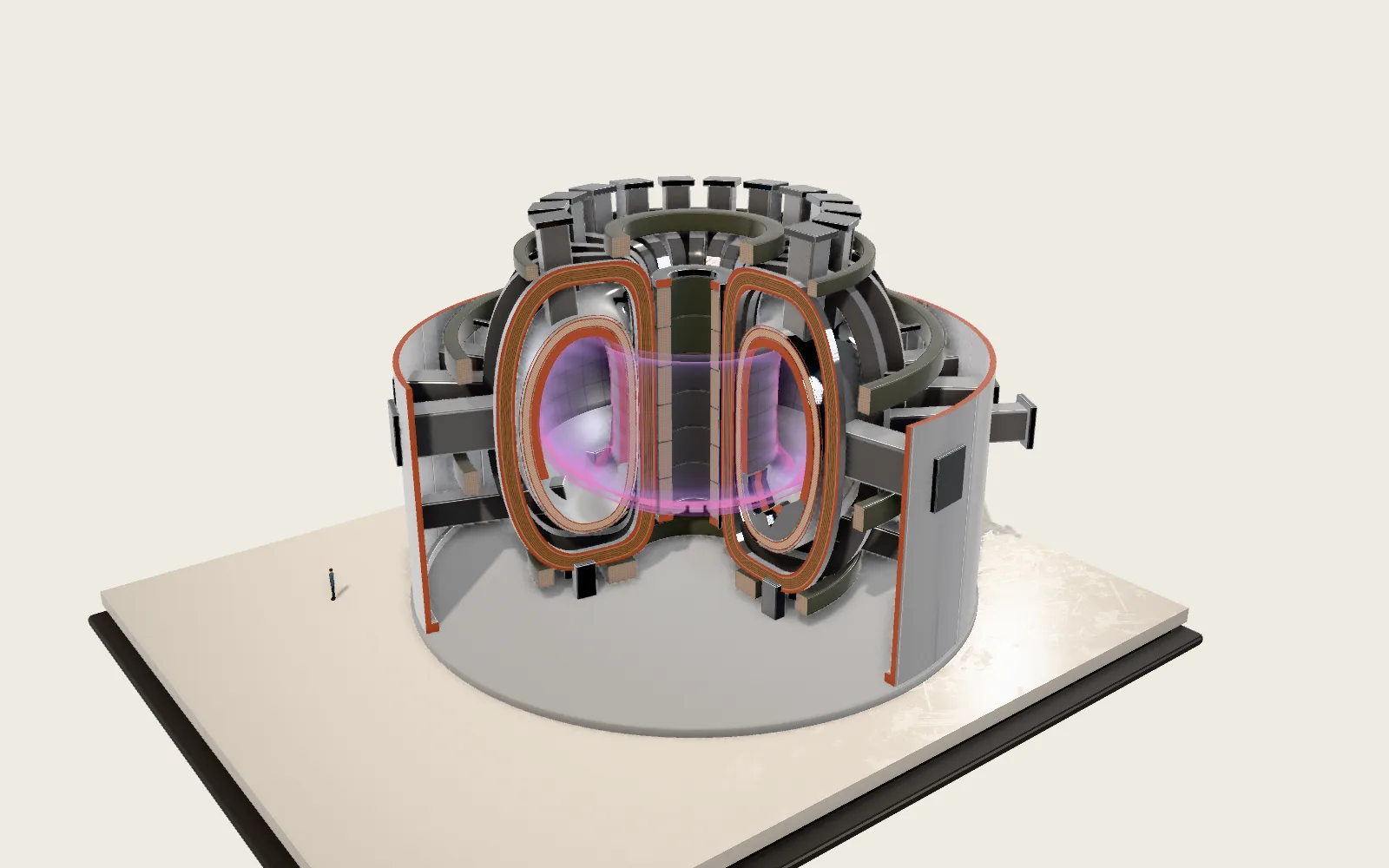
- Plate F06 Tokamak Fusion Reactor Energy, Flight & SensingGoing further A tokamak like ITER: eighteen D-shaped superconducting coils round a ring-shaped vacuum vessel, inside which a deuterium–tritium plasma at about 150 million degrees hangs in a magnetic field. Open →
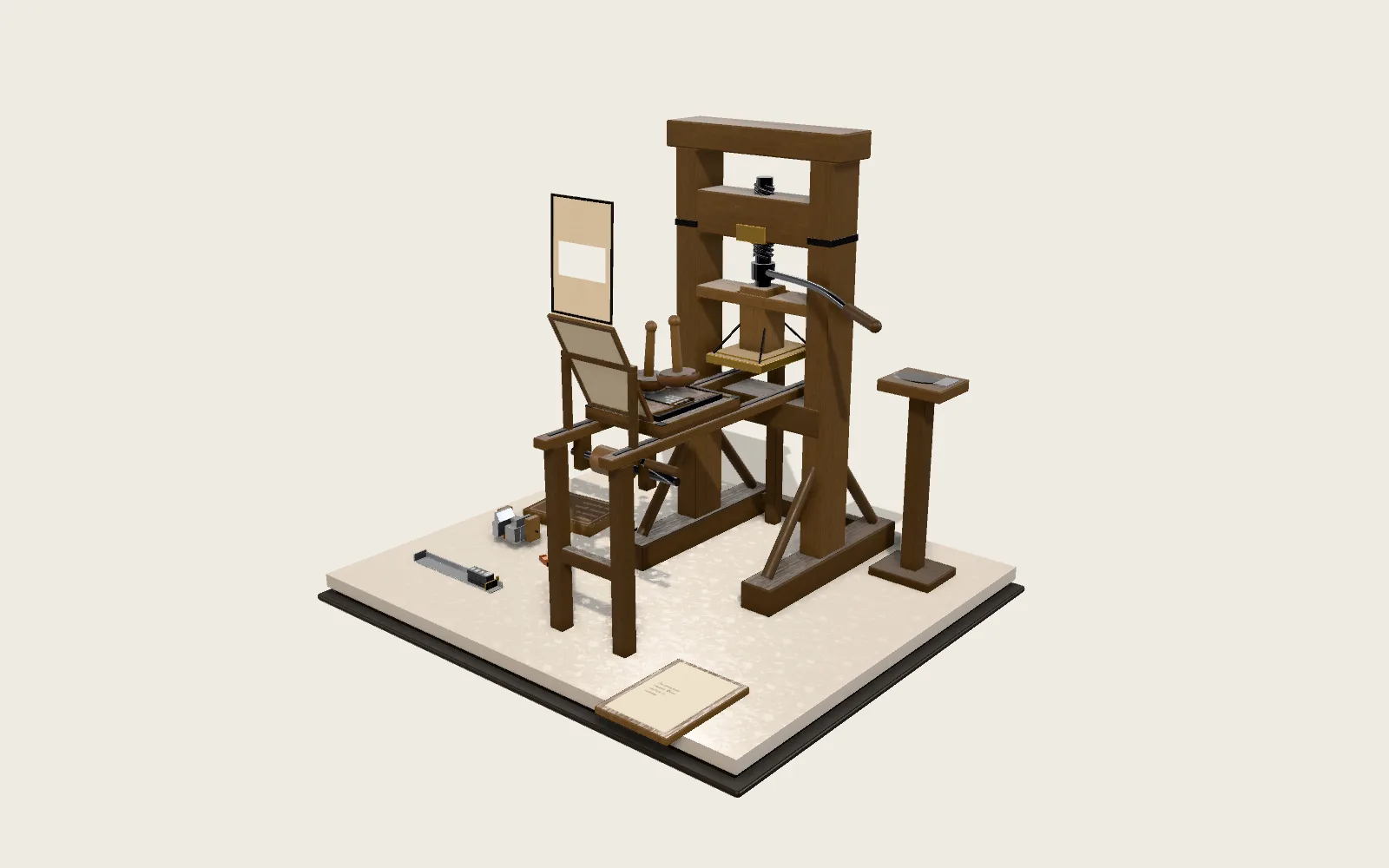
- Plate C05 The Printing Press Classic MachinesStart here Metal letters set into a page, inked, covered with paper, one pull of the bar: a printed page. Mainz, about 1450. Open →
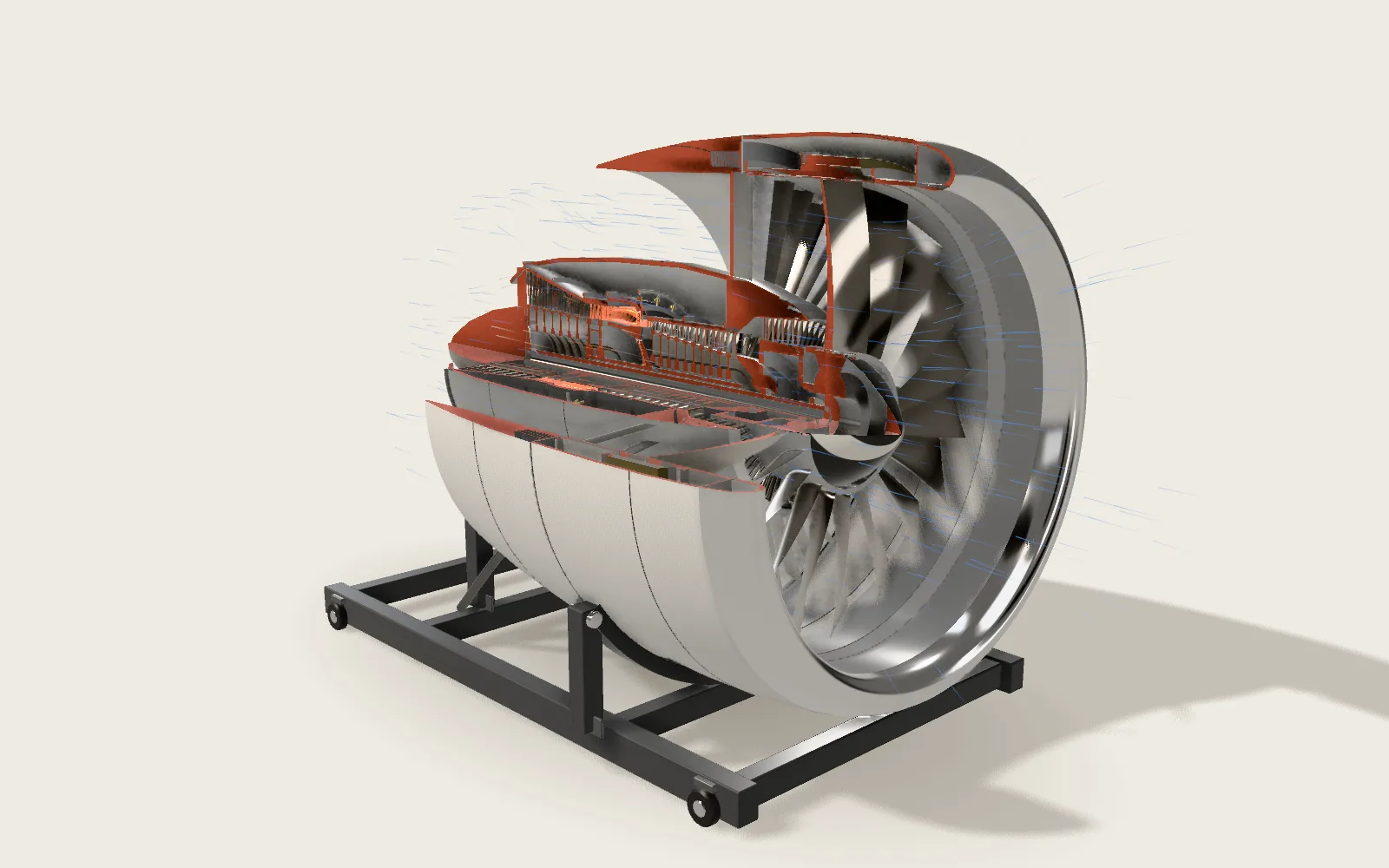
- Plate F07 Turbofan Engine Energy, Flight & SensingGoing further A high-bypass turbofan of the kind under a widebody’s wing, a quarter cut away: fan, ten-stage high-pressure compressor, annular combustor, two turbines. At take-off it swallows about 1.2 tonnes of air a second. Open →
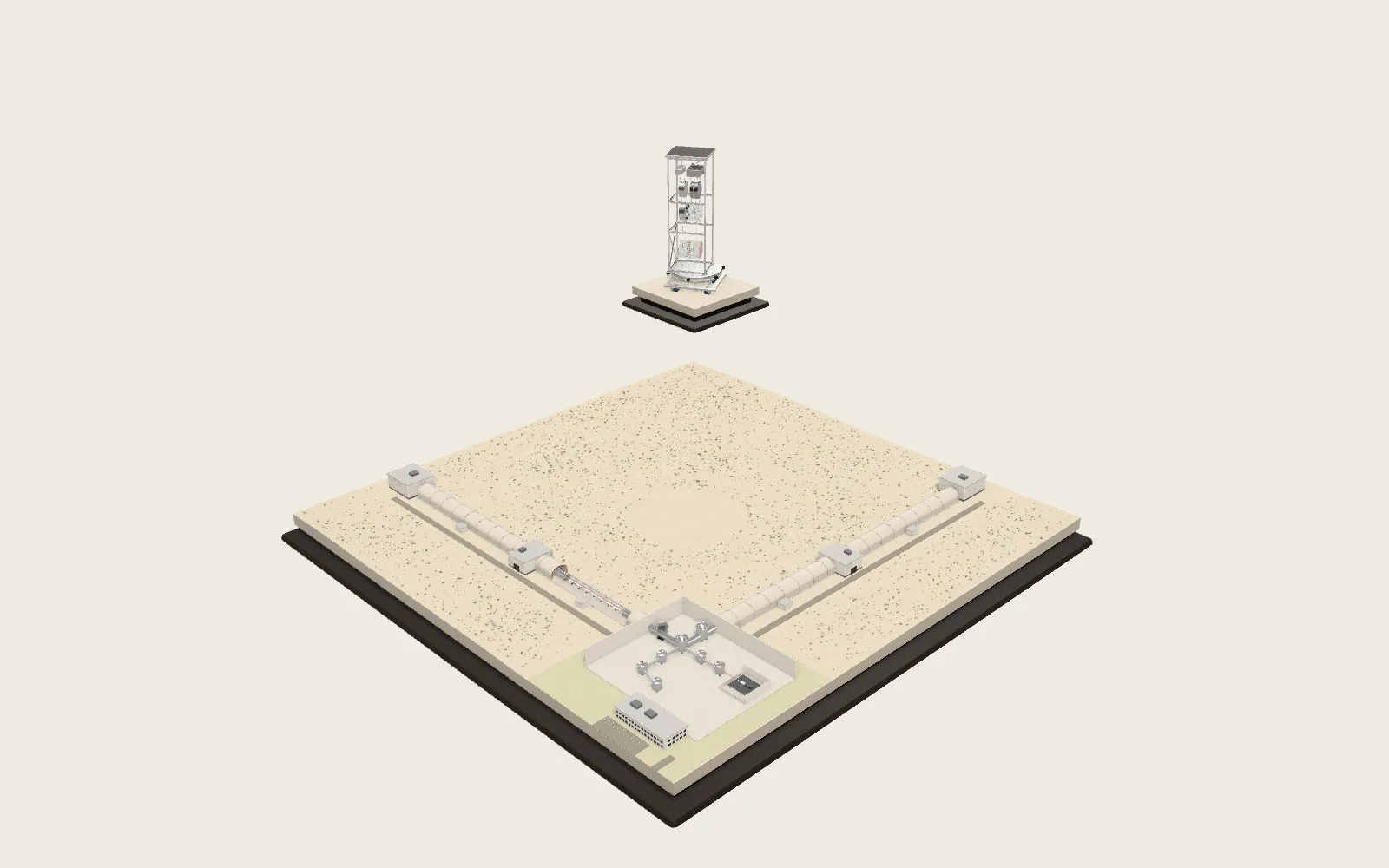
- Plate F08 The Gravitational-Wave Interferometer Energy, Flight & SensingGoing further Two arms 4 km long measure changes in length more than ten thousand times smaller than a proton. In 2015 it recorded, for the first time, the gravitational waves from two black holes merging. Open →
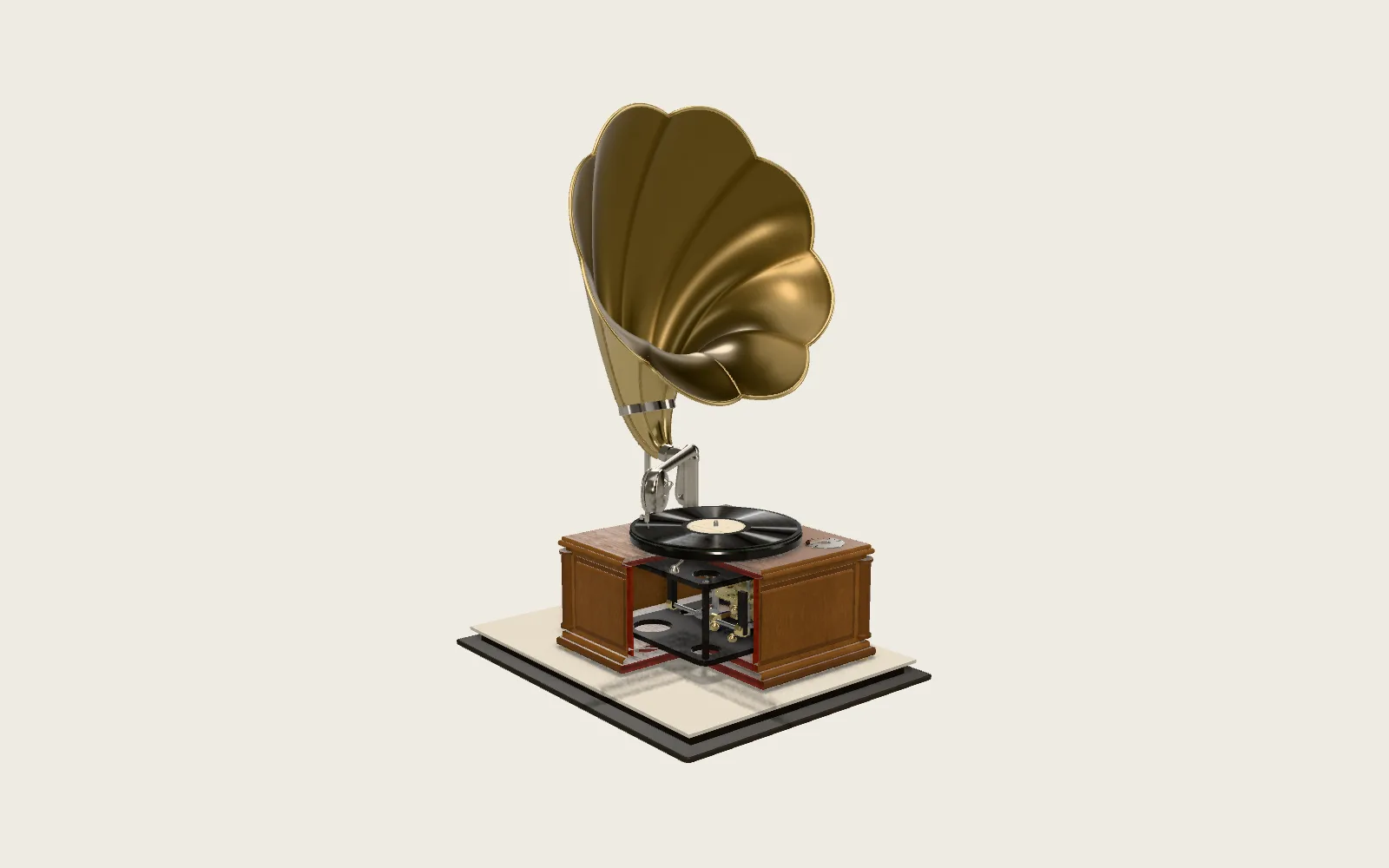
- Plate C06 The Phonograph and the Gramophone Classic MachinesStart here Sound pushes a needle that cuts wiggles into a groove; a needle running back along the wiggles brings the sound back. The whole machine runs without electricity. Open →
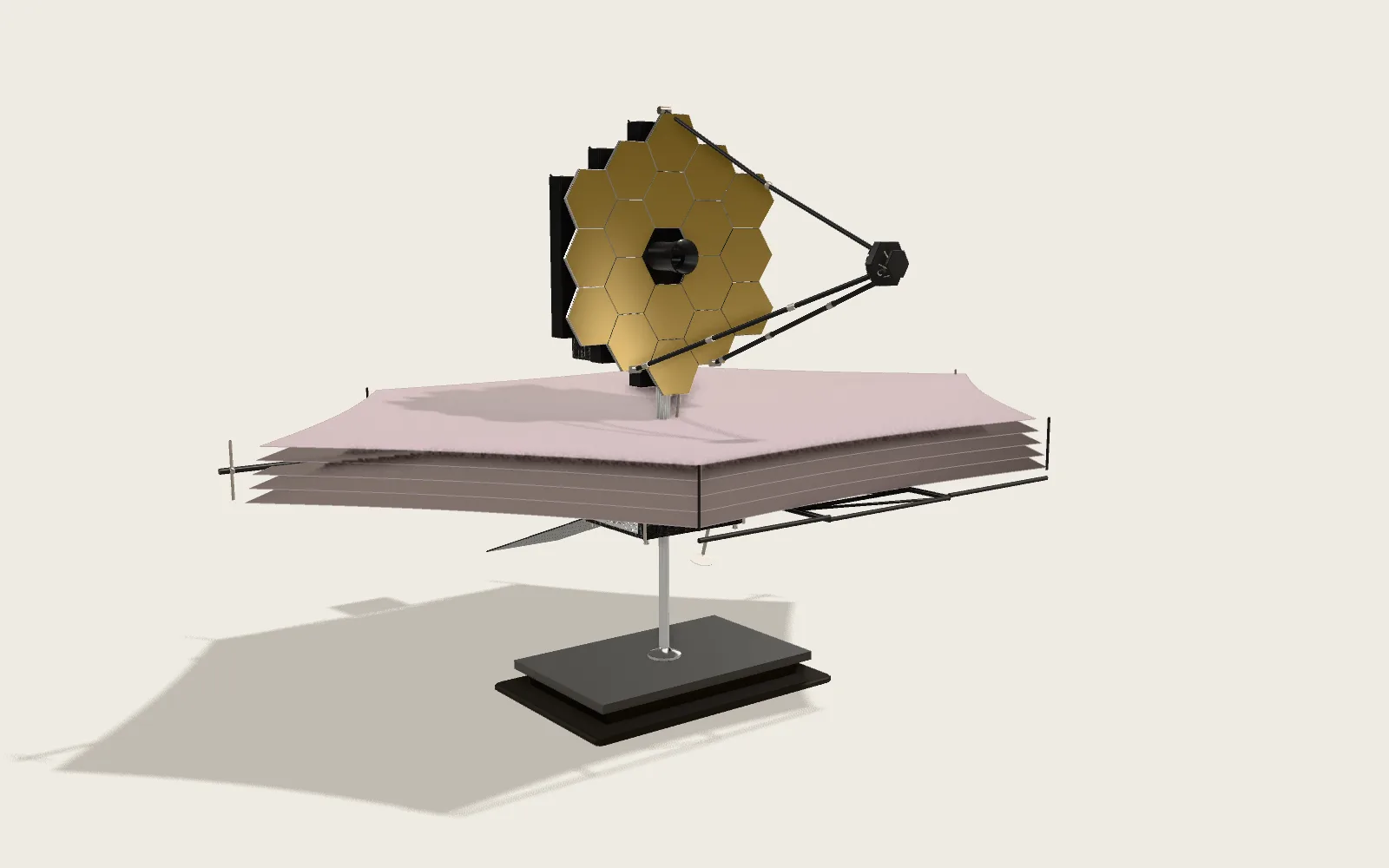
- Plate F09 The Webb Space Telescope Energy, Flight & SensingGoing further Eighteen gold-coated segments make one 6.5 m mirror, and five layers of film keep the Sun’s heat off it. It was launched folded and unfolded itself in space over two weeks. Open →
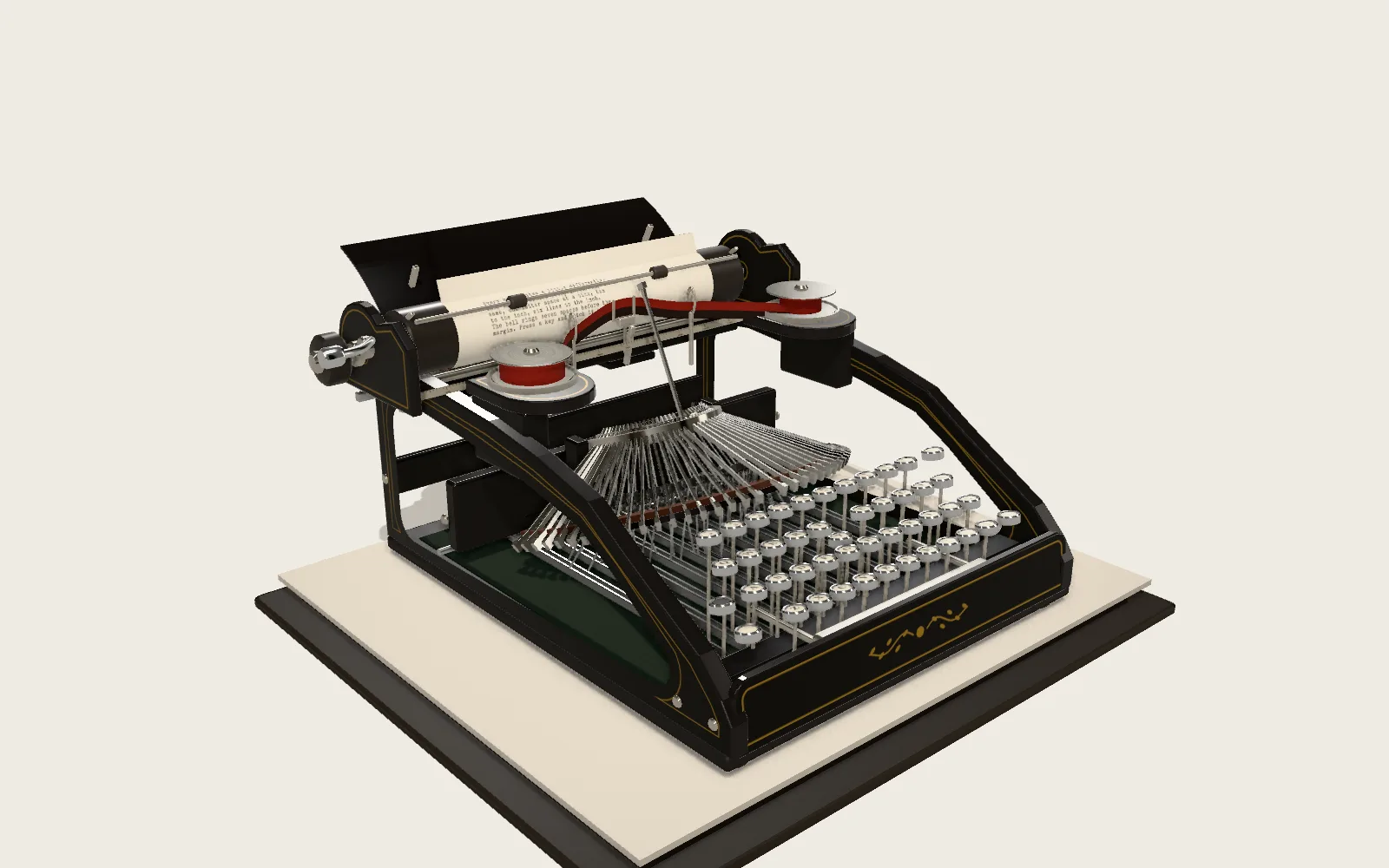
- Plate C07 The Typewriter Classic MachinesStart here Press a key and a typebar swings up and strikes the paper through the ribbon; let go and the carriage steps one space to the left. Open →
- Plate F10 The Harmonic Drive Energy, Flight & SensingGoing further The strain-wave gear inside a robot joint: an ellipse flexes a thin steel cup, and each turn the cup falls back just two teeth. A 100 : 1 reduction in one stage, with almost no backlash. Open →
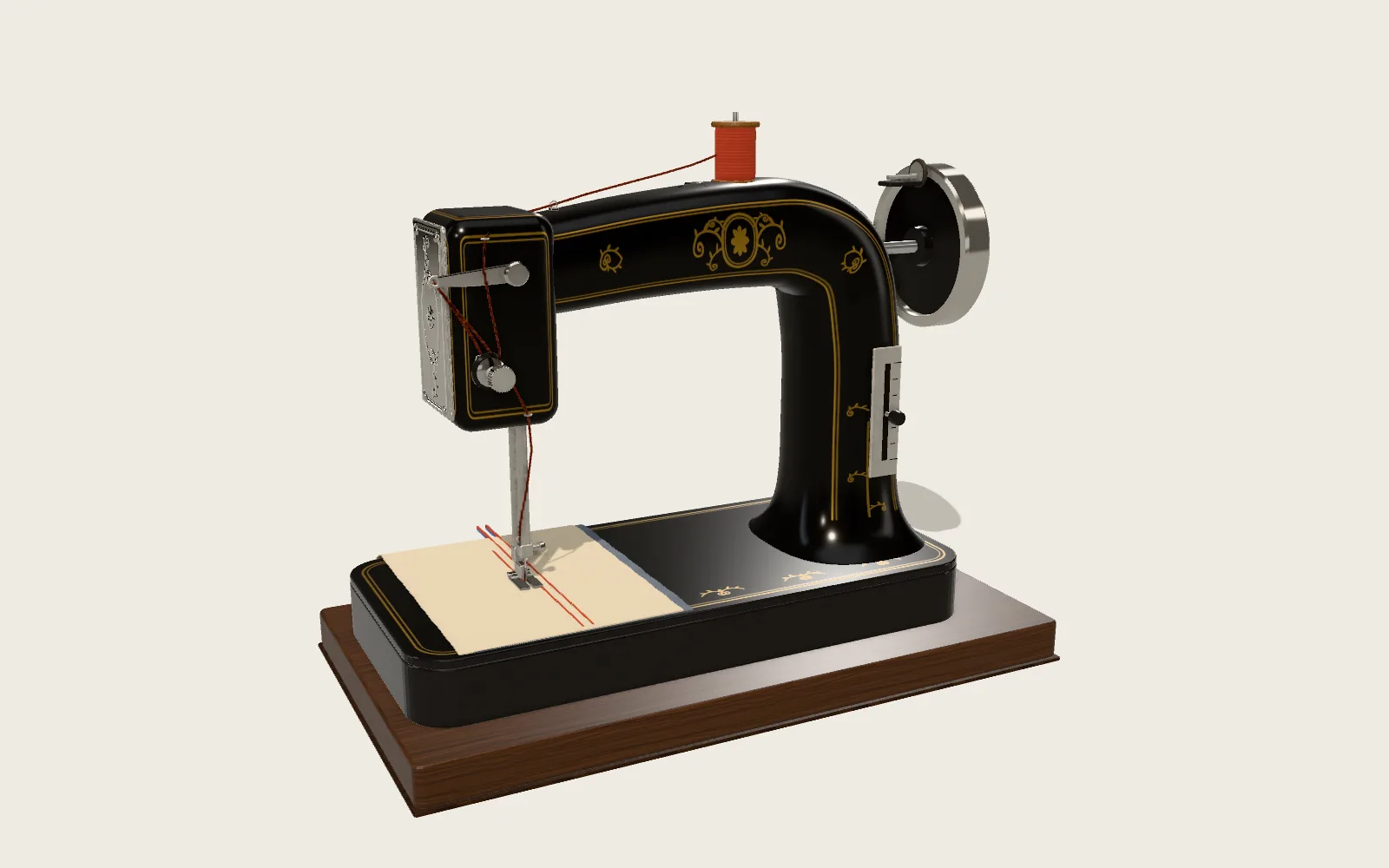
- Plate C08 The Lockstitch Sewing Machine Classic MachinesStart here The needle takes a loop of thread under the cloth; the hook carries it round the bobbin case and over the lower thread, and the loop is drawn back into the cloth. One turn of the handwheel, one stitch. Open →
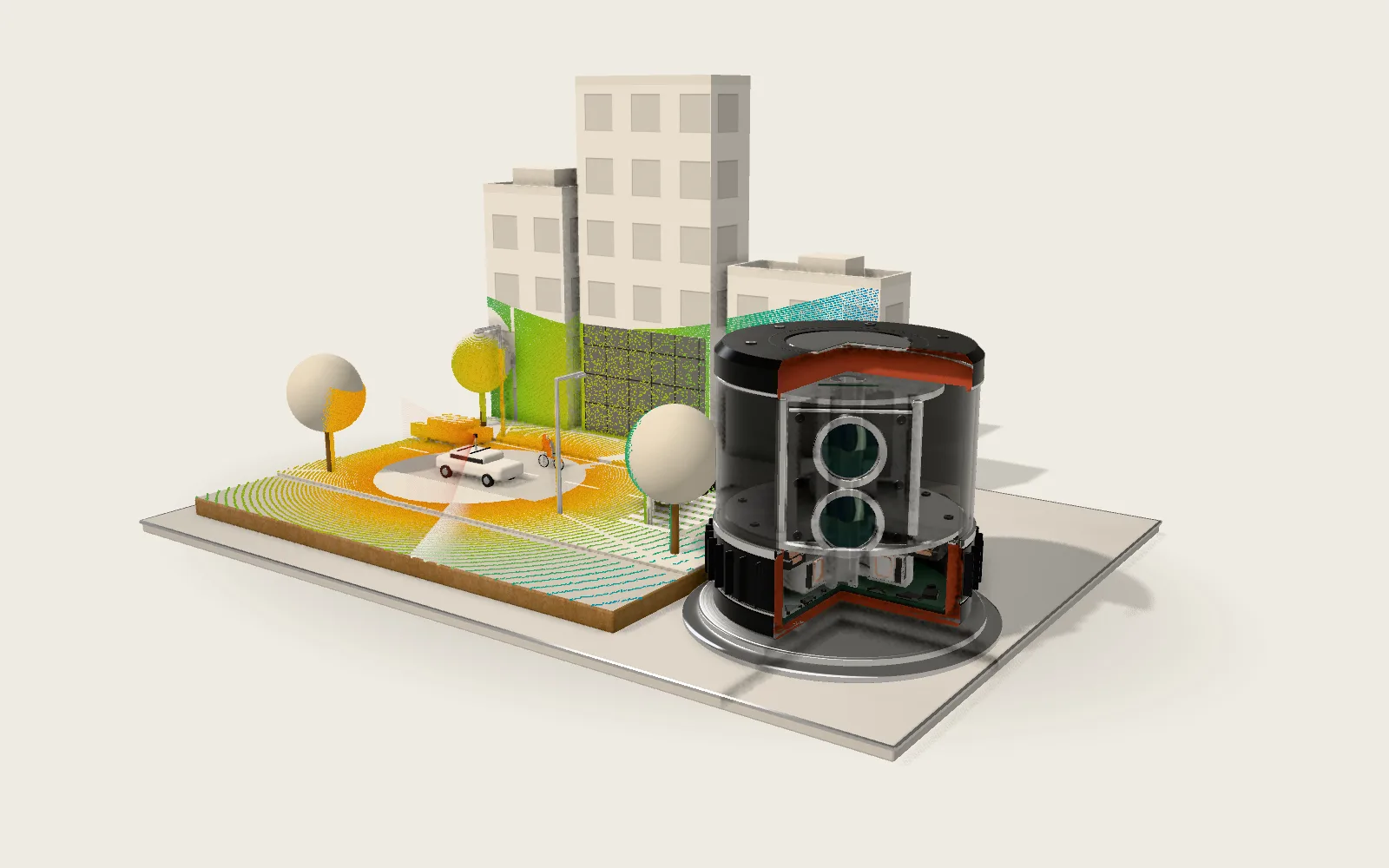
- Plate F11 Lidar Energy, Flight & SensingGoing further A lidar on a car’s roof times light: 6.67 nanoseconds there and back is one metre. 128 beams spin, and the street around turns into hundreds of thousands of points with coordinates. Open →
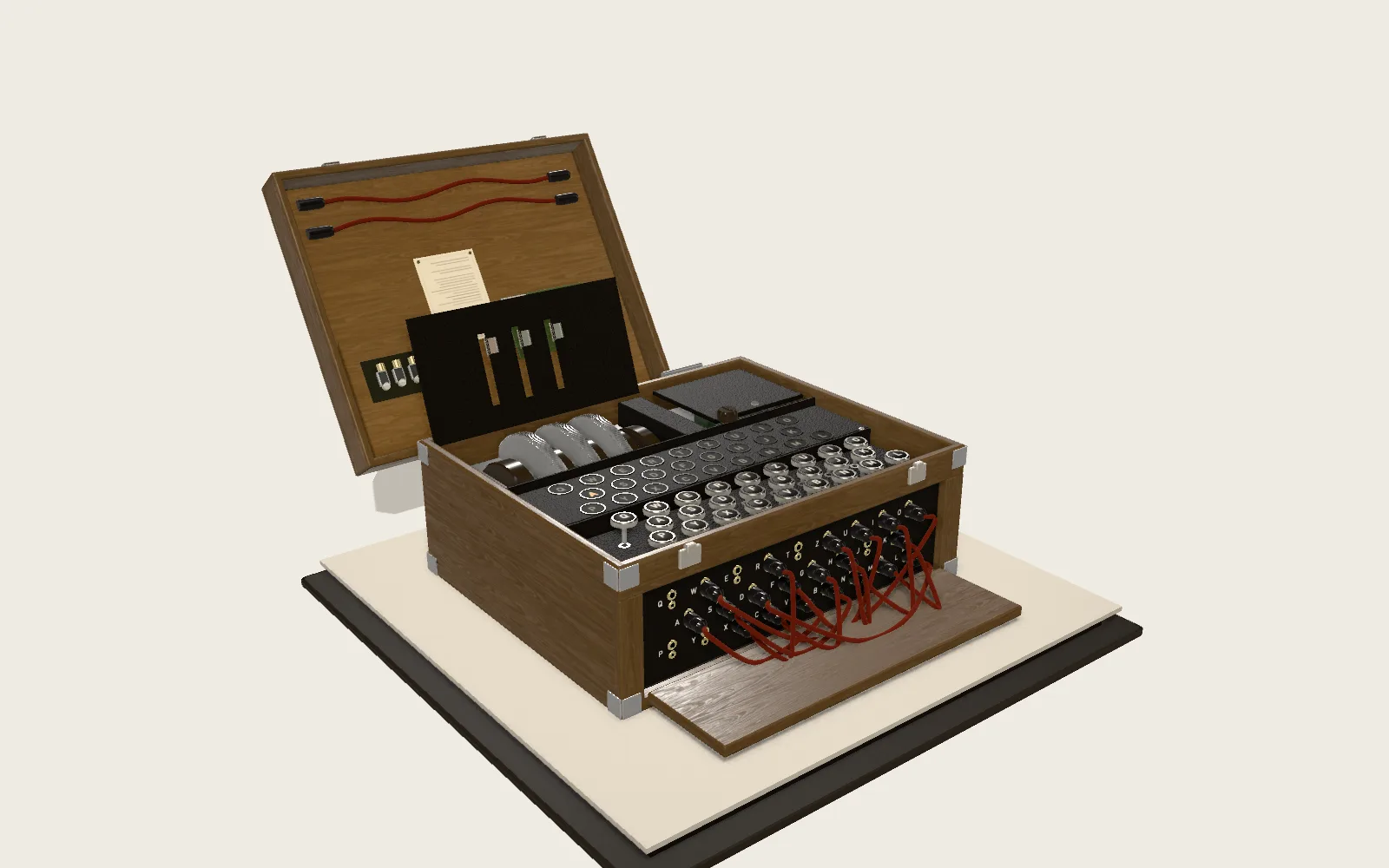
- Plate C09 The Enigma Cipher Machine Classic MachinesGoing further Press a key and the rotors step first; the current runs through the plugboard, three rotors and a reflector and back, and another letter lights up. Open →
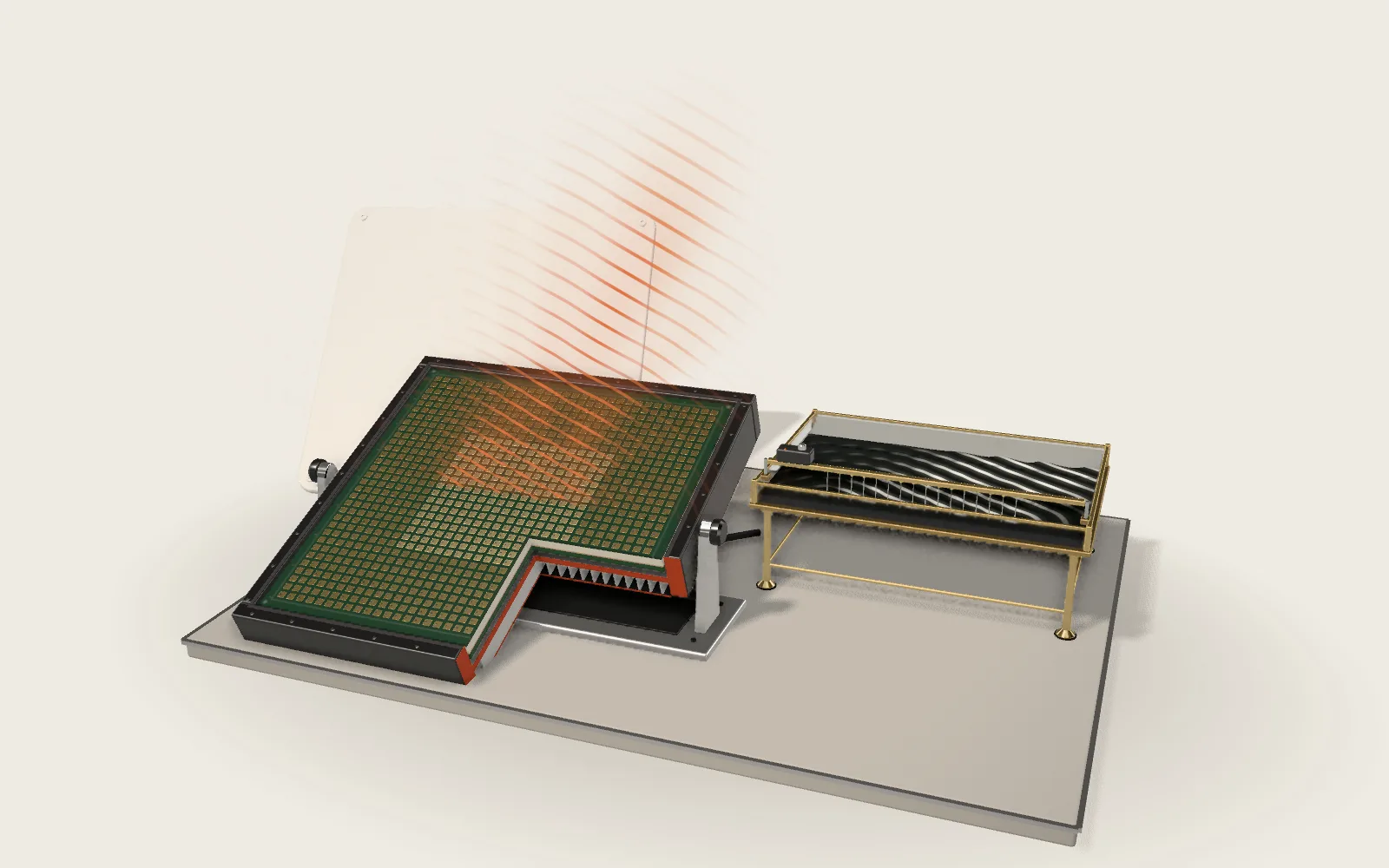
- Plate F12 The Phased Array Energy, Flight & SensingGoing further A flat panel holds a thousand small antennas. Let each send a moment after its neighbour and the beam leans to one side. No motor: the direction is set by timing alone. Open →
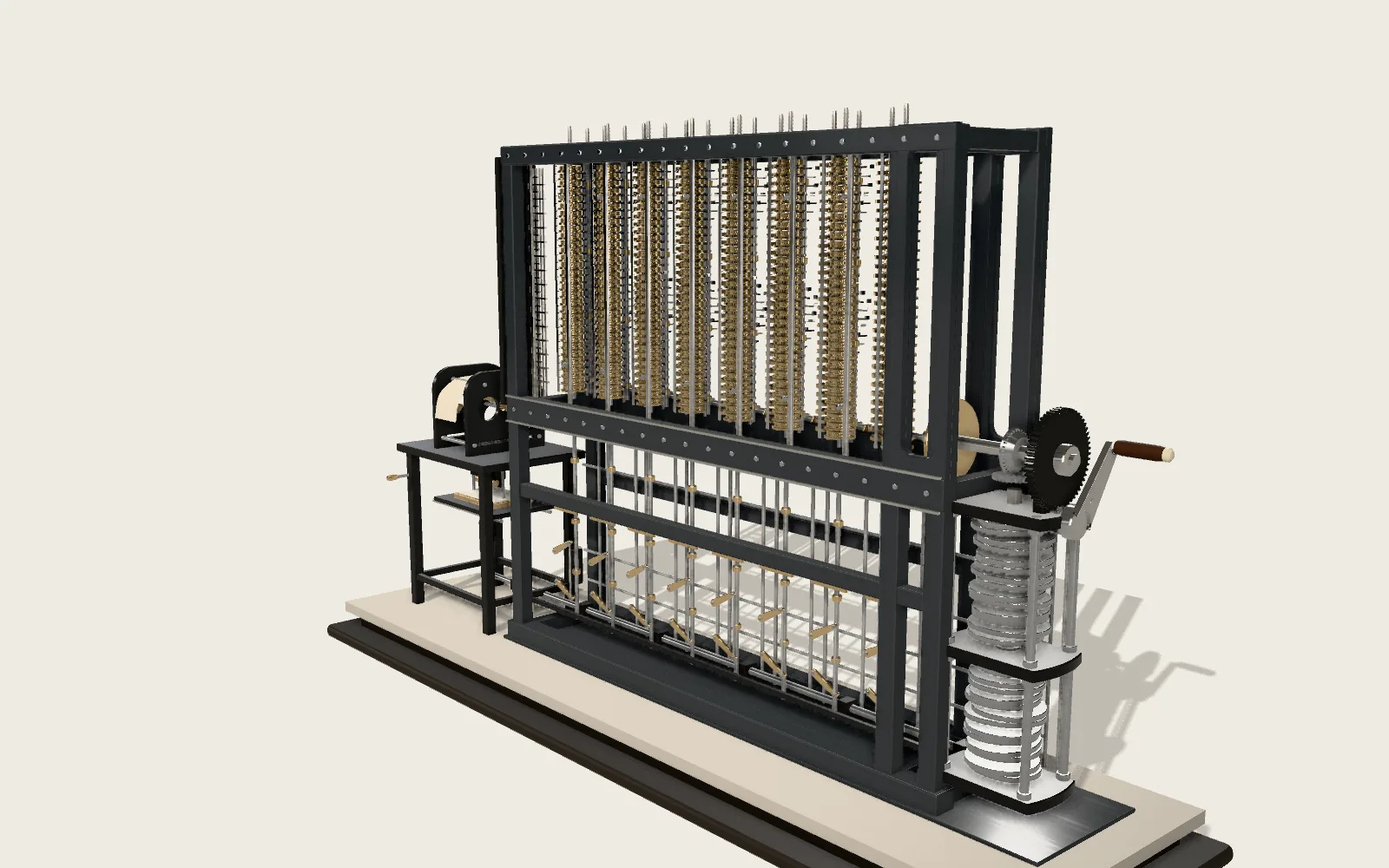
- Plate C10 The Difference Engine Classic MachinesGoing further Tables of polynomials by addition alone: eight columns of figure wheels, each added to the next, one result per turn of the cycle, printed straight away. Open →
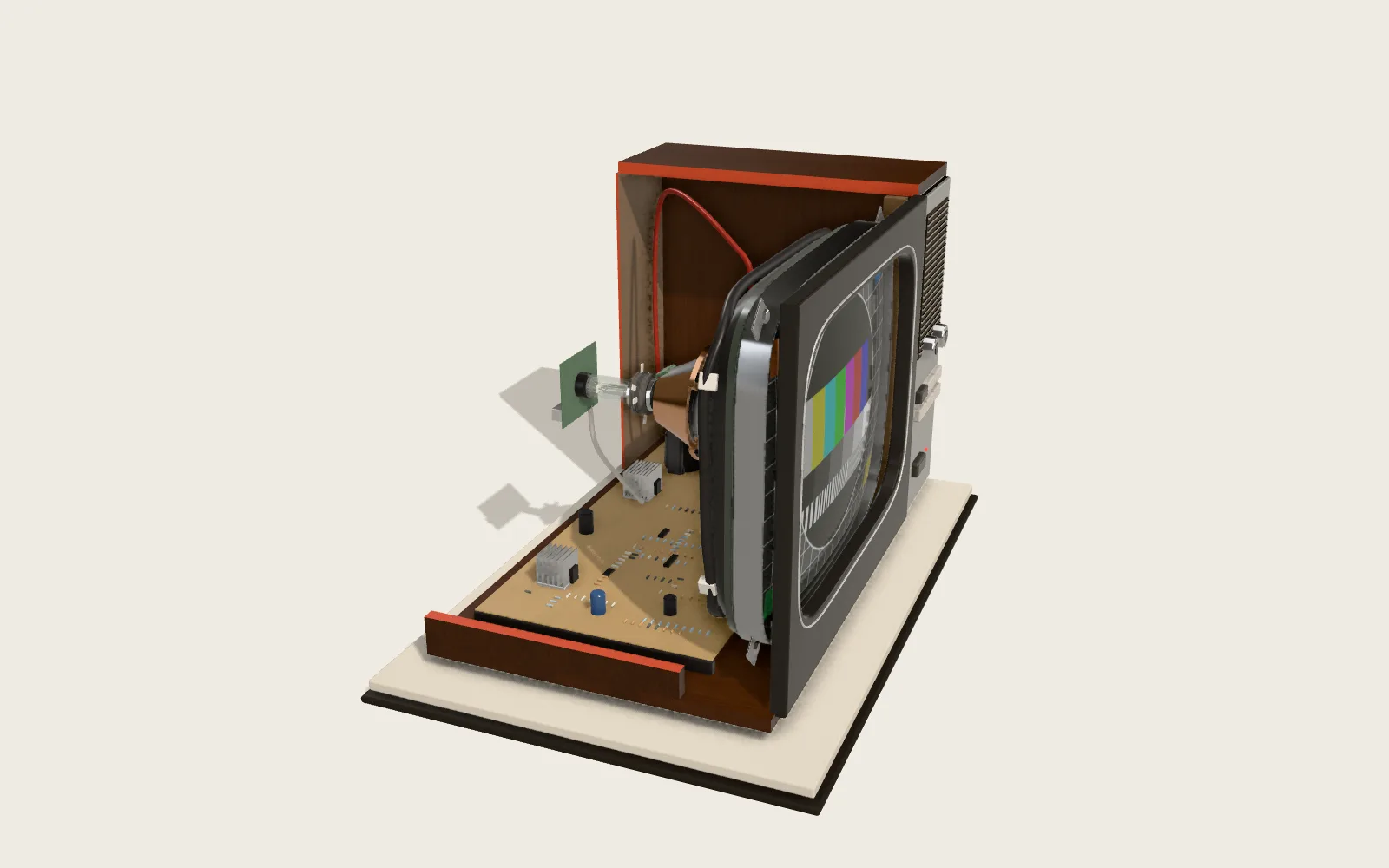
- Plate C11 The Picture Tube Classic MachinesGoing further A beam of electrons in a vacuum, pushed about by magnetic fields more than fifteen thousand lines a second, paints a picture on phosphor one spot at a time. Open →
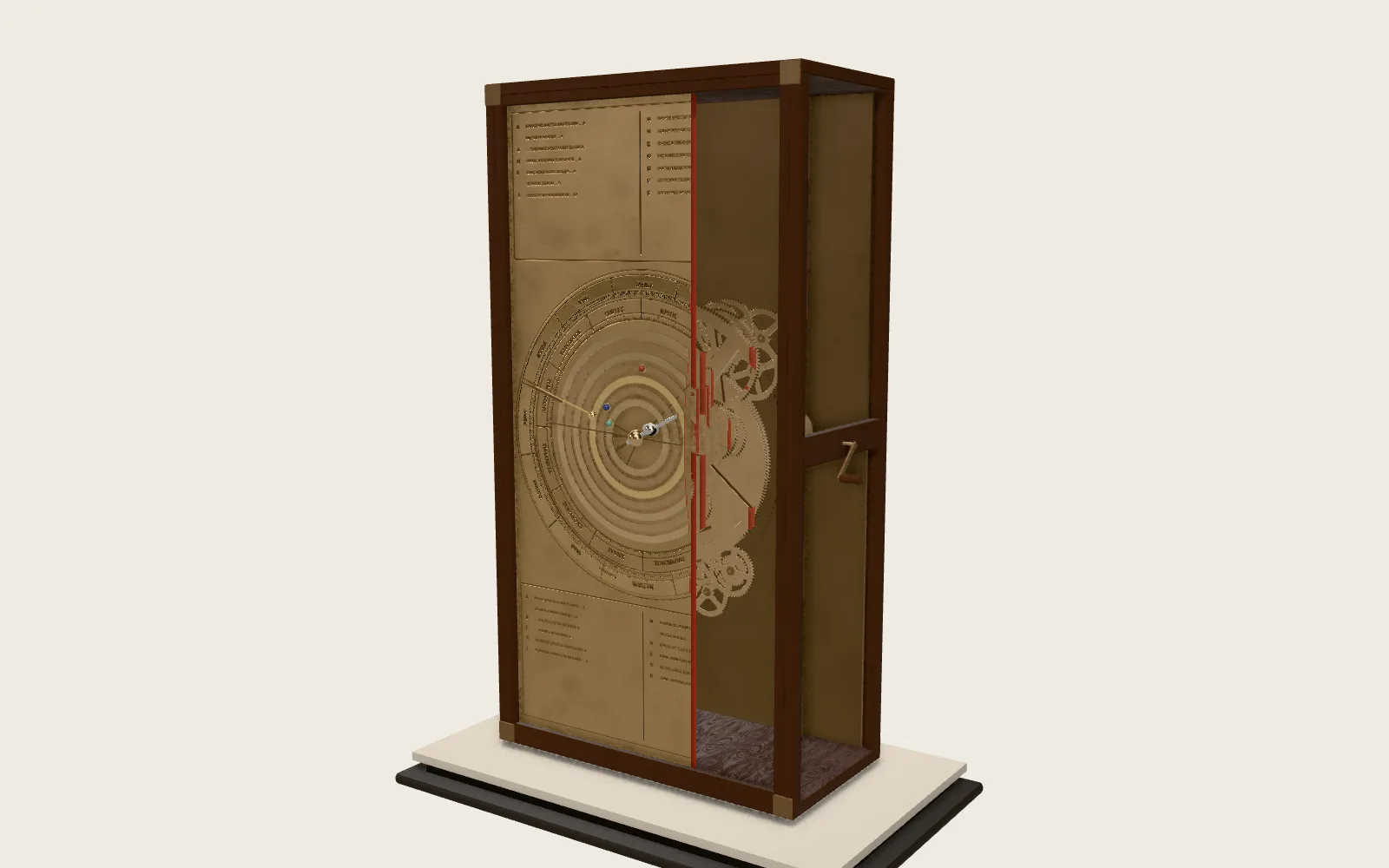
- Plate C12 The Antikythera Mechanism Classic MachinesGoing further A box of bronze gears from more than two thousand years ago: turn the crank, and the Sun, the Moon, its phase, the calendar and the eclipse cycles all move on together. Open →
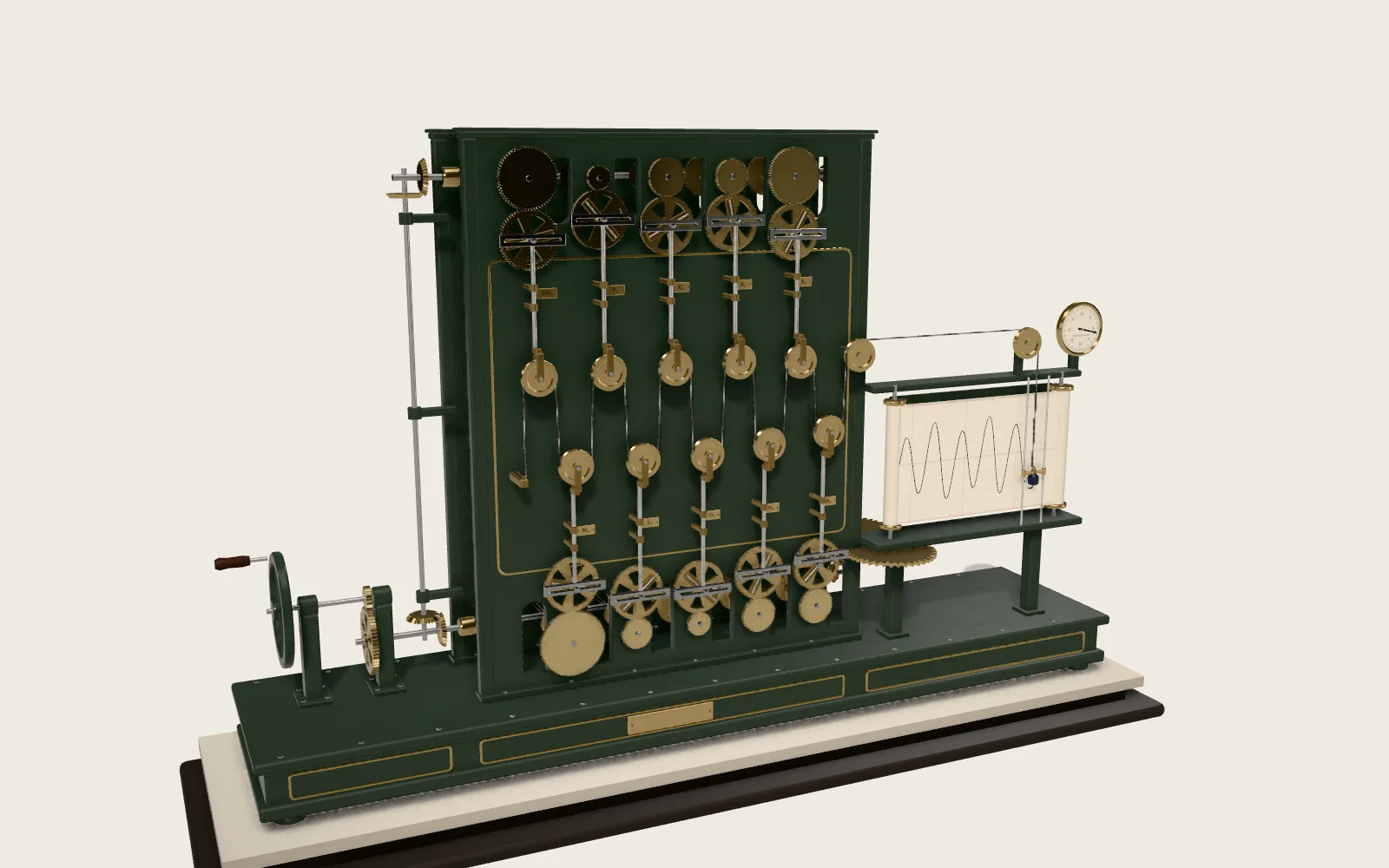
- Plate C13 The Tide-Predicting Machine Classic MachinesGoing further A row of cranks, one wire and a pen: Kelvin’s machine added ten cosines together and drew a year of a port’s tides in four hours. Open →
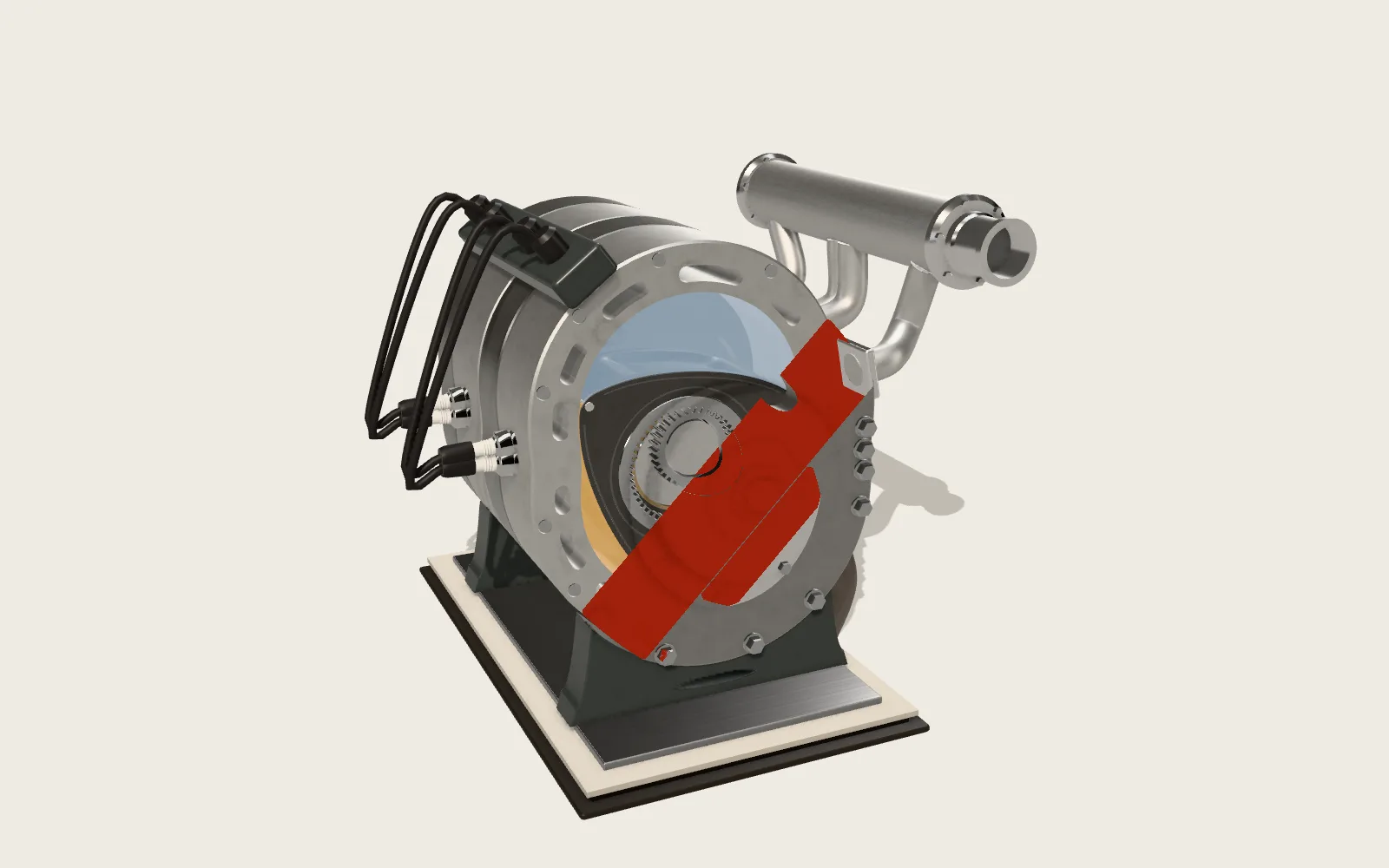
- Plate C14 The Wankel Rotary Engine Classic MachinesGoing further A three-sided rotor goes round inside a waisted bore: three chambers work through the four strokes at once, with no pistons going up and down and no valves. Open →
- Plate C15 The Mark I Perceptron Classic MachinesGoing further A machine that learned letters from examples: four hundred photocells to see, 512 randomly wired units in between, and motor-driven potentiometers to remember. Open →