The Antikythera Mechanism
In 1901 a corroded lump of bronze came up from an ancient wreck off southern Greece. Inside it is the earliest geared calculator known. It was made around the second century BC, it holds astronomical cycles in its tooth counts, and a turn of its crank works out, for any day, where the Sun and Moon stand, the phase of the Moon, the month of the calendar and the eclipses that may come. The model follows the reconstruction published by the UCL research team in 2021: a wooden case, bronze plates and gears, the zodiac and the display of the Cosmos at the front and two spiral dials at the back.
Scroll
A Lump of Bronze from the Sea
In 1900 sponge divers found an ancient wreck on the seabed off the island of Antikythera; the ship had sunk in the first century BC. In 1900 and 1901 bronze and marble statues, glassware and a corroded lump of bronze and wood came up. In 1902, at the National Archaeological Museum in Athens, someone noticed a gearwheel in it.
Today it is 82 fragments, about a third of the original. The largest, Fragment A, holds 27 gears; Fragments B, C and D hold one each: thirty in all. X-ray tomography in 2005 showed the teeth and arbors inside the fragments and read thousands of Greek letters engraved on the plates.
Cycles That Don’t Line Up
Greek cities ran their calendars by the Moon. Twelve lunar months fall about 11 days short of a year, so every two or three years an extra month went in. 235 lunar months are almost exactly 19 years: the Metonic cycle, with seven extra months in nineteen years.
Eclipses have a cycle too. After 223 lunar months the Sun, the Moon and the nodes of the Moon’s orbit come back to nearly the same places: the Saros. Babylonian astronomers had long used cycles like this to predict eclipses.
This machine turns those cycles into gear ratios. One crank moves the date, the Sun and Moon along the zodiac, the Moon’s phase, the month of the calendar and the eclipses forward together.
Turning Time
A crank in the side of the case (the original is lost) turns a1, a 48-tooth crown gear, which drives b1, the largest gear, with four spokes. One turn of b1 is one year. At this ratio one turn of the crank is about 78 days.
b1 carries the date pointer at the front across two scales. The inner is the zodiac, twelve signs of 30 degrees. The outer is the Egyptian calendar, twelve months of 30 days and five extra days. The outer ring can be turned back a day every four years, so a year on the machine is 365¼ days.
Tooth Counts Are Periods
A 64-tooth pinion on b1’s arbor drives 38 teeth; 48 on that arbor drive 24; 127 drive 32: 64/38 × 48/24 × 127/32 = 254/19. When b1 turns 19 times, the Moon’s arbor turns 254 times: the number of times the Moon goes round the Earth against the stars in 19 years.
254 less 19 is 235, the number of new moons in 19 years. The calendar pointer at the back takes another train: 64/38 × 53/96 × 15/53 = 5/19, five turns in 19 years, 47 cells a turn, 235 in all.
The big wheels take their tooth counts straight from the cycles: 127 is half of 254, and e3 in the Saros train has 223. Both are prime, so neither can be made up from smaller gears.
The Moon’s train: 64/38 × 48/24 × 127/32 = 254/19
The Moon Speeds Up and Slows Down
Against the stars the Moon moves about 12 to 15 degrees a day, faster when it is near the Earth and slower when far. Two 50-tooth gears show this. k1 carries a pin that runs in a slot in k2, and their axes are about a millimetre apart. k1 turns evenly, the pin slides to and fro in the slot, and k2 runs now ahead, now behind.
The pair rides on e3, the 223-tooth wheel, which turns once in 8.88 years and carries the fast point round with it, as the long axis of the Moon’s orbit turns once in about 8.85 years. It is Hipparchos’ lunar theory of the second century BC, in gears.
The Moon Ball
On the Moon pointer sits a ball about 6 mm across, half pale and half black. The difference between the turning of the Moon and of the Sun turns it: when the Moon catches up with the Sun the black half faces out, new moon; opposite the Sun, the pale half, full moon.
Fragment C still holds the ball, its housing and a small gear that drove it.
Two Spirals on the Back
At the top of the back is the 19-year calendar: a spiral of five turns divided into 235 cells, one a month. A slider on the end of the pointer runs in the spiral groove and steps out a turn at the end of each round. The cells carry month names of a Corinthian calendar. Inside are two small dials: one turns in four years and names the Panhellenic games of each year (Isthmia, Olympia, Nemea, Pythia and two lesser games); the other turns in 76 years, four Metonic cycles.
Below is the Saros dial: four turns, 223 cells. In a month with an eclipse the cell carries Σ (the Moon: a lunar eclipse) or Η (the Sun: a solar eclipse), with the hour by day or night. 51 such glyphs are reconstructed on the dial.
A Saros is about eight hours more than a whole number of days, so each round’s eclipses come eight hours later. The small dial inside has three sectors: add nothing, add 8 hours, add 16 hours; after three Saros, 54 years, it is back where it began.
The Planets: Evidence and Reconstruction
An inscription on the back cover describes the front: rings that make up a Cosmos, the planets marked by little spheres, the Sun a “little golden sphere” with a “ray” and a pointer, in the order Moon, Mercury, Venus, Sun, Mars, Jupiter, Saturn. On the front cover the Venus section gives 462 and the Saturn section 442: 289 synodic cycles of Venus in 462 years, 427 of Saturn in 442.
The four spokes of b1 carry holes, flat seats and broken pillars, and Fragment D holds a 63-tooth gear fixed to a disc: there was once gearing riding on b1. But not one of the gears that drove the planets survives. The 2021 reconstruction fits the Sun and five planets into 34 gears from those two periods and these traces; the periods for Mercury, Mars and Jupiter are derived, and the “Dragon Hand” for the Moon’s nodes is entirely a hypothesis.
Taken Apart
The wooden case is about 34 × 18 × 9 cm, itself an estimate. The front plate carries the zodiac, the Egyptian calendar and the Cosmos; the back plate the two spiral dials. Between them are b1 and the trains layered behind it, for the Moon, the calendar and the Saros; in front of b1, the reconstructed planetary gearing.
In the 2021 reconstruction the machine has 69 gears, 34 in front of b1 and 35 behind. The teeth are triangular and made by hand, with a module of about 0.5 mm: about 1.6 mm from one tooth to the next.
What It Changed
No surviving object for at least a thousand years afterwards has gearing this complex. Cicero wrote of instruments by Archimedes and by Posidonios that showed the motions of the Sun, Moon and planets; this lump of bronze shows that such things could be made.
It turned the numbers of astronomy into tooth counts: a cycle is the ratio of a gear train, a theory is a pair of gears on offset axes. Much is still open: whether the outer scale is the 365-day Egyptian calendar or, as a 2024 statistical study of its holes suggests, a 354-day lunar one; and how accurately, with hand-made triangular teeth, it could ever have run.
Turn It Yourself
The crank, the date and every pointer are linked. Set a day, and the front and back show that day’s Sun and Moon, phase, month and eclipses; with “surviving only”, the parts lit are the ones the fragments actually hold.
Try thisSet the date to a full moon and crank on day by day: how far does the Moon pointer move in a day? About two weeks later, how far?
What the model leaves out
The tooth counts and the sizes of the surviving gears follow the 2021 paper’s measurements; the positions of the arbors are laid out from the tooth counts and radii, not placed one by one from the tomography. b1’s 223 teeth are an estimate from a broken wheel. Of the thirty surviving gears, a small 20-tooth crown gear is not drawn. Of the gearing in front of b1, only the trains whose tooth counts the paper gives (Venus, Mercury, the nodes) are drawn as such; the rest is indicative. The month cells at the back once carried month names; the model has only the divisions. The Σ and Η on the Saros dial are where mean motions put eclipses, not a copy of the original’s glyphs. The pin-and-slot offset uses Hipparchos’ ratio (about 6°), and the Sun’s uneven motion his eccentre (1/24). The pointers start from the mean positions of 1 January 205 BC and then move by the gear ratios alone, so the further from that day, the more they drift from the real sky, as the original’s would. The outlines of the fragments are indicative.
Some common misreadings
It cannot be programmed; it works out fixed gear ratios, so it is not a computer in the modern sense. It shows an Earth-centred sky, with the planets’ uneven motions modelled by epicyclic gearing. The planetary display is attested by inscriptions, but its gears are all reconstructed, and the 2021 scheme is the one that best fits the evidence so far. When it was made is also an estimate (around the second century BC), and its starting date is disputed.
Sources
- Freeth et al., A Model of the Cosmos in the ancient Greek Antikythera Mechanism (Scientific Reports 11:5821, 2021): 82 fragments, 30 gears, 27 in Fragment A, the 63-tooth gear in D, 462 and 442, 69 gears, the ring display
- The same, Supplementary Information: tooth counts, pitch radii and modules of the surviving gears (Table S8), the Venus, Mercury and nodes trains, planetary parameters, the Egyptian calendar ring
- Freeth et al., Decoding the ancient Greek astronomical calculator known as the Antikythera Mechanism (Nature 444, 2006): the gear trains, the pin and slot, eclipse prediction
- Freeth, Jones, Steele and Bitsakis, Calendars with Olympiad display and eclipse prediction on the Antikythera Mechanism (Nature 454, 2008): the five-turn Metonic spiral, Corinthian month names, the games dial, the four-turn Saros dial
- Freeth, Eclipse prediction on the ancient Greek astronomical calculating machine known as the Antikythera Mechanism (PLoS ONE, 2014): 51 eclipse glyphs, Σ and Η, an epoch in 205 BC
- Pakzad et al., Improved X-ray computed tomography reconstruction of the largest fragment of the Antikythera Mechanism (PLoS ONE, 2018)
- Woan and Bayley, An improved calendar ring hole-count for the Antikythera mechanism (Horological Journal, July 2024): 354 or 355 holes
- Institute for the Study of the Ancient World, New York University: The Antikythera Mechanism
- National Archaeological Museum, Athens: The Antikythera Mechanism
The text, pictures and models on this page are licensed CC BY-NC 4.0: free to use and adapt for teaching and other non-commercial purposes, with credit to world.lapla.si. Third-party material listed above keeps its own licence.
Follow the question
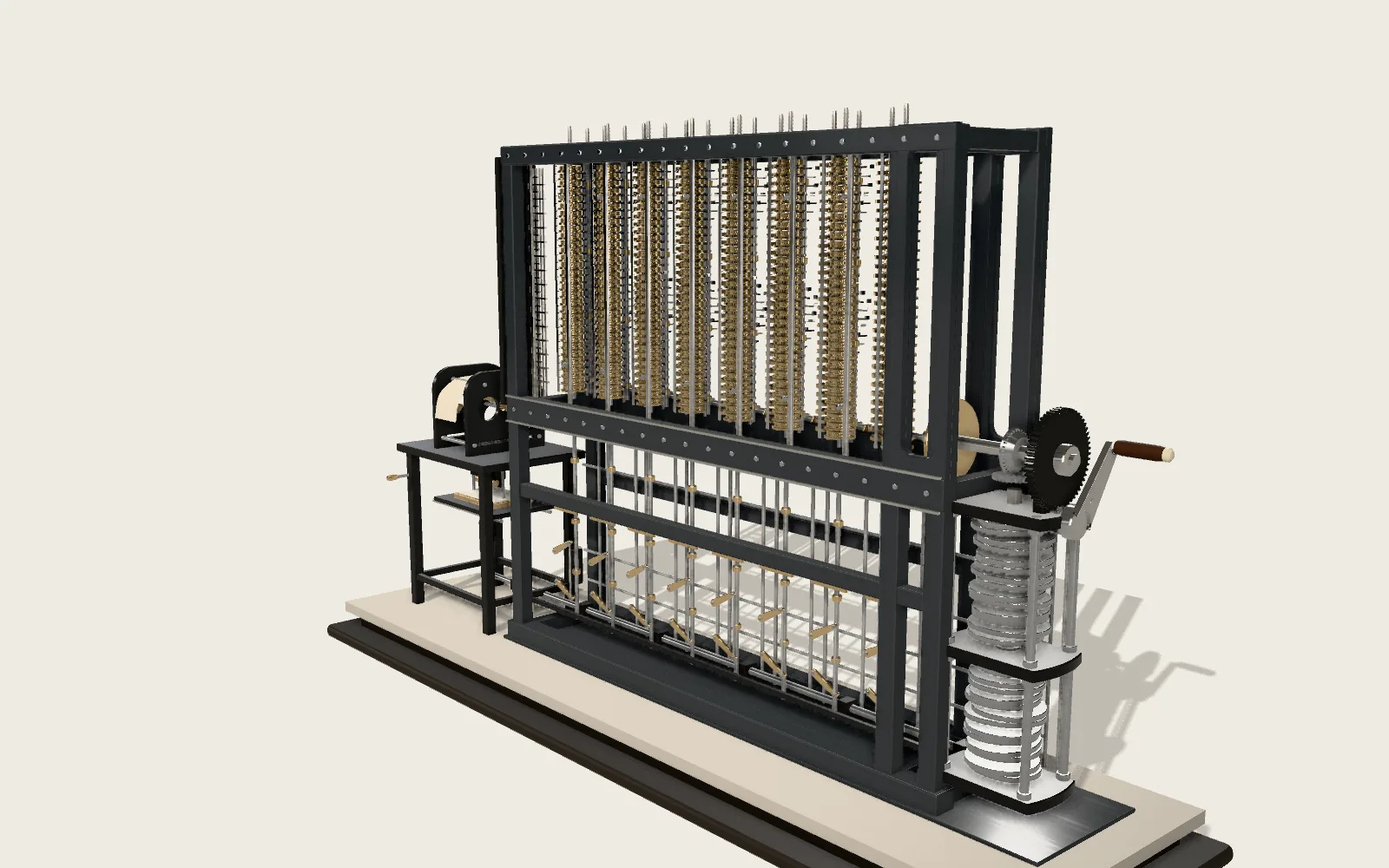 Plate C10The Difference EngineTables of polynomials by addition alone: eight columns of figure wheels, each added to the next, one result per turn of the cycle, printed straight away.
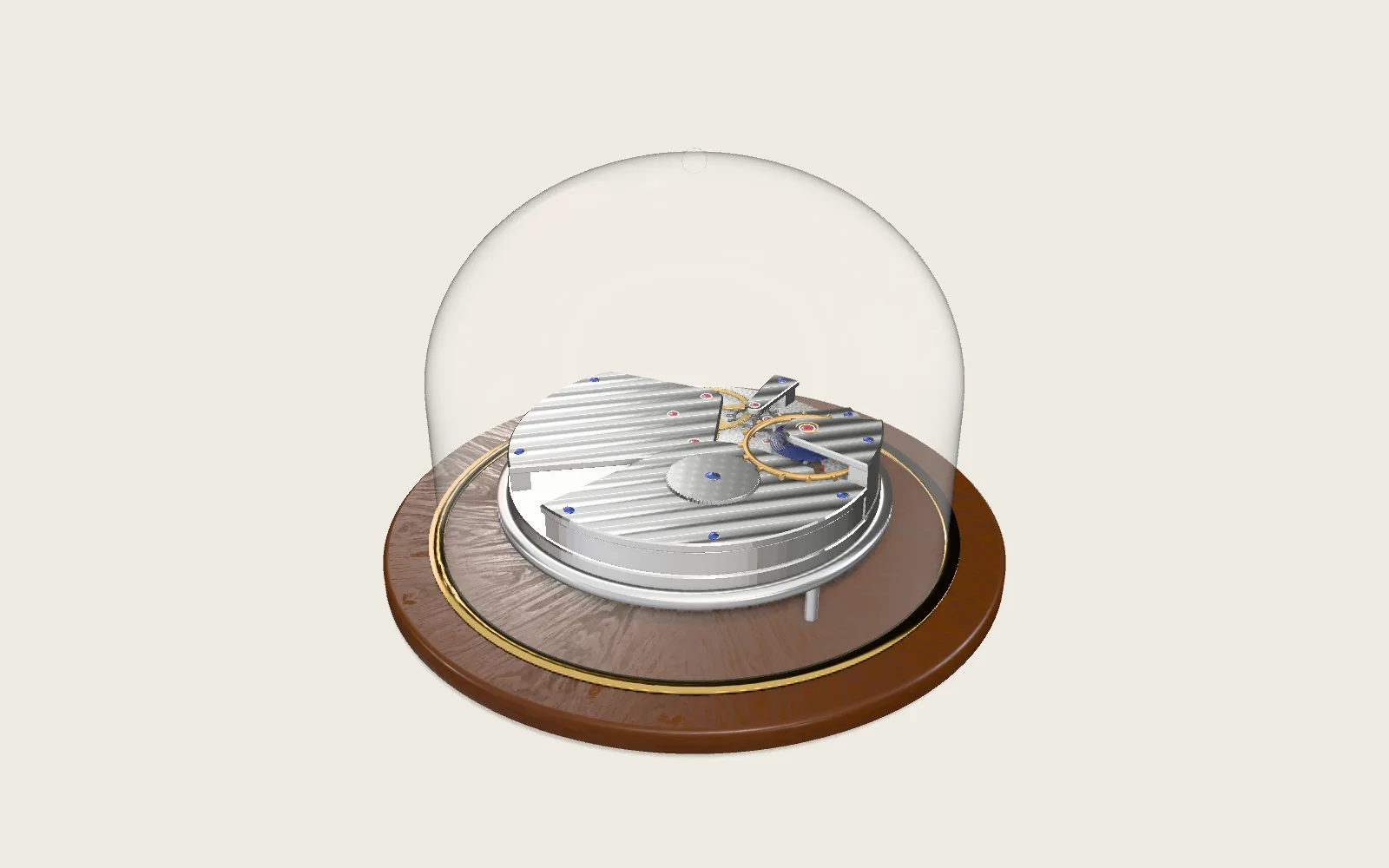 Plate C03The EscapementA spring or a falling weight, let go, gives up its energy all at once. The escapement lets it out in equal small steps, one per beat, timed by something that swings back and forth.
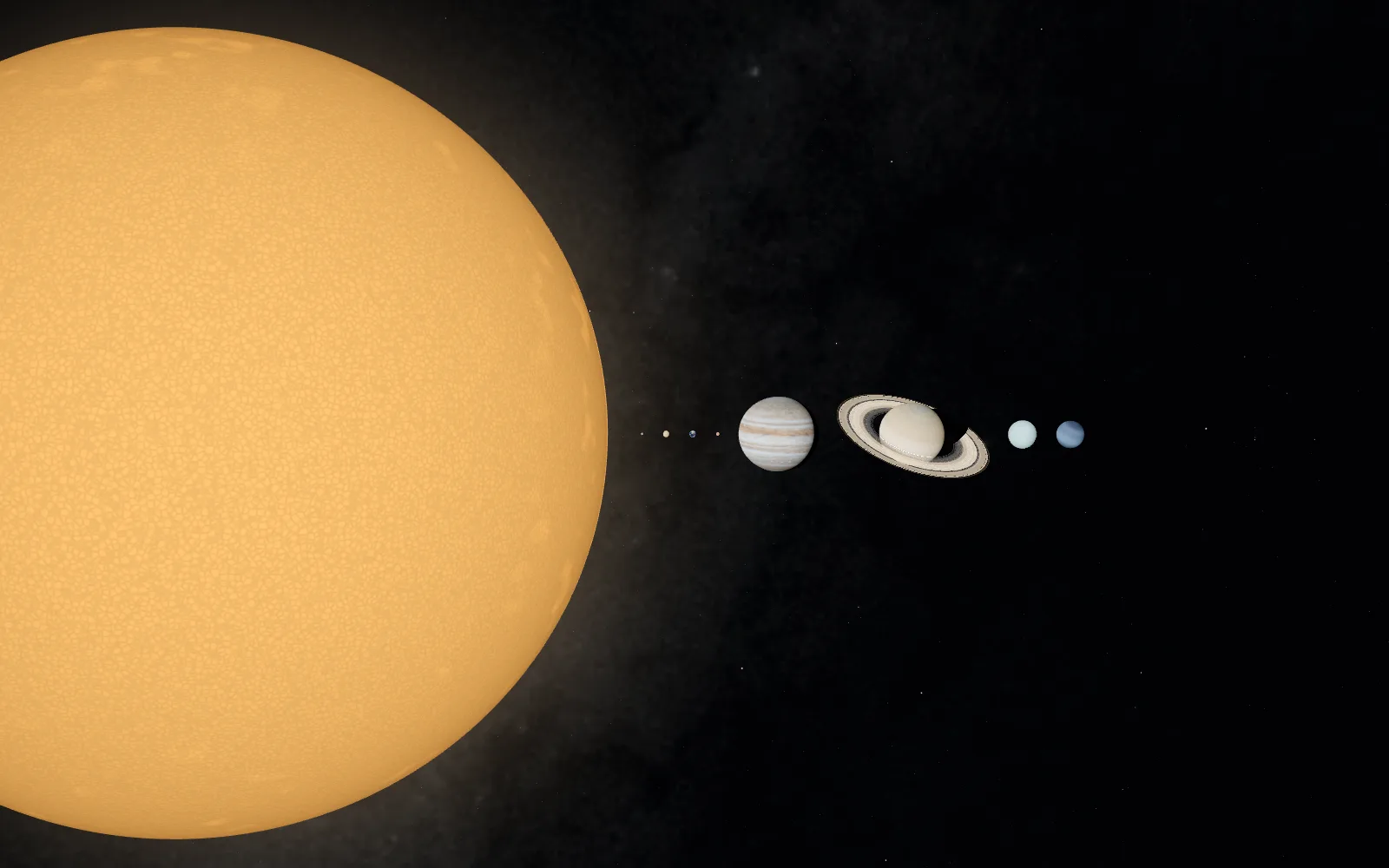 Plate 24The Solar System TodayWhere are the eight planets right now? The farther from the Sun, the slower they go, and the longer a lap takes.
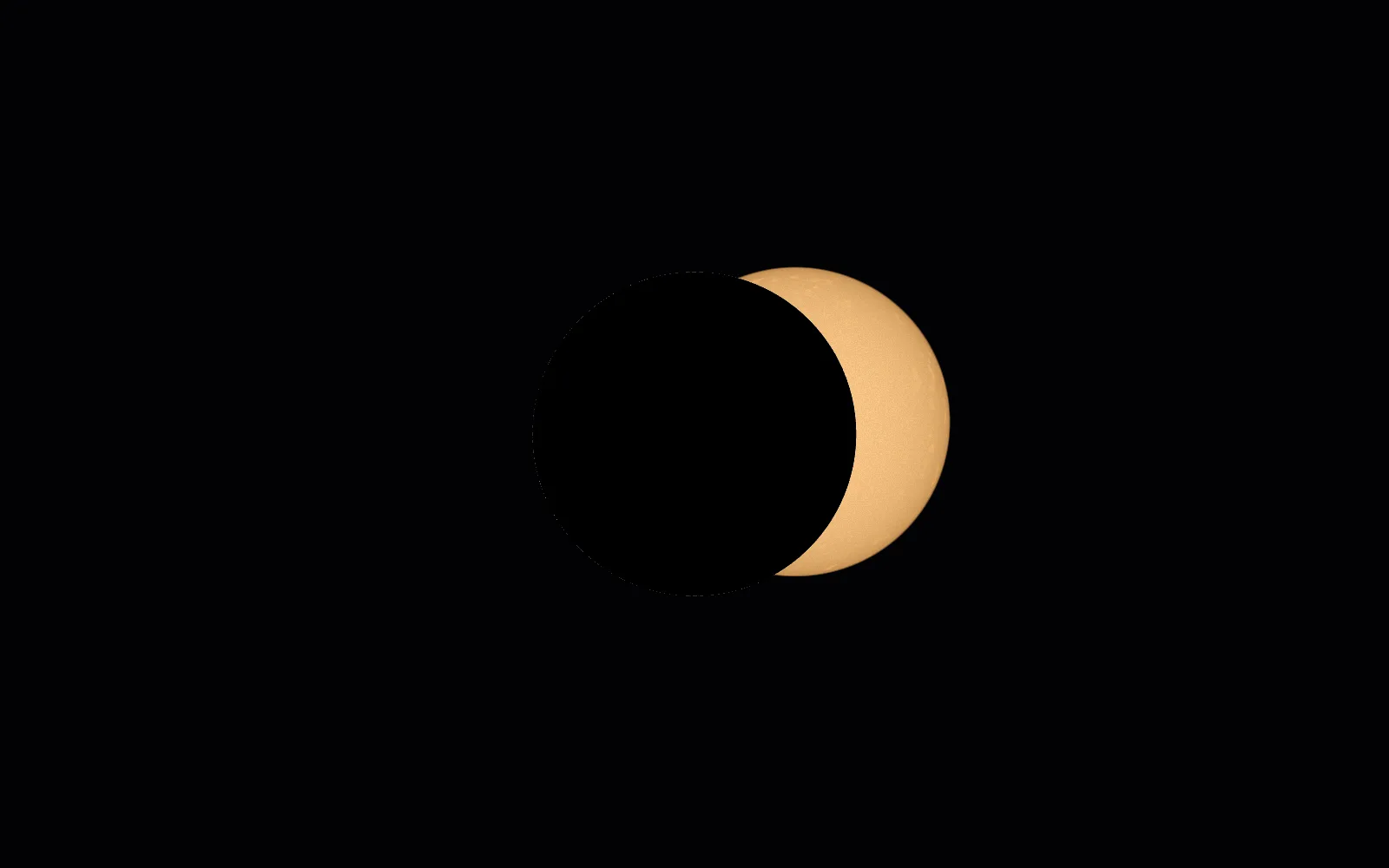 Plate 03The Shadow of the MoonThe Sun is about 400 times wider than the Moon, and about 400 times farther away. That coincidence lets day turn to night for a few minutes.