Plate 03 · Space
The Shadow of the Moon
The Sun is about 400 times wider than the Moon, and about 400 times farther away. That coincidence lets day turn to night for a few minutes. The Earth and Moon below are drawn to scale, in size and in distance.
Scroll
A Coincidence
The Sun is about 400 times wider than the Moon, but it is also about 400 times farther away. So in the sky, the two look almost exactly the same size.
When the Moon passes precisely between the Earth and the Sun, it can cover the Sun’s disk completely, leaving only a pale halo we never otherwise see: the corona, the Sun’s outermost atmosphere.
The sky seen from the ground · the Moon and Sun at their true apparent sizes
A Shadow in Two Parts
The Moon trails a shadow. The dark core, the umbra, covers only a small patch of the Earth; around it, the half-light of the penumbra spreads thousands of kilometers wide.
Stand in the umbra and you see a total eclipse. Stand in the penumbra and the Sun loses only a bite: a partial eclipse.
Earth and Moon to scale · the Sun is too large and too far to fit
Why Not Every Month
Once a month, the Moon passes between the Earth and the Sun. If every pass made an eclipse, eclipses would be nothing special.
There isn’t one every month because the Moon’s orbit around the Earth is not in the same plane as the Earth’s orbit around the Sun; it is tilted by about five degrees. Most months, the Moon’s shadow slips past above or below the Earth and falls into space.
Two Chances a Year
The two orbits meet along a line. Only when that line points roughly toward the Sun does a new moon sit in the plane of the Earth’s orbit, so that its shadow can reach us. That happens about every six months, in windows called eclipse seasons.
Time is running fast here. Count them: in a year, how many times does the shadow land on the Earth?
August 12, 2026
On this day the Moon’s umbra touched down in the Arctic Ocean north of Siberia, passed close to the North Pole, crossed Greenland and Iceland, and left the Earth in the Spanish evening, about an hour and a half later.
It swept out a narrow band. In Reykjavík, Iceland’s capital, totality lasted about a minute; in Oviedo, in northern Spain, nearly two. Outside the band, people saw only a partial eclipse.
Eclipse predictions by Fred Espenak, NASA’s GSFC
August 2, 2027
The next total eclipse will begin over the Atlantic and cross southern Spain, North Africa, Egypt and the Arabian Peninsula before ending over the Indian Ocean. Totality will be longest near Luxor, in Egypt: about 6 minutes 23 seconds.
Except during those minutes of totality, look at the Sun only through proper eclipse glasses. Even a thin crescent of Sun is bright enough to damage your eyes.
Eclipse predictions by Fred Espenak, NASA’s GSFC
A Ring of Fire
The Moon’s distance from the Earth is not fixed. Near its farthest, it looks slightly smaller in the sky and cannot cover the whole Sun, leaving a bright ring around it: an annular eclipse.
Then the tip of the umbra falls short of the ground.
Your Turn
Run time forward and count the eclipses in a year. Set the tilt of the orbit to zero and see what changes. Push the Moon farther or pull it closer to switch between total and annular eclipses.
Try thisSet the tilt of the orbit to 0°: how many solar eclipses come in a year?
What the model leaves out
The Earth and Moon are to scale in size and distance; the Sun, far too large and too distant, is shown only by the direction its light comes from and a small disk in the sky. Both orbits are drawn as circles. The Moon’s changing distance and the slow turning of its orbit are kept; many smaller perturbations are not. The eclipse seasons and counts come from this simplified model and do not match real dates. The eclipses of 2026 and 2027 are computed point by point from NASA’s published Besselian elements and agree with the official predictions.
A common misreading
In a solar eclipse it is the Moon’s shadow that falls on the Earth; the Earth’s shadow falling on the Moon is a lunar eclipse. Another misreading: that a partly covered Sun is dim enough to look at. It is not. As long as any of the Sun shows, use eclipse glasses or another safe way of viewing.
Sources
- NASA: Eclipse geometry
- NASA: Types of solar eclipses, and viewing them safely
- NASA GSFC: Besselian elements, total solar eclipse of 2026 August 12
- NASA GSFC: Besselian elements, total solar eclipse of 2027 August 2
- Terrain Tiles on AWS Open Data
Data
Eclipse Predictions by Fred Espenak, NASA’s GSFC. Earth: NASA Earth Observatory, Blue Marble Next Generation, October 2004 (Reto Stöckli); city lights, NASA Earth Observatory Black Marble 2016 (Joshua Stevens, Miguel Román, Suomi NPP VIIRS); clouds, NASA Blue Marble 2002 (Reto Stöckli, NASA GSFC). Moon: NASA Scientific Visualization Studio, CGI Moon Kit (LRO LROC WAC colour mosaic; LOLA elevation). Stars: Yale Bright Star Catalogue, 5th revised edition (Hoffleit & Warren 1991), via CDS VizieR. Milky Way: NASA/Goddard Space Flight Center Scientific Visualization Studio, Deep Star Maps 2020; Gaia DR2: ESA/Gaia/DPAC. Elevation and seafloor: Terrain Tiles on AWS Open Data (Mapzen / Tilezen); global ETOPO1 terrain data U.S. National Oceanic and Atmospheric Administration; GMTED2010 and SRTM courtesy of the U.S. Geological Survey.
Follow the question
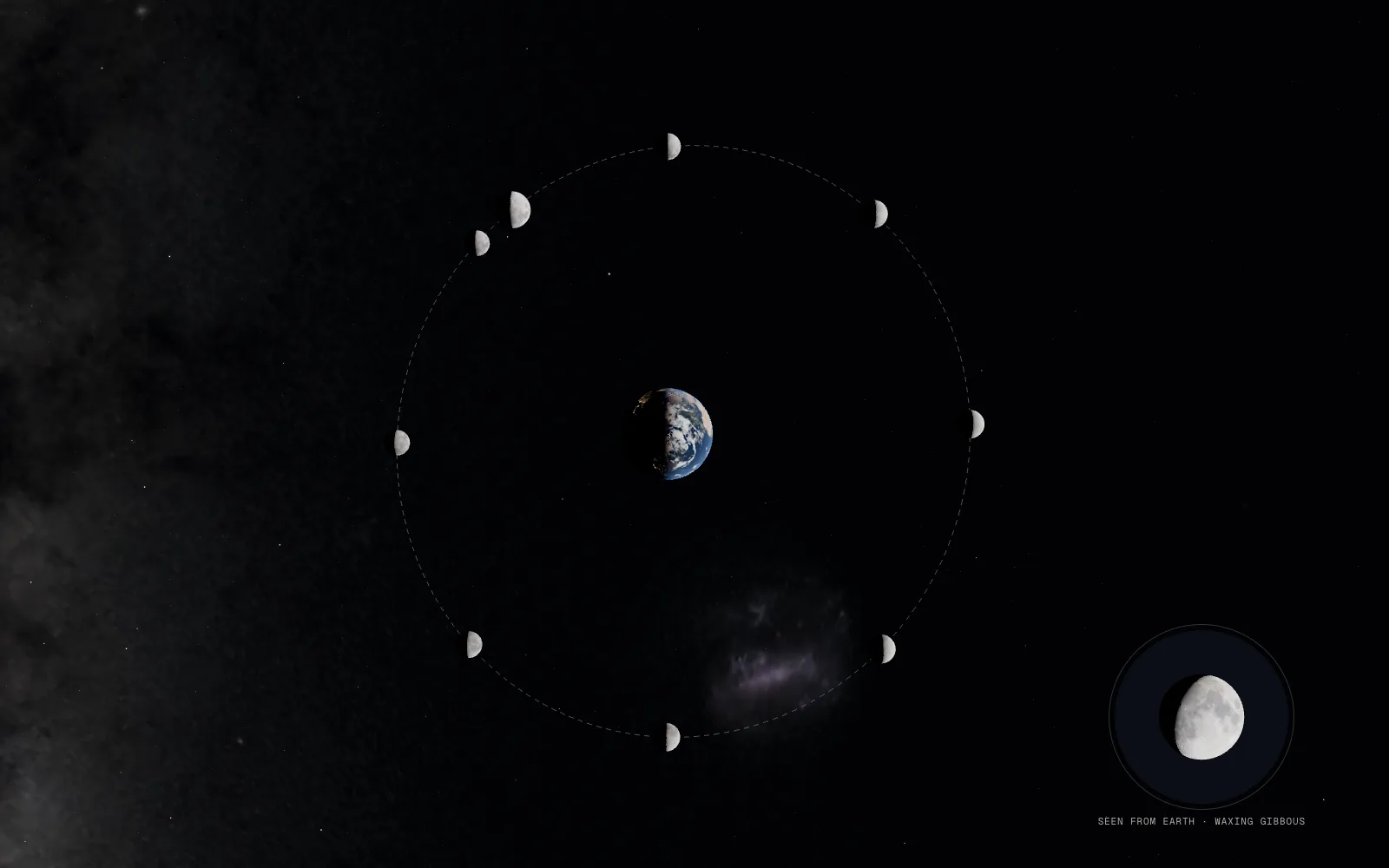 Plate 12Why the Moon Changes ShapeThe Moon never changes shape. What changes is how much of its sunlit half we can see.
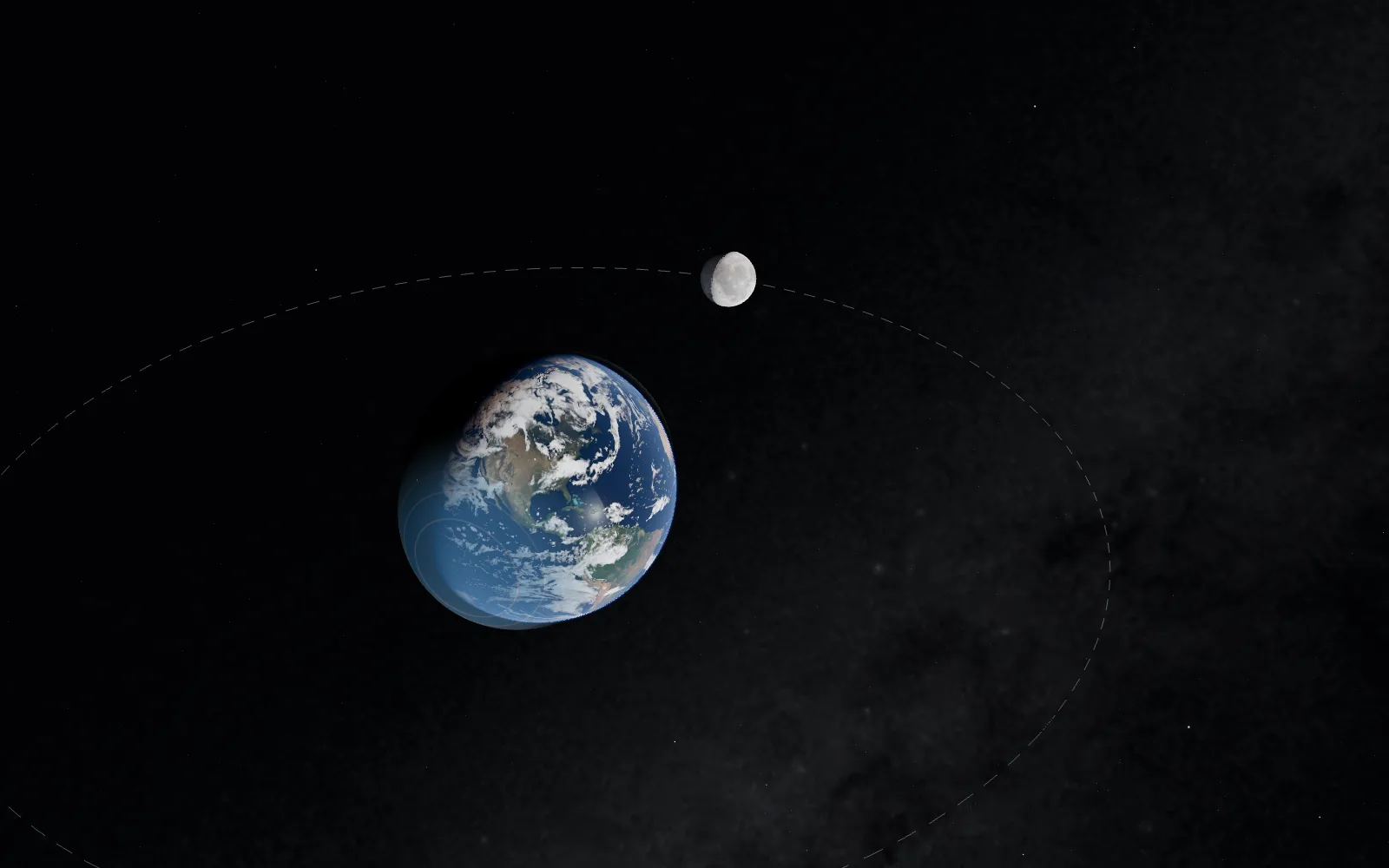 Plate 10How the Moon Moves the SeaWhy are there two high tides a day? Because the Moon pulls the near ocean toward it — and leaves the far ocean behind.