Classic Machines
Steam engines, cameras, clocks. Each is built as a model you can run and take apart.
15 plates
Plates 15
- Plate C01 Watt’s Steam Engine PowerStart here An iron vessel standing in cold water saved most of the coal; two spinning balls taught the engine its own pace. Built in Birmingham in 1788, it stands at rest in London today. Open →
- Plate C02 The SLR Camera Light & SoundStart here While you frame, a mirror behind the lens sends the light up into a prism. Press the release and the mirror lifts; two cloth curtains cross the film one after the other. Open →
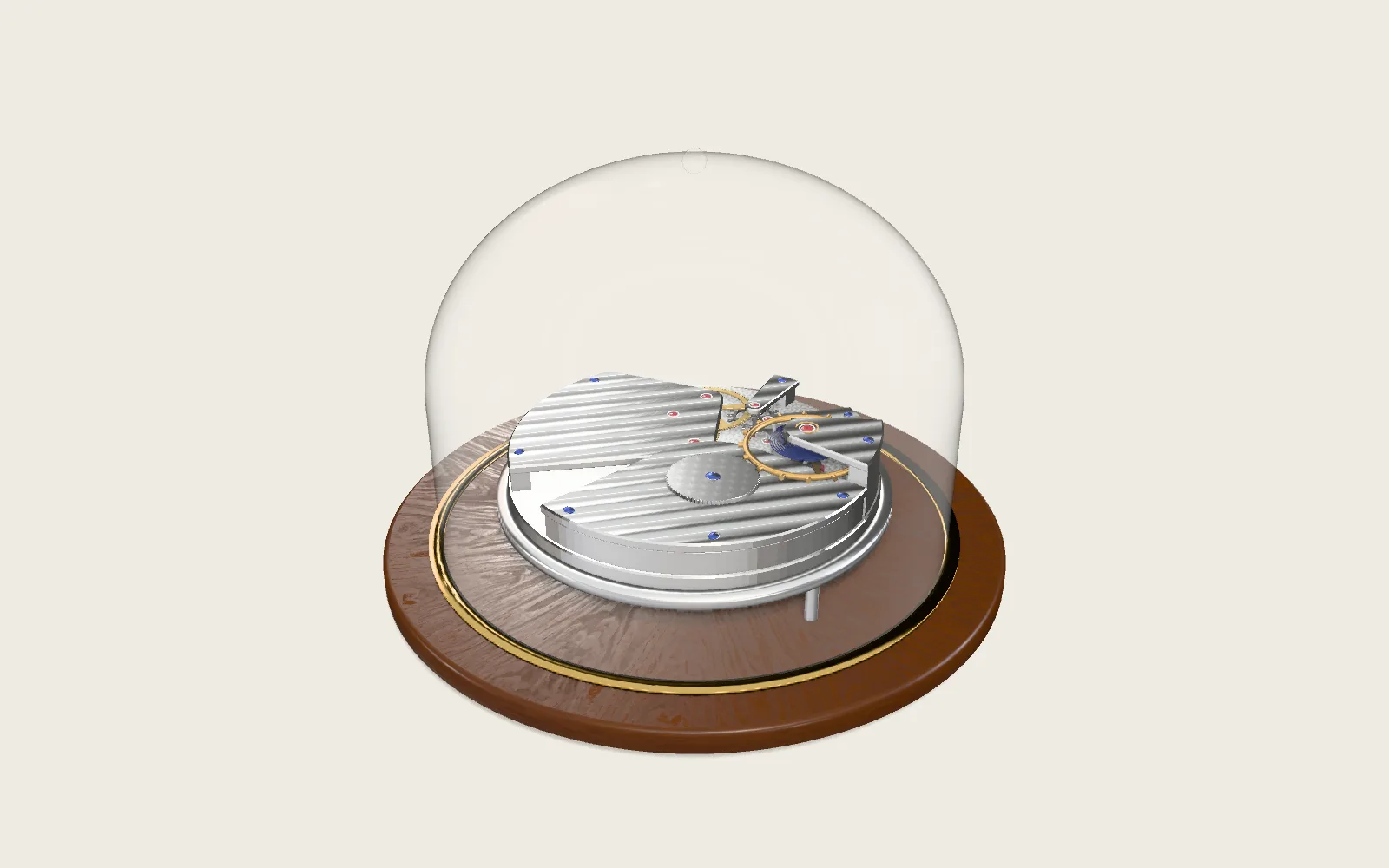
- Plate C03 The Escapement TimekeepingStart here A spring or a falling weight, let go, gives up its energy all at once. The escapement lets it out in equal small steps, one per beat, timed by something that swings back and forth. Open →
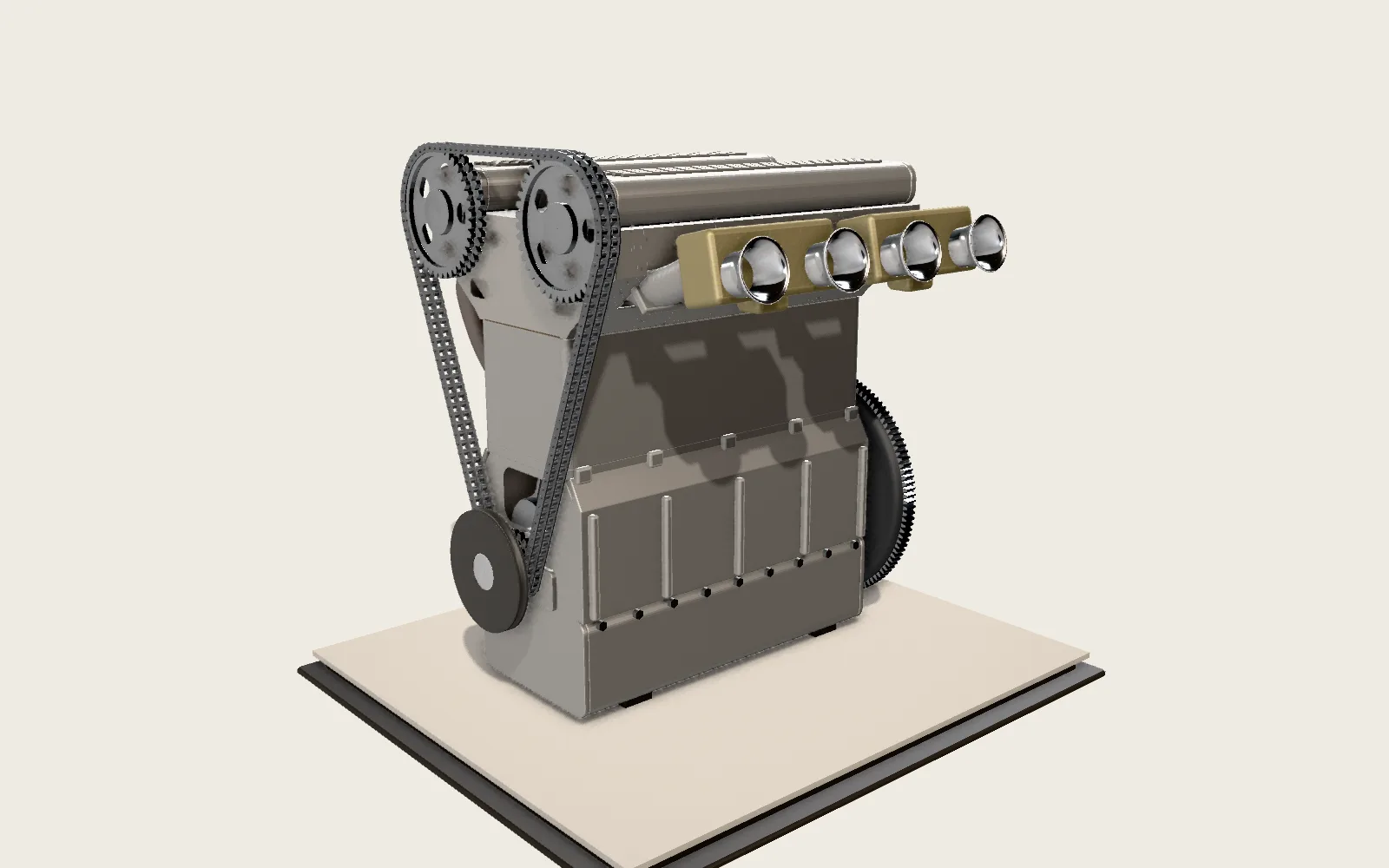
- Plate C04 The Four-Stroke Engine PowerStart here The fuel burns inside the cylinder. The piston makes four strokes and the crank turns twice; in one of them, the burning gas drives the piston down. Open →
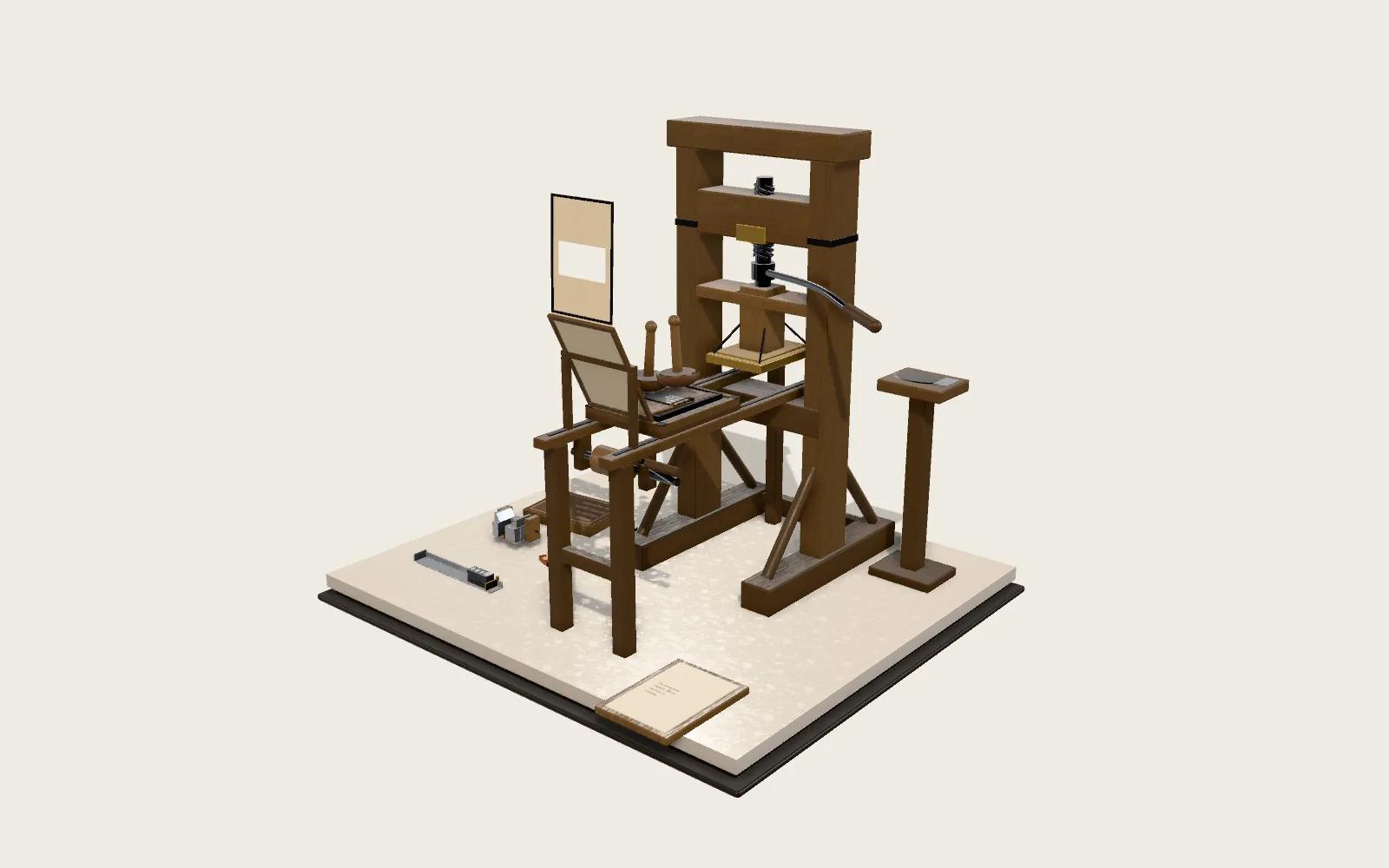
- Plate C05 The Printing Press Print & WritingStart here Metal letters set into a page, inked, covered with paper, one pull of the bar: a printed page. Mainz, about 1450. Open →
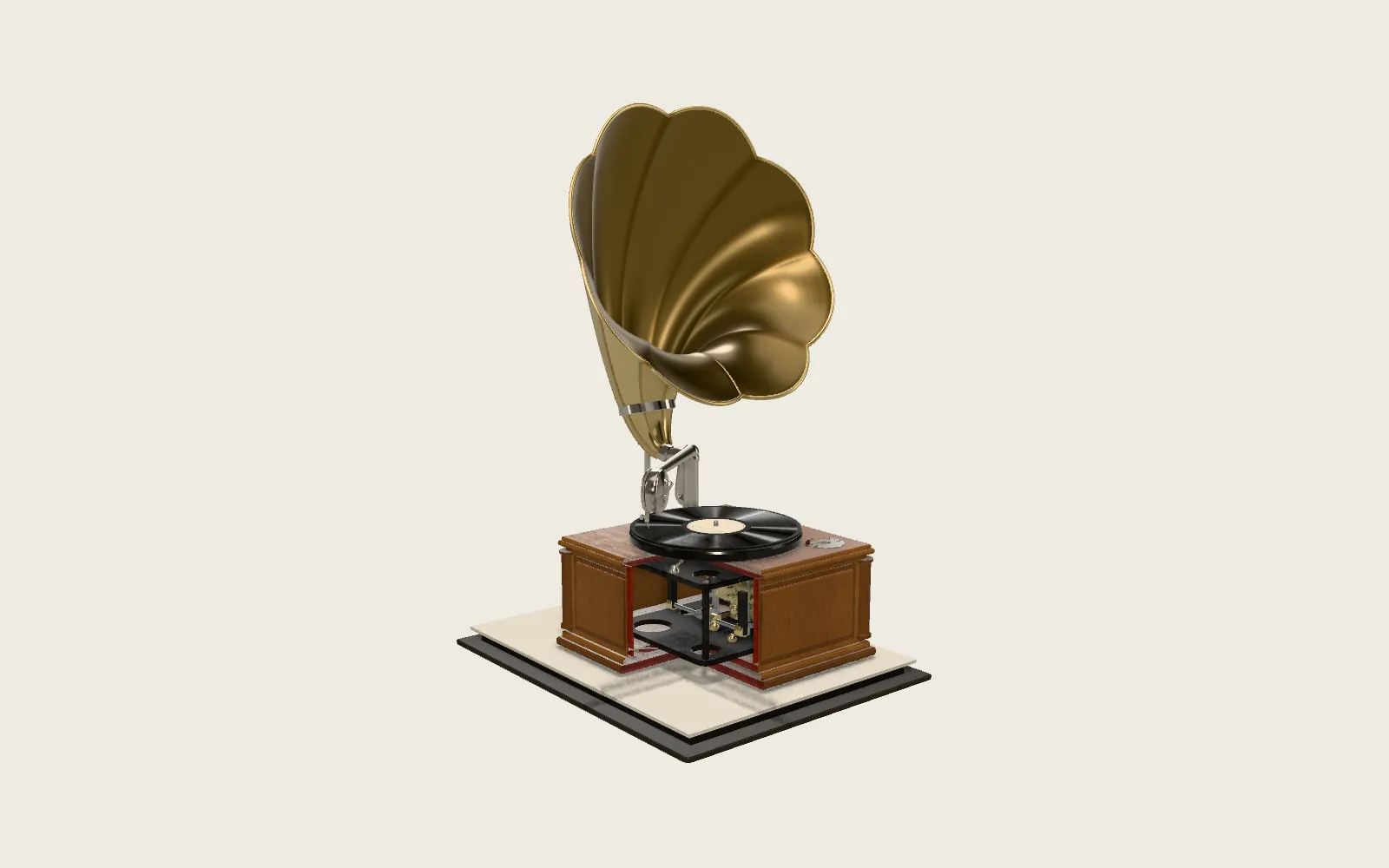
- Plate C06 The Phonograph and the Gramophone Light & SoundStart here Sound pushes a needle that cuts wiggles into a groove; a needle running back along the wiggles brings the sound back. The whole machine runs without electricity. Open →
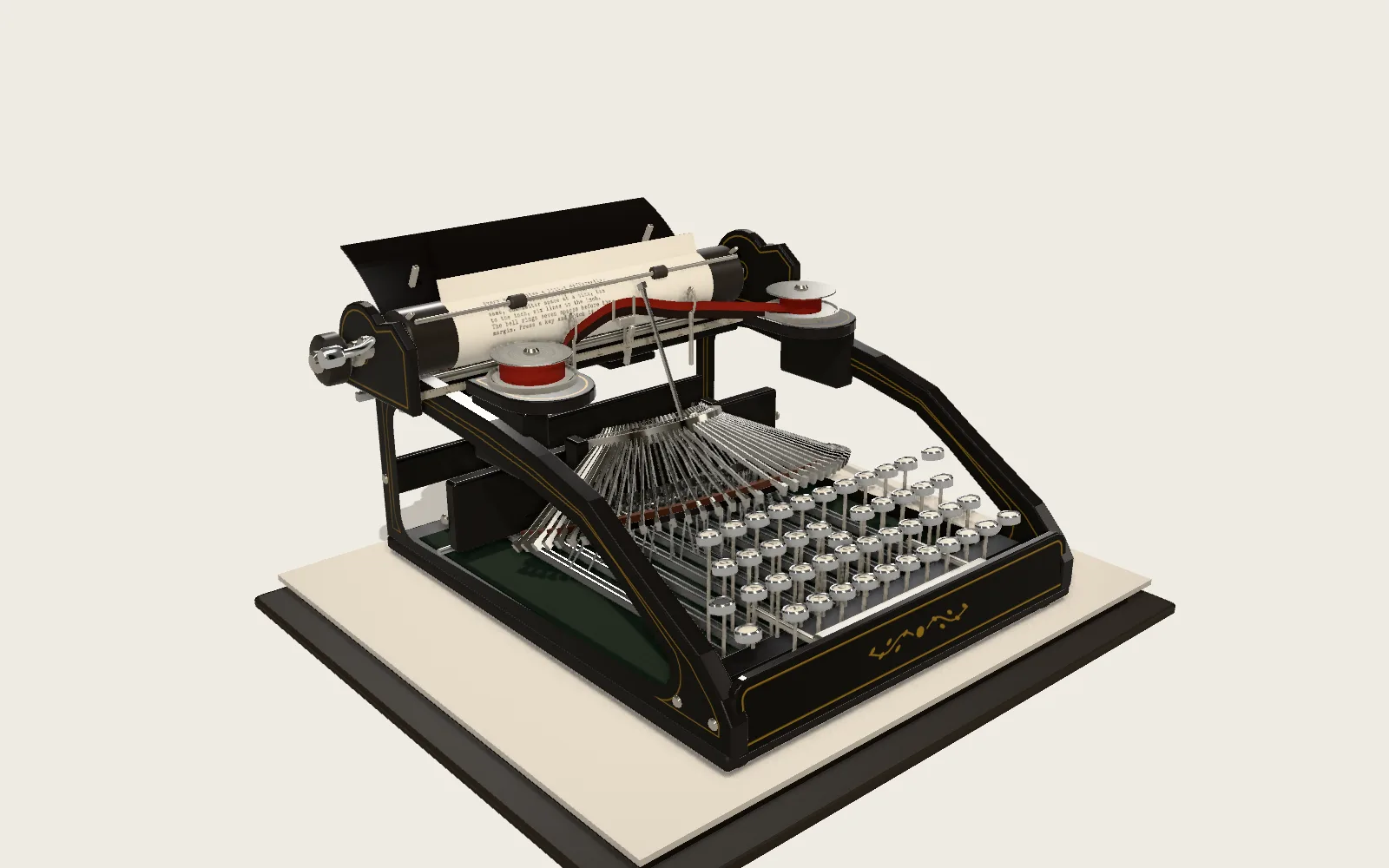
- Plate C07 The Typewriter Print & WritingStart here Press a key and a typebar swings up and strikes the paper through the ribbon; let go and the carriage steps one space to the left. Open →
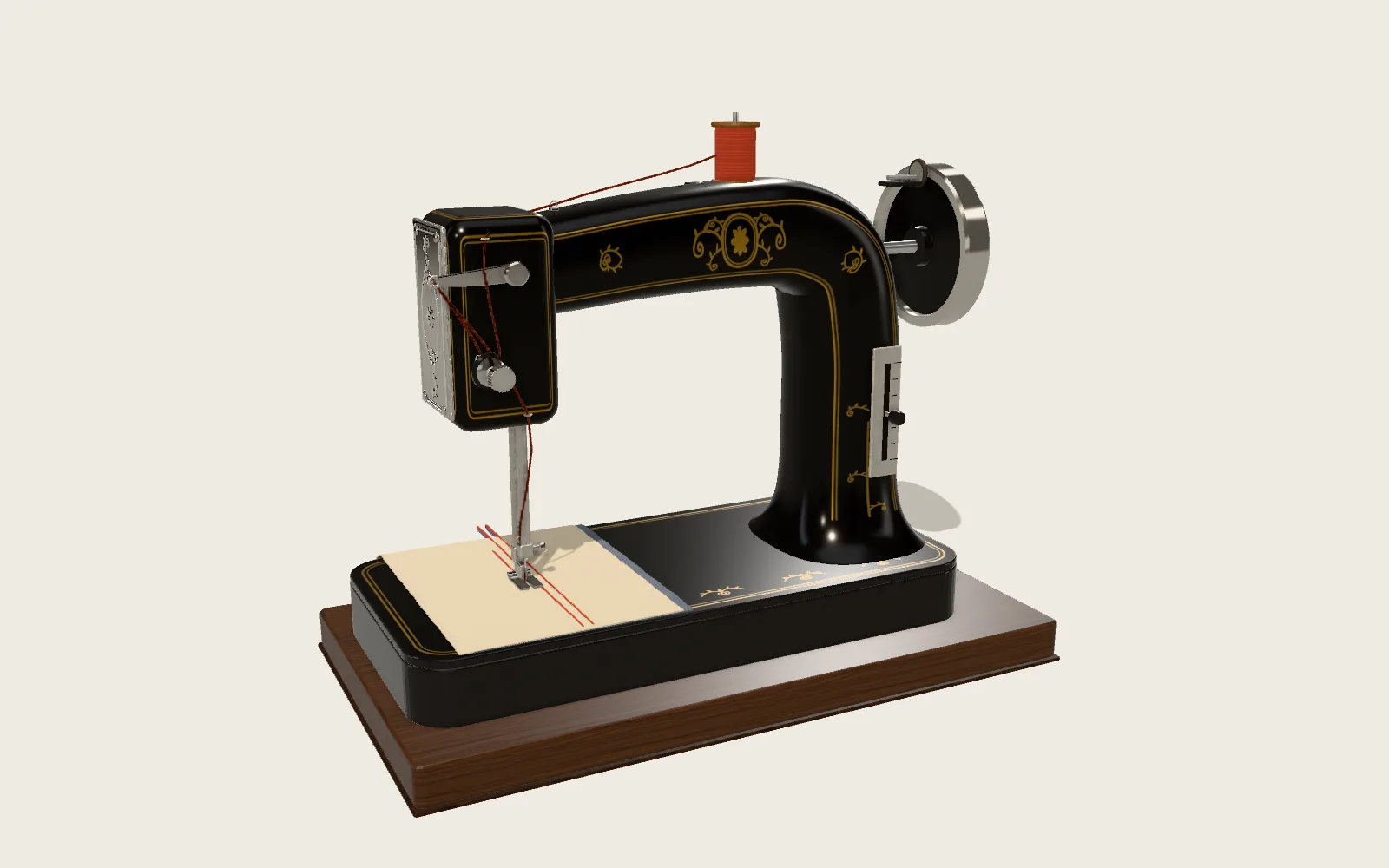
- Plate C08 The Lockstitch Sewing Machine ManufacturingStart here The needle takes a loop of thread under the cloth; the hook carries it round the bobbin case and over the lower thread, and the loop is drawn back into the cloth. One turn of the handwheel, one stitch. Open →
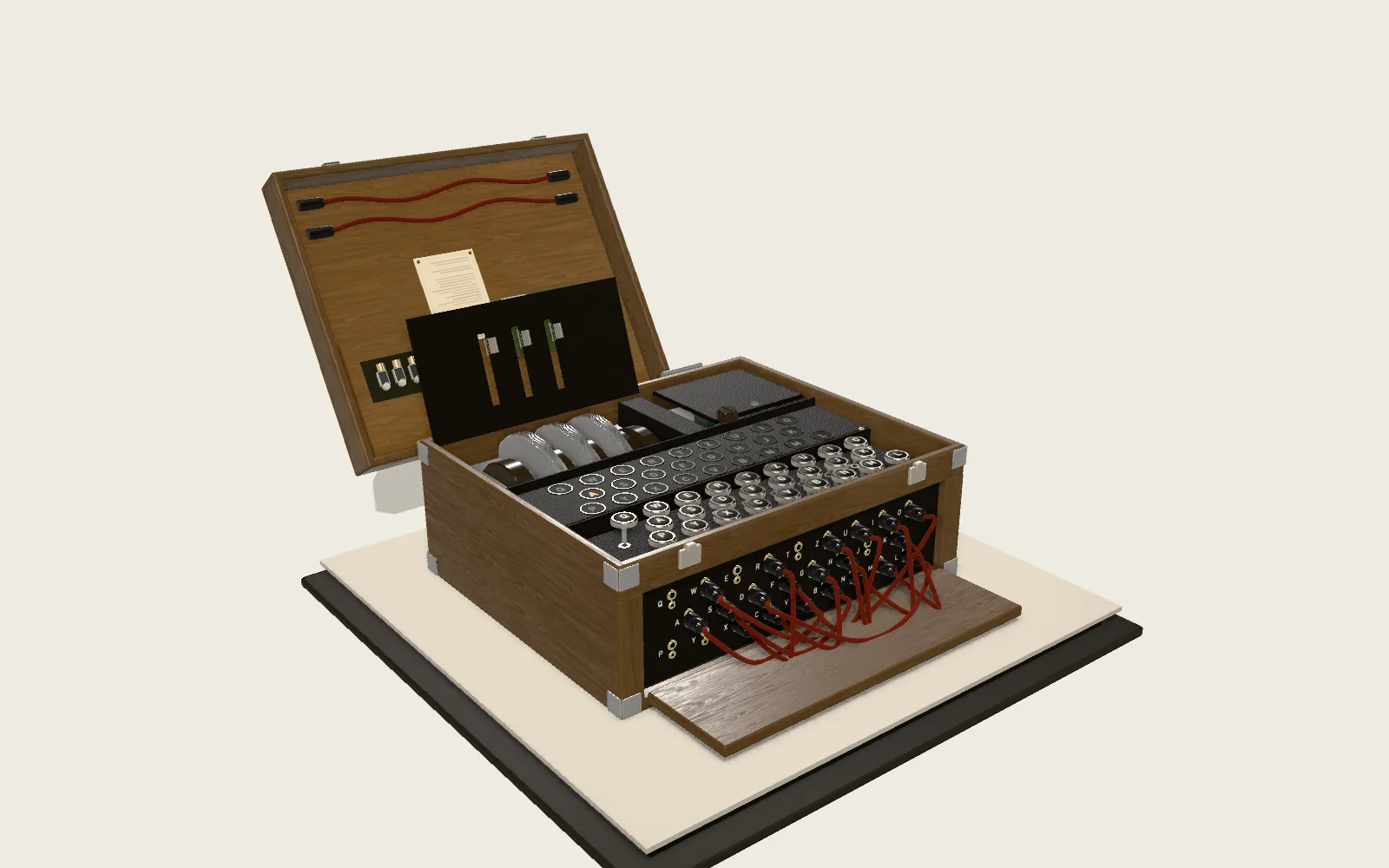
- Plate C09 The Enigma Cipher Machine InformationGoing further Press a key and the rotors step first; the current runs through the plugboard, three rotors and a reflector and back, and another letter lights up. Open →
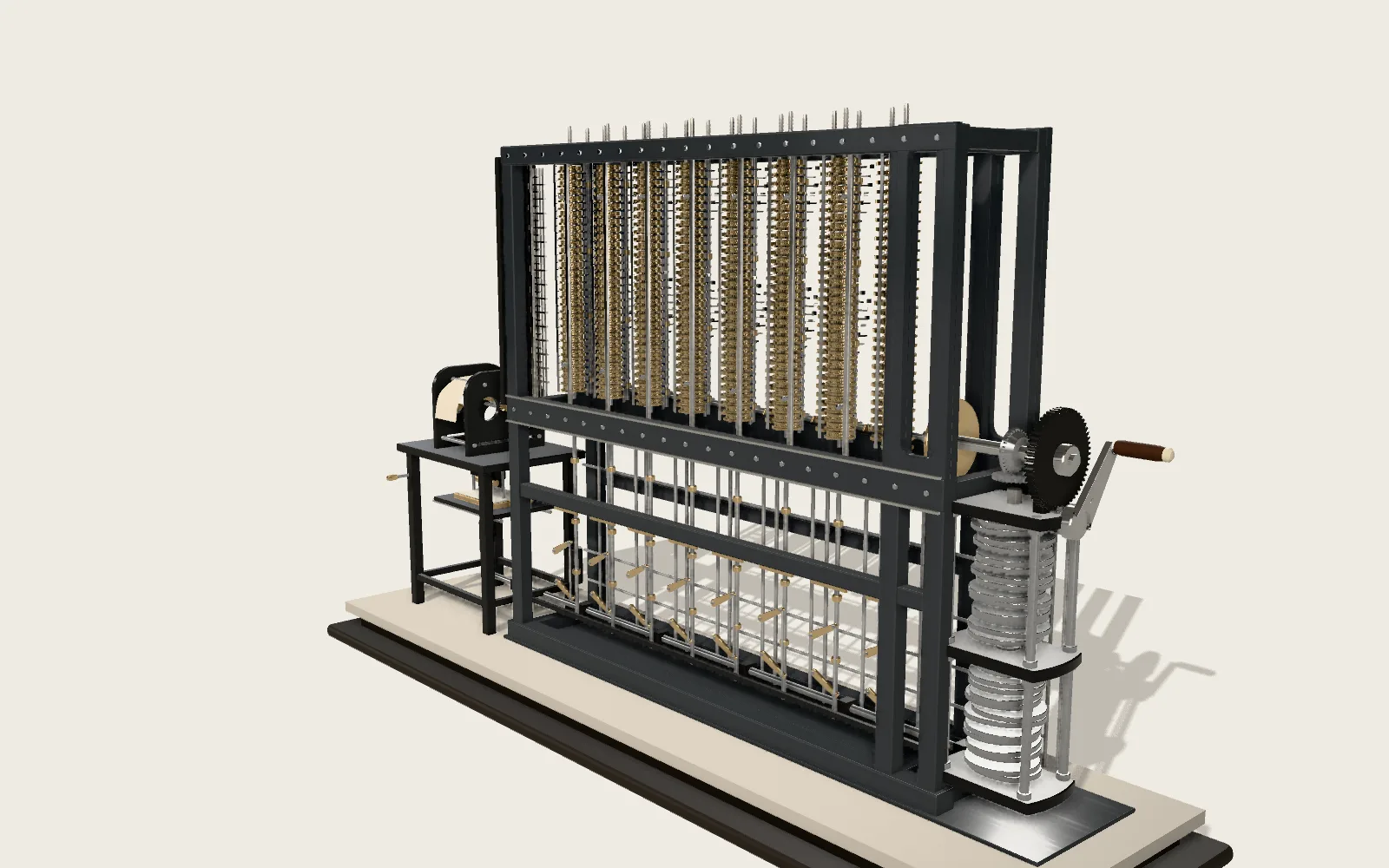
- Plate C10 The Difference Engine ComputingGoing further Tables of polynomials by addition alone: eight columns of figure wheels, each added to the next, one result per turn of the cycle, printed straight away. Open →
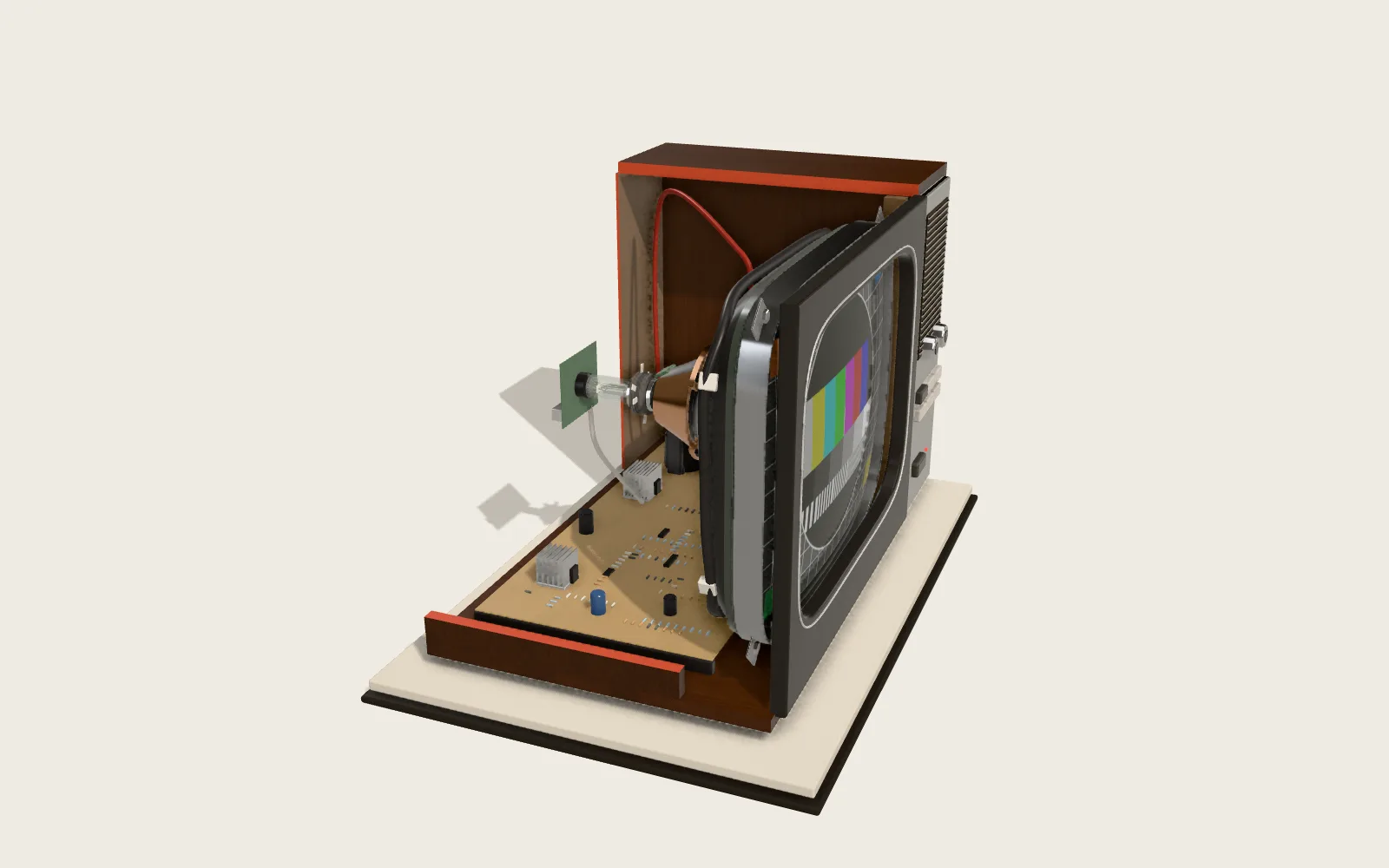
- Plate C11 The Picture Tube Light & SoundGoing further A beam of electrons in a vacuum, pushed about by magnetic fields more than fifteen thousand lines a second, paints a picture on phosphor one spot at a time. Open →
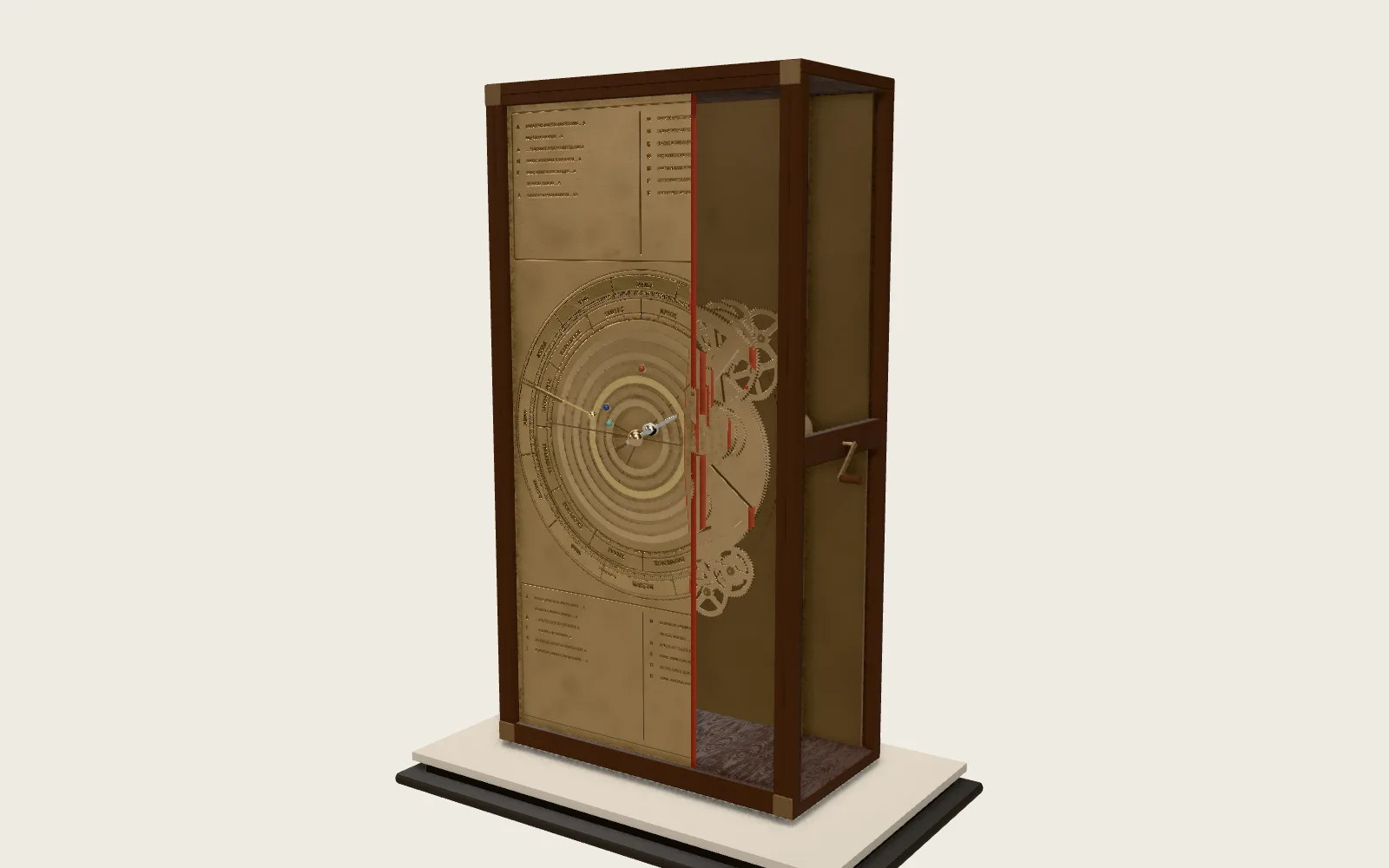
- Plate C12 The Antikythera Mechanism SkyGoing further A box of bronze gears from more than two thousand years ago: turn the crank, and the Sun, the Moon, its phase, the calendar and the eclipse cycles all move on together. Open →
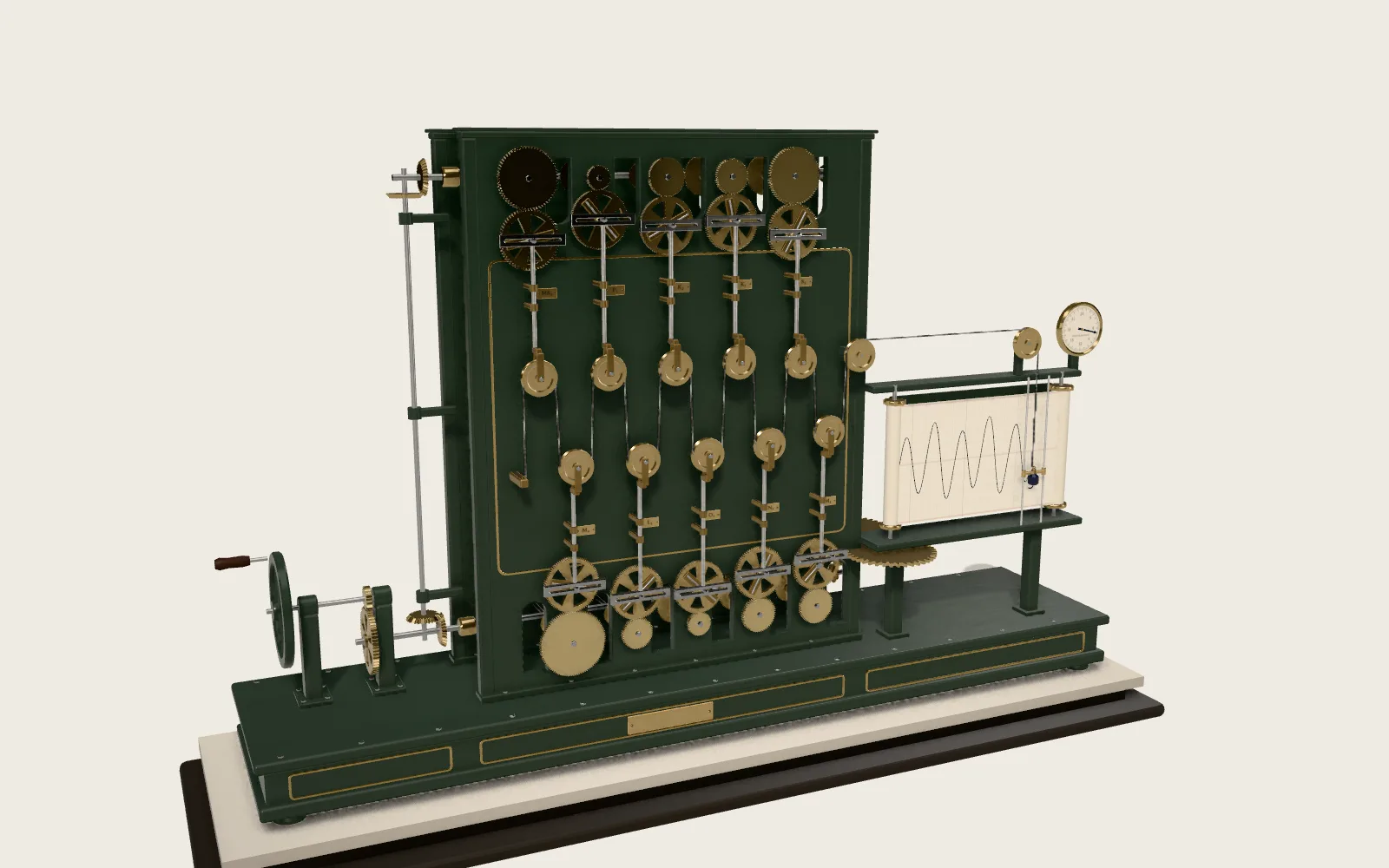
- Plate C13 The Tide-Predicting Machine ComputingGoing further A row of cranks, one wire and a pen: Kelvin’s machine added ten cosines together and drew a year of a port’s tides in four hours. Open →
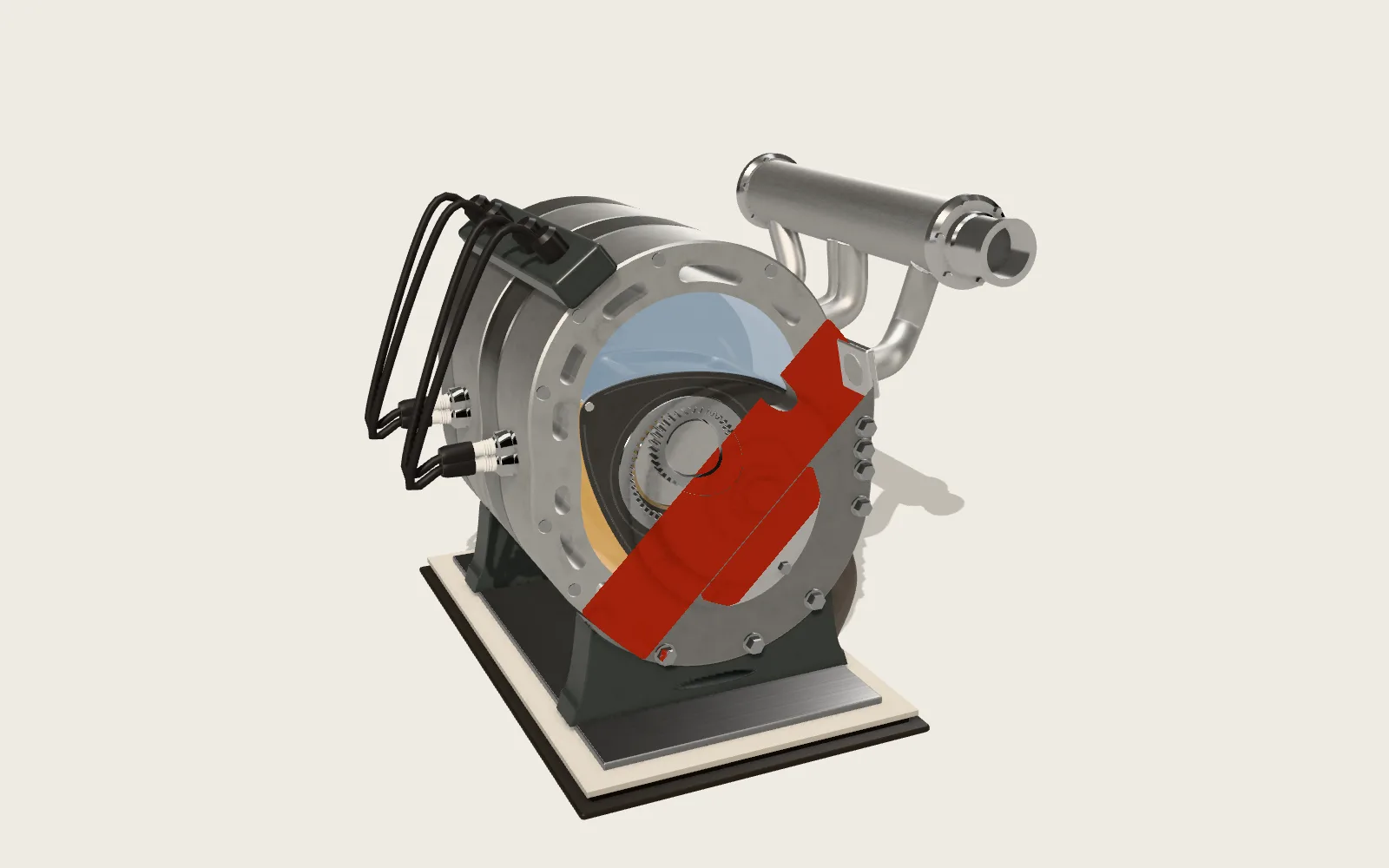
- Plate C14 The Wankel Rotary Engine PowerGoing further A three-sided rotor goes round inside a waisted bore: three chambers work through the four strokes at once, with no pistons going up and down and no valves. Open →
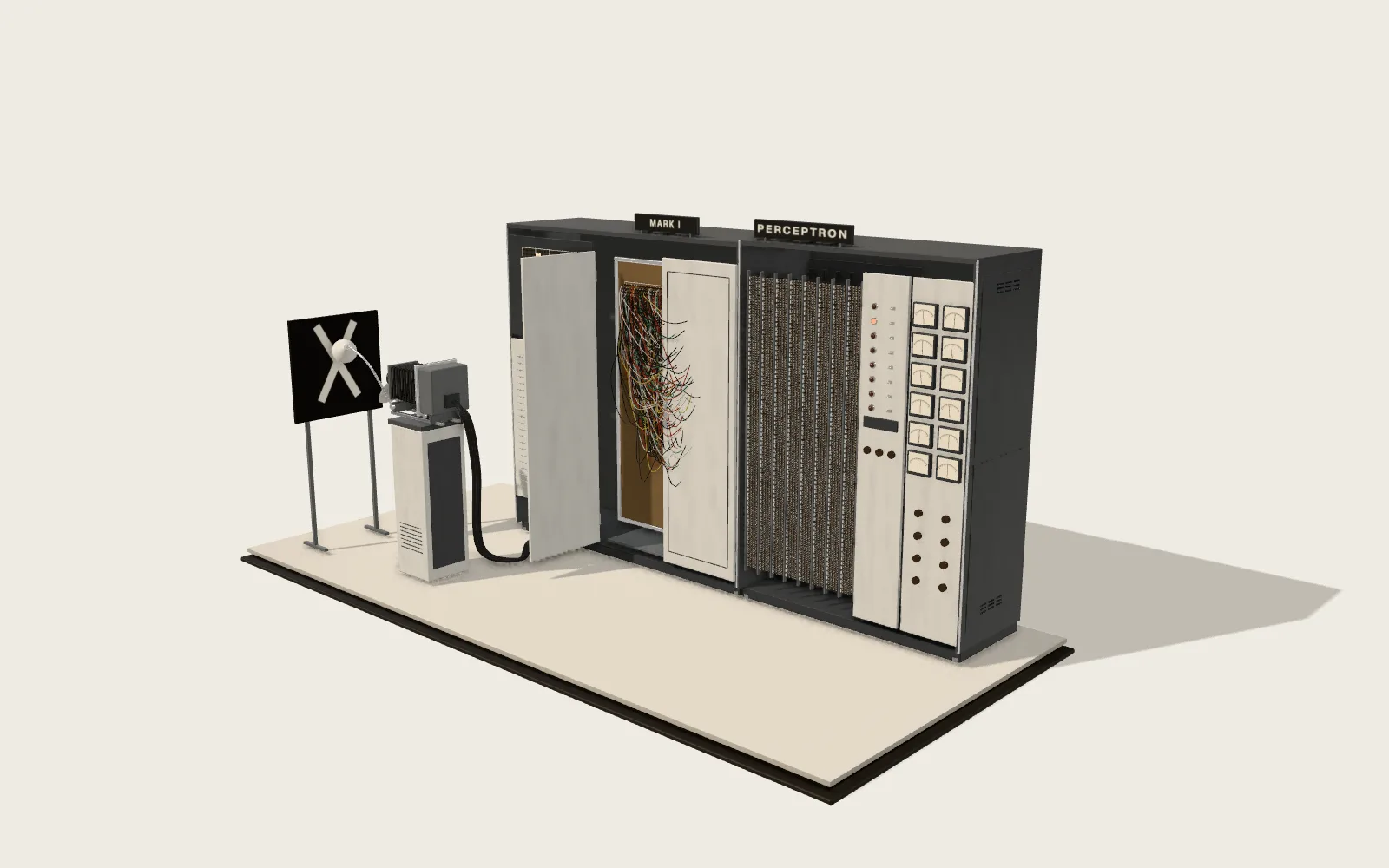
- Plate C15 The Mark I Perceptron ComputingGoing further A machine that learned letters from examples: four hundred photocells to see, 512 randomly wired units in between, and motor-driven potentiometers to remember. Open →