Energy, Flight & Sensing
A fusion machine and a jet engine, and the instruments that sense gravitational waves, distant galaxies and the people on the road.
8 plates
Plates 8
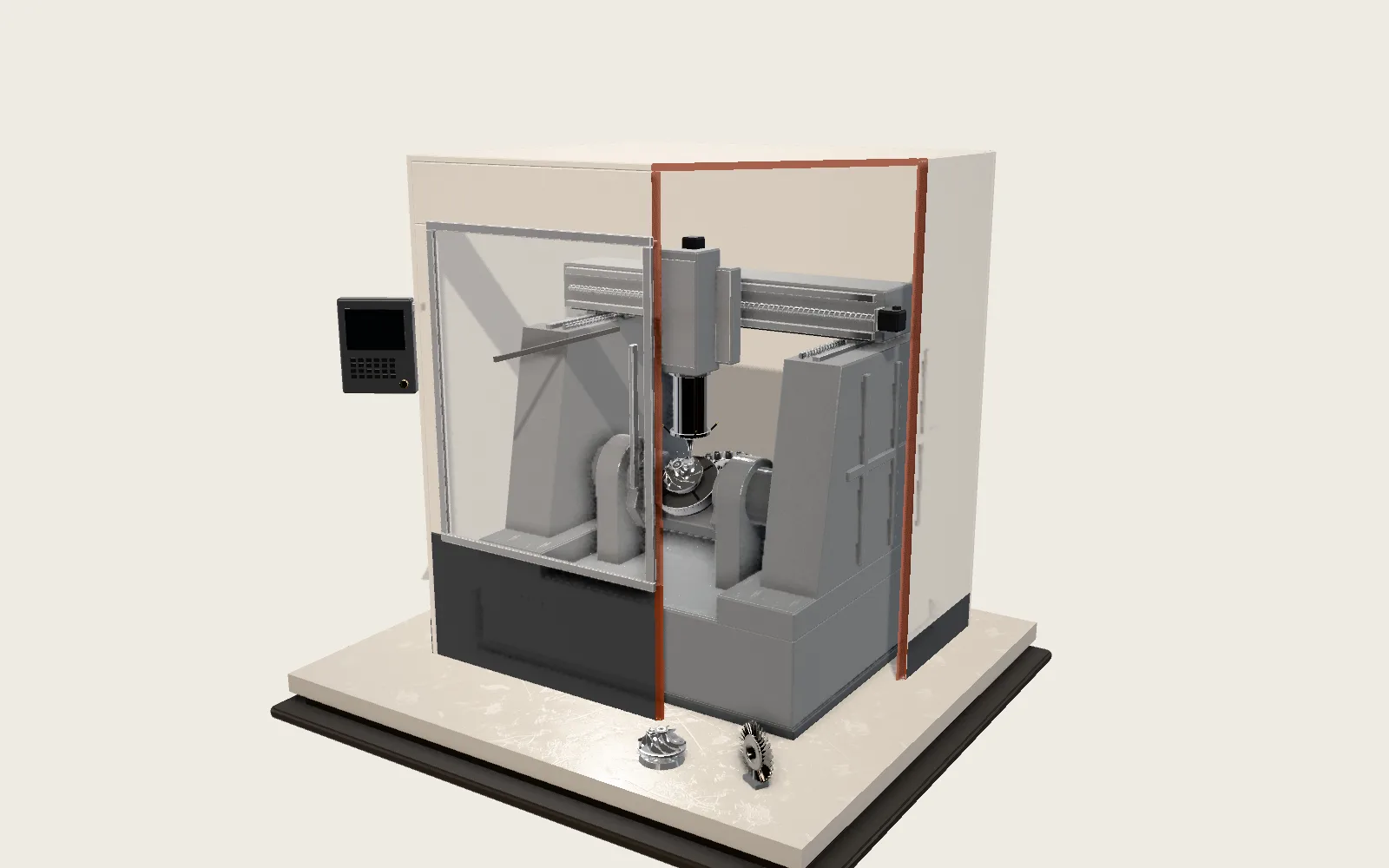
- Plate F02 Five-Axis Machining Centre ManufacturingGoing further Three straight axes move the spindle, two rotary axes turn the part, and all five move together to cut an impeller from a solid block of aluminium. Open →
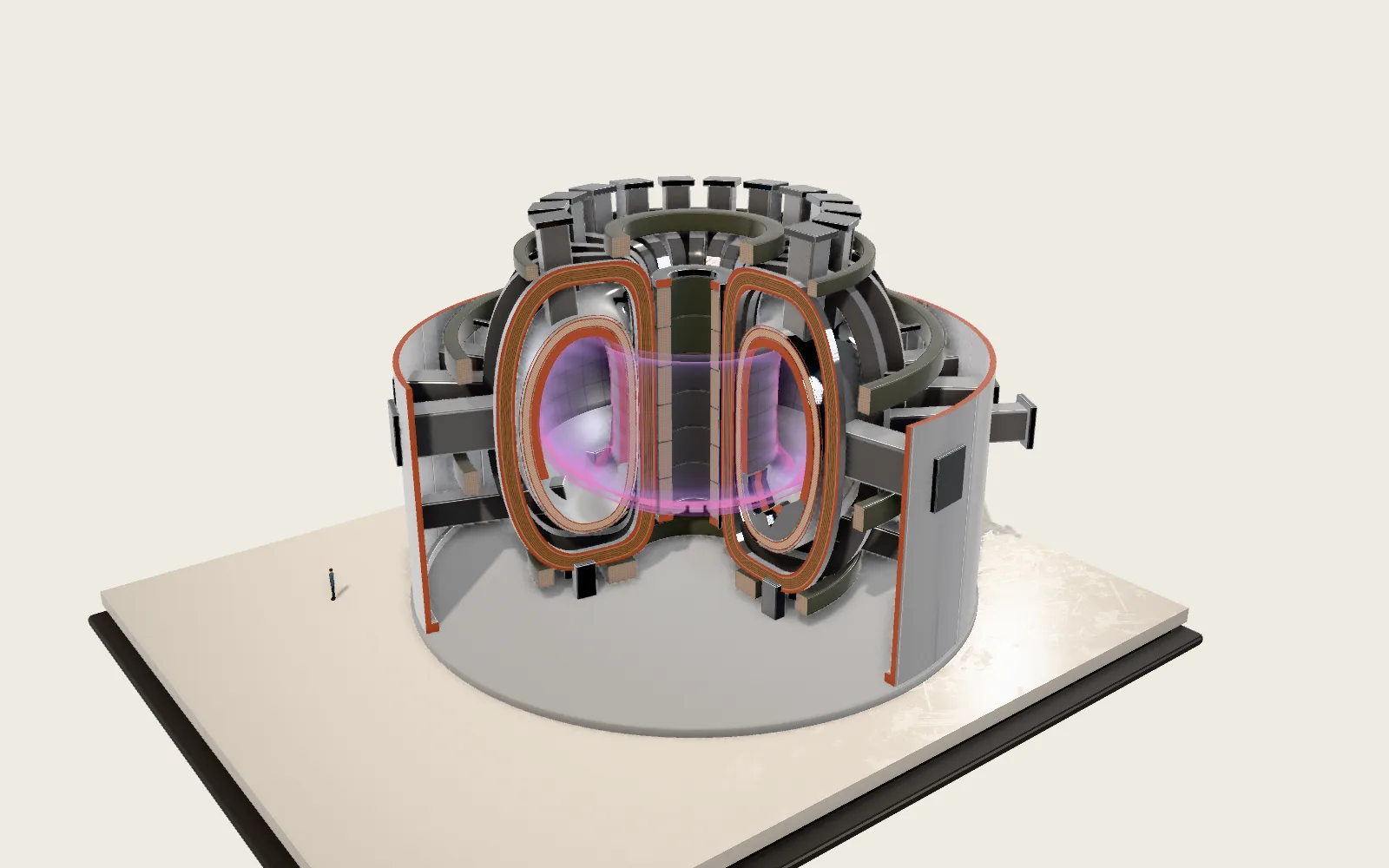
- Plate F06 Tokamak Fusion Reactor EnergyGoing further A tokamak like ITER: eighteen D-shaped superconducting coils round a ring-shaped vacuum vessel, inside which a deuterium–tritium plasma at about 150 million degrees hangs in a magnetic field. Open →
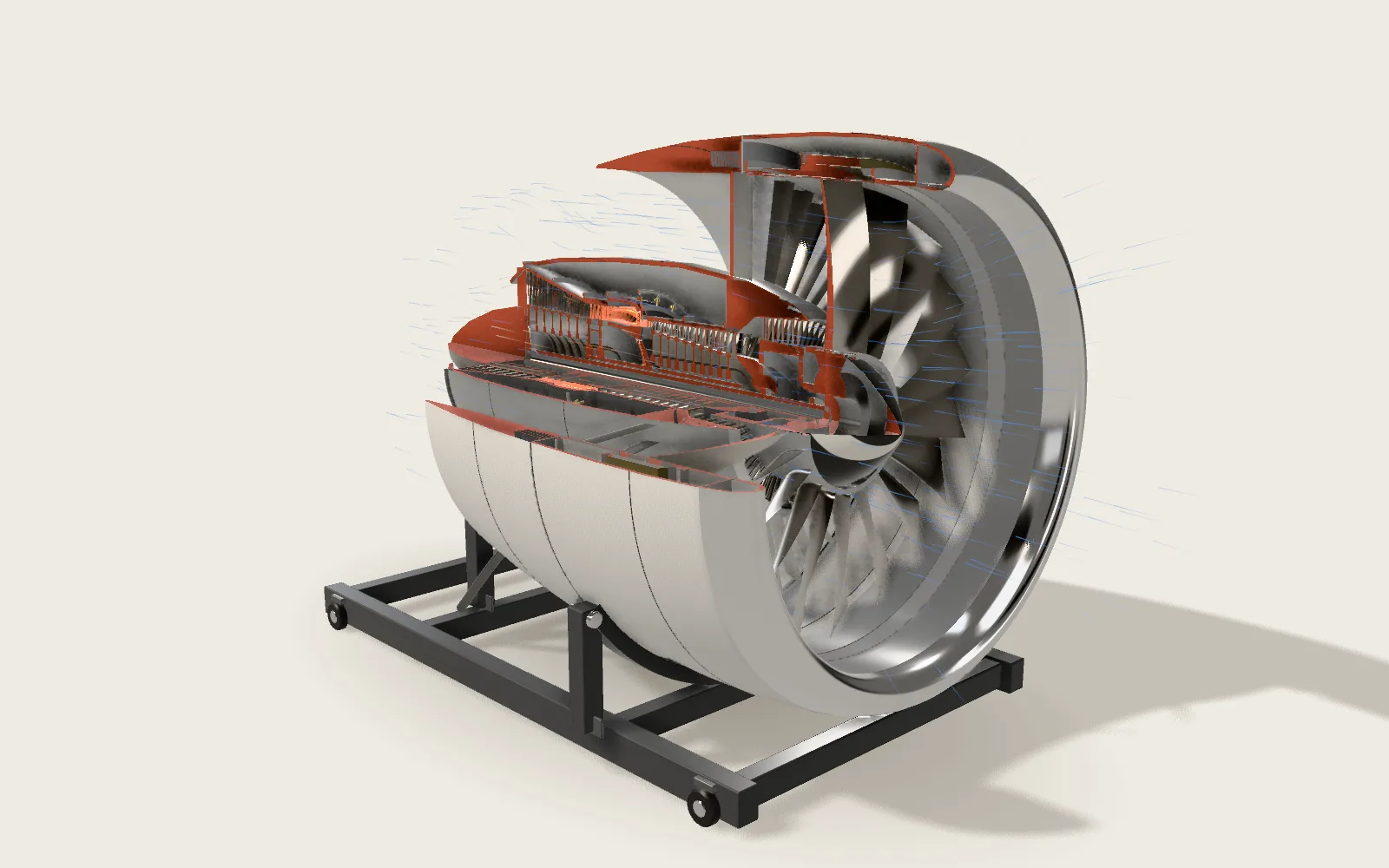
- Plate F07 Turbofan Engine PowerGoing further A high-bypass turbofan of the kind under a widebody’s wing, a quarter cut away: fan, ten-stage high-pressure compressor, annular combustor, two turbines. At take-off it swallows about 1.2 tonnes of air a second. Open →
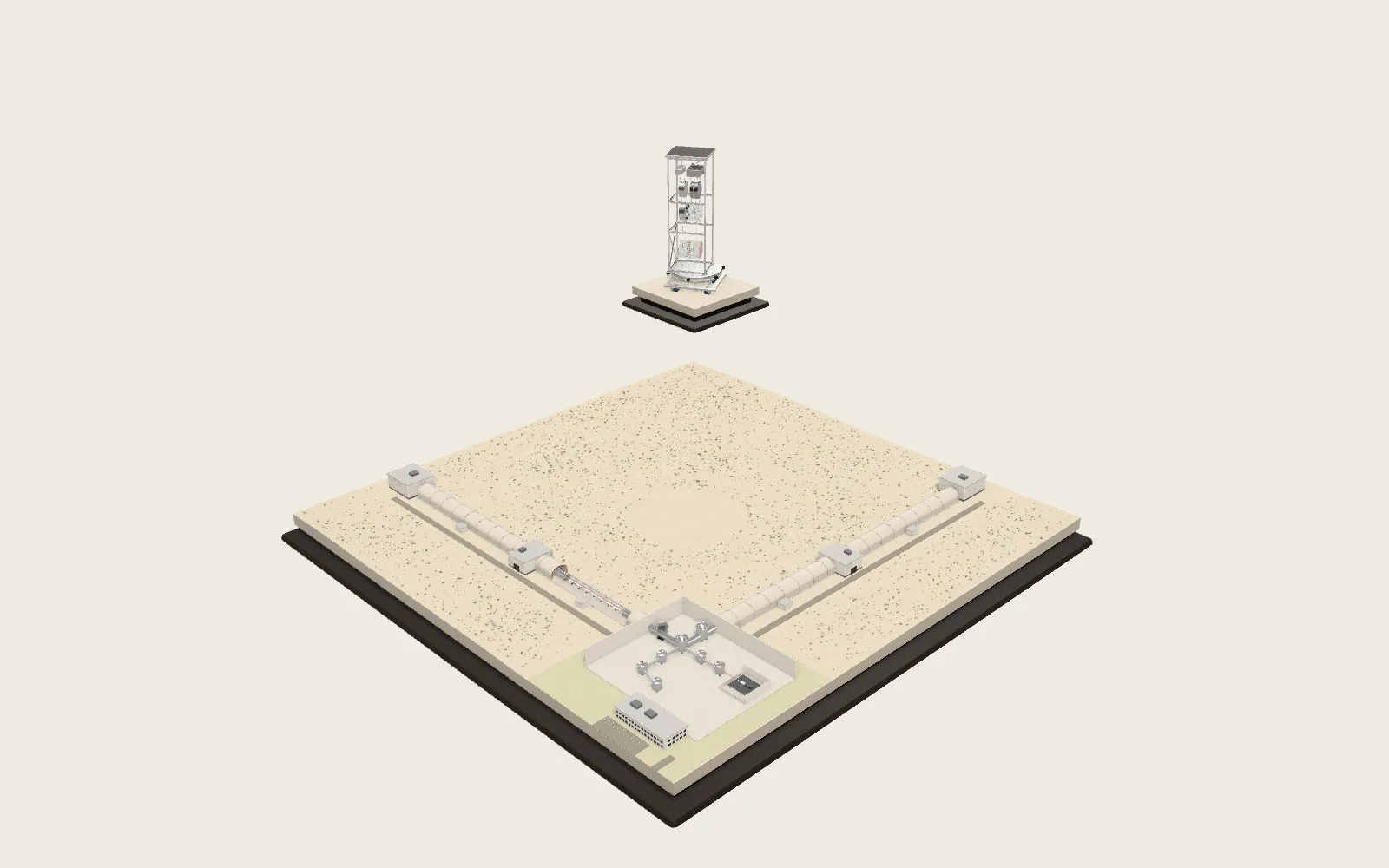
- Plate F08 The Gravitational-Wave Interferometer SensingGoing further Two arms 4 km long measure changes in length more than ten thousand times smaller than a proton. In 2015 it recorded, for the first time, the gravitational waves from two black holes merging. Open →
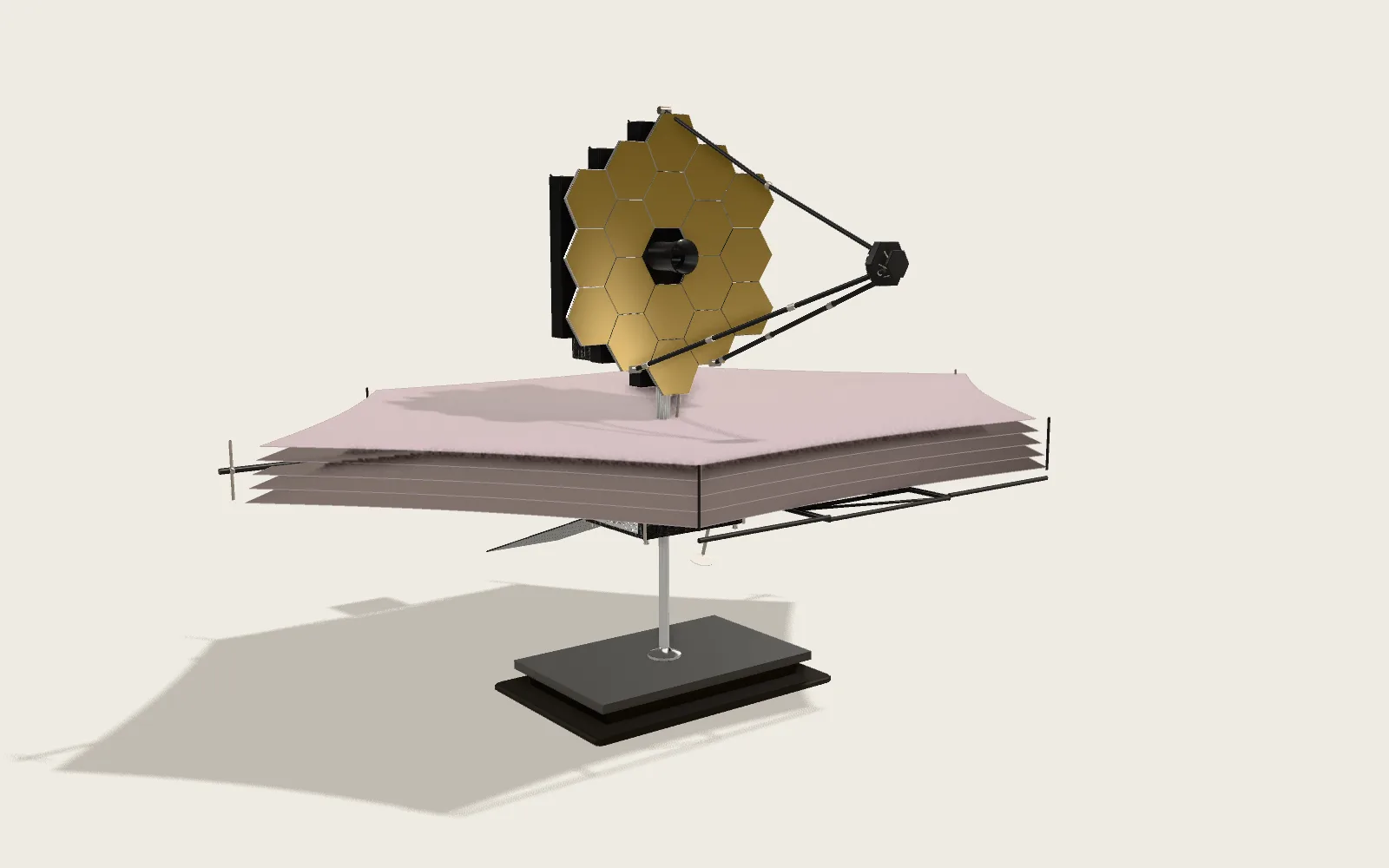
- Plate F09 The Webb Space Telescope SensingGoing further Eighteen gold-coated segments make one 6.5 m mirror, and five layers of film keep the Sun’s heat off it. It was launched folded and unfolded itself in space over two weeks. Open →
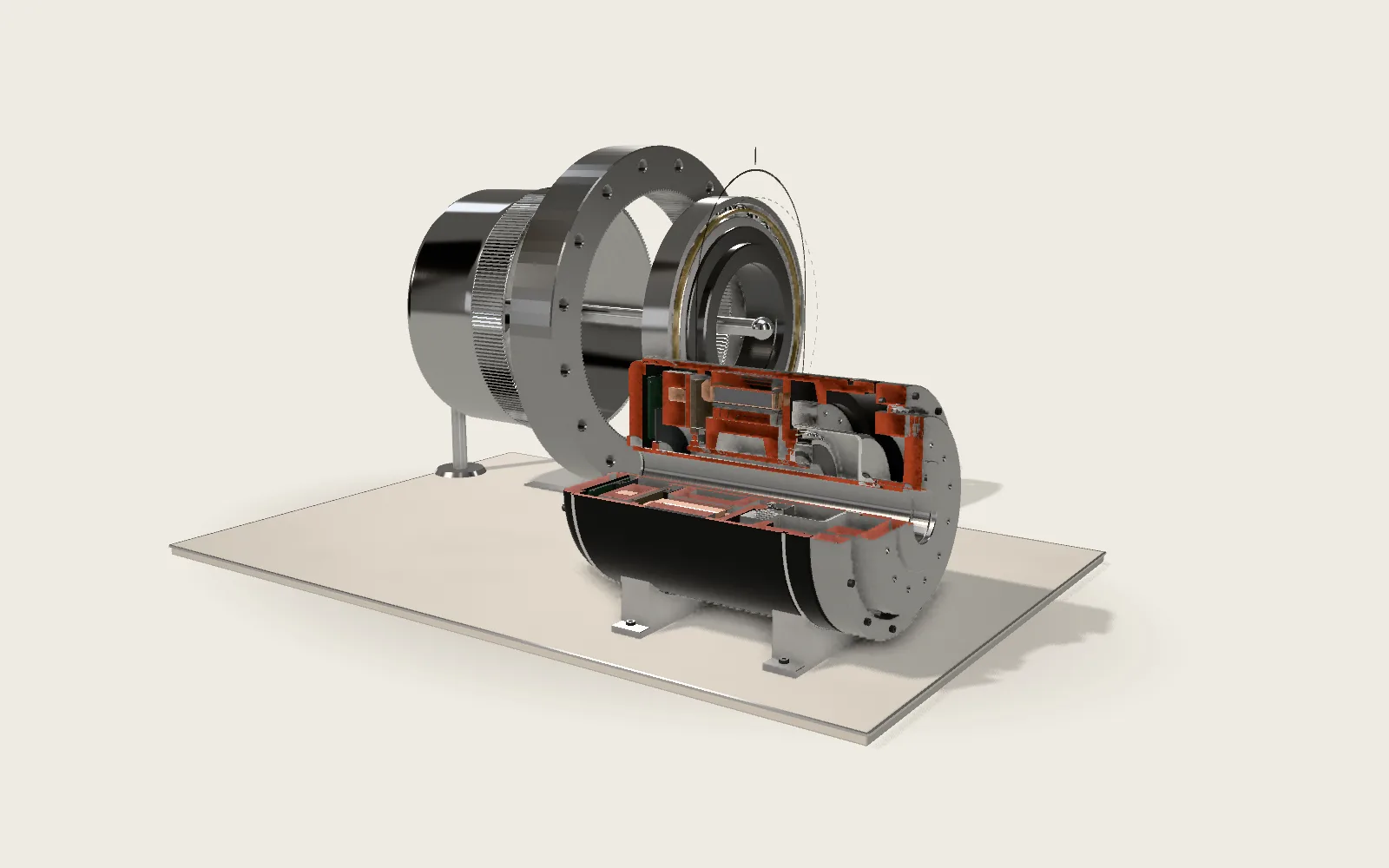
- Plate F10 The Harmonic Drive ManufacturingGoing further The strain-wave gear inside a robot joint: an ellipse flexes a thin steel cup, and each turn the cup falls back just two teeth. A 100 : 1 reduction in one stage, with almost no backlash. Open →
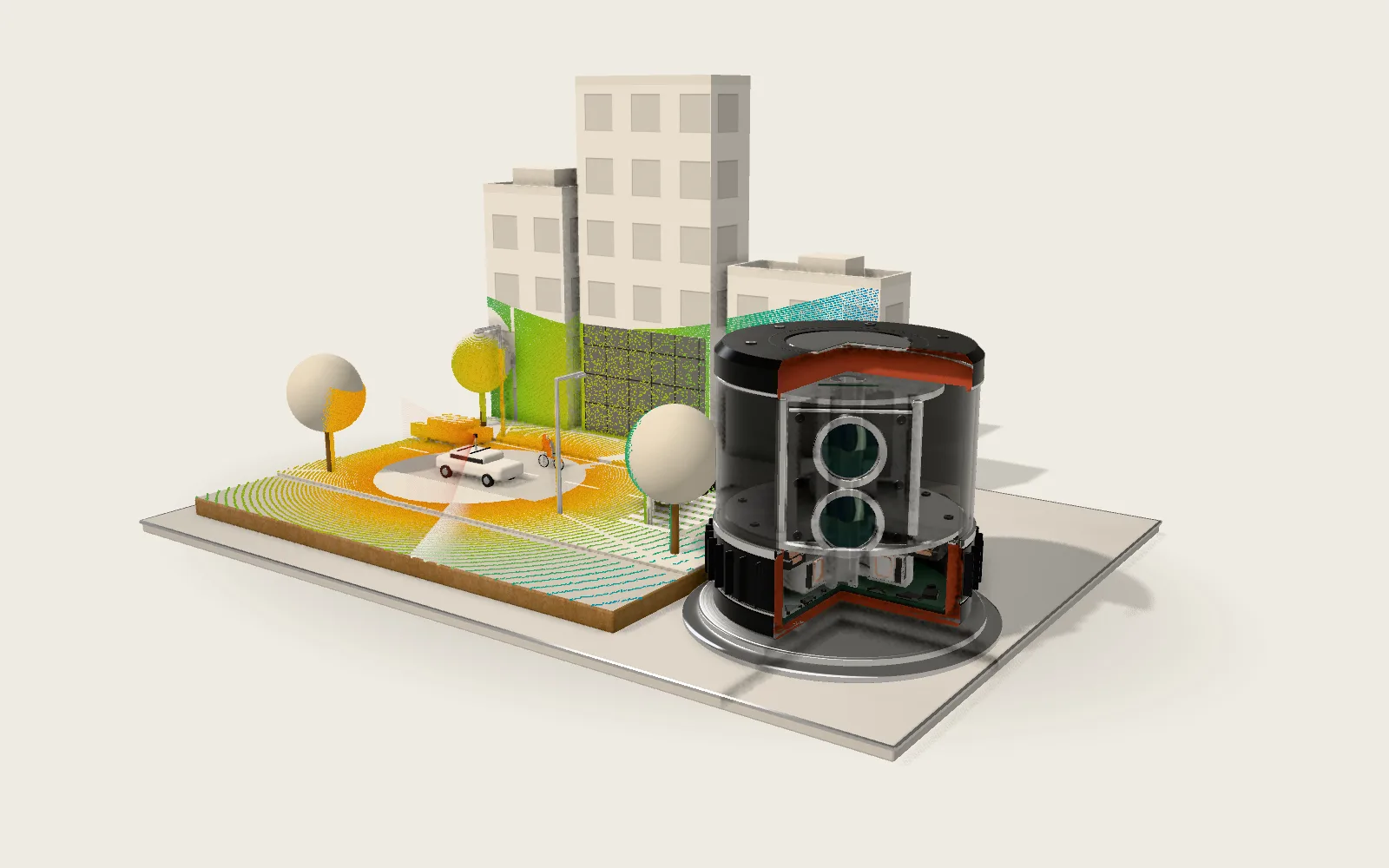
- Plate F11 Lidar SensingGoing further A lidar on a car’s roof times light: 6.67 nanoseconds there and back is one metre. 128 beams spin, and the street around turns into hundreds of thousands of points with coordinates. Open →
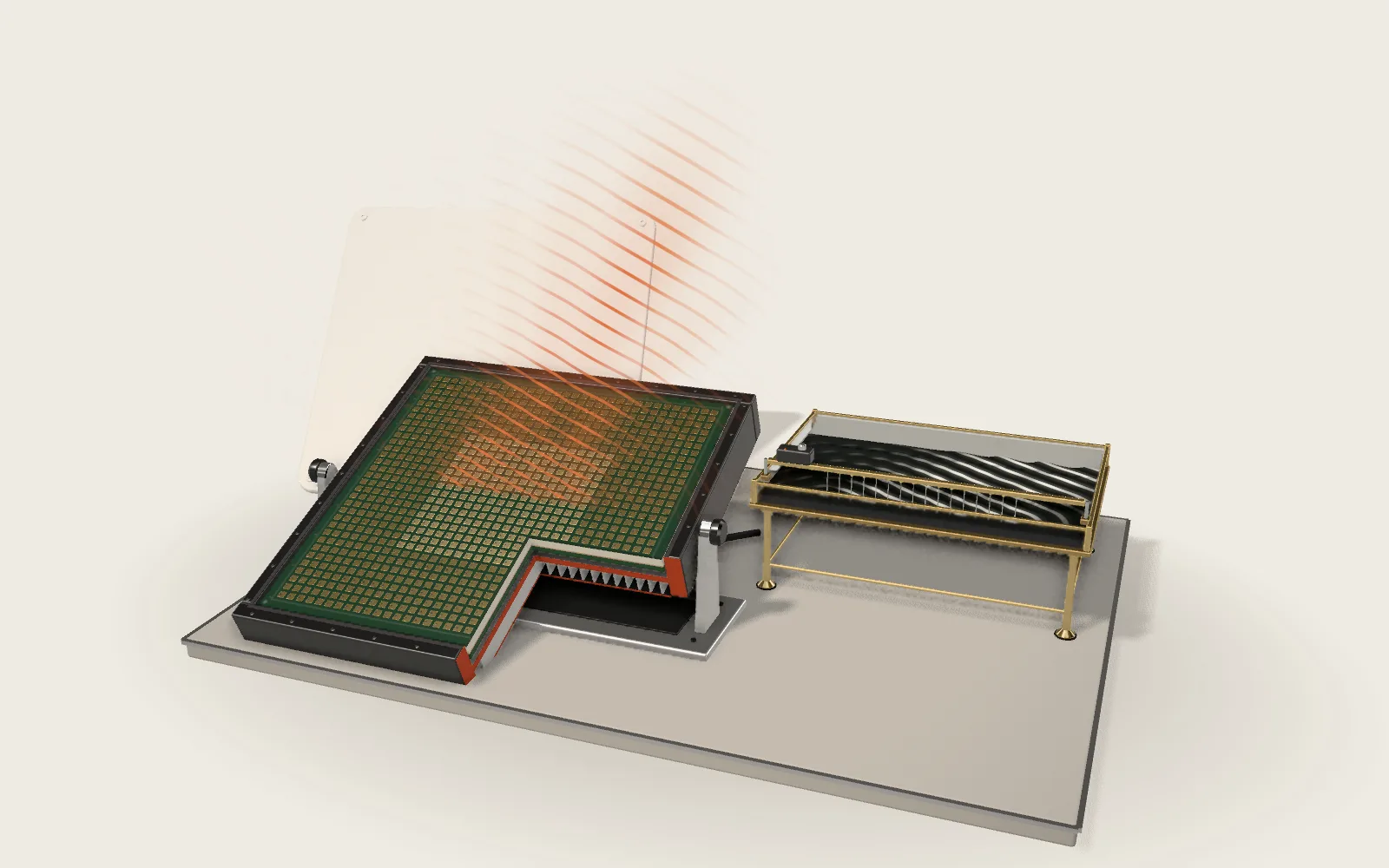
- Plate F12 The Phased Array SensingGoing further A flat panel holds a thousand small antennas. Let each send a moment after its neighbour and the beam leans to one side. No motor: the direction is set by timing alone. Open →