Matter, Light & Sound
Why everyday things are the way they are: why ice floats, why the sky is blue, how sound crosses the air.
17 plates
Plates 17
- Plate 07 Why a Rainbow Is Round Light & SoundStart here It does not hang anywhere in the sky. It is a ring of light 42 degrees around the shadow of your own head. Open →
- Plate 08 Why Snowflakes Have Six Points MatterStart here Every snowflake grows from one tiny six-sided crystal of ice. Open →
- Plate 13 Why the Sky Is Blue Light & SoundStart here The sky is not reflecting the sea. The air itself is throwing the blue in sunlight across the sky. Open →
- Plate 15 How Sound Crosses the Air Light & SoundStart here Sound is a push passed along through the air. The air doesn’t travel to you; the push does. Open →
- Plate 17 Why Ice Floats MatterStart here Freeze most liquids and the solid sinks in its own liquid. Ice floats. The secret is in the little hexagons water molecules build. Open →
- Plate 21 Three Cones, a Million Colors Light & SoundStart here Sunlight holds a smooth sweep of colors, but our eyes see it with just three kinds of cells. Every color you see is those three cells taking a vote. Open →
- Plate 26 Why a Siren Changes Its Tune Light & SoundStart here An ambulance sounds higher coming towards you and lower going away. The siren hasn’t changed; its sound waves have been squeezed or stretched. Open →
- Plate 28 Where a Bubble’s Colours Come From Light & SoundStart here Soapy water has no colour, yet bubbles shimmer with every hue. The colour isn’t in the soap — it is in how thick the film is. Open →
- Plate 29 A Curved Piece of Glass Light & SoundGoing further Light bends a little as it passes from air into glass. Shape the glass into a curve and light passing through every part of it can meet at one point — which is how magnifying glasses, cameras and your eyes work. Open →
- Plate 31 Why Metal Feels Cold MatterStart here A metal spoon and a wooden spoon left in the same room are exactly the same temperature, yet the metal one feels much colder. What your hand feels is how fast heat leaves it. Open →
- Plate 32 Why Mountain Water Isn’t Hot Enough MatterStart here At the top of Everest, water boils at about 70°C — too cool to hard-boil an egg, however long you wait. The temperature water boils at depends on how much air is pressing down on it. Open →
- Plate 34 Why a Steel Ship Floats MatterStart here Drop a lump of steel in water and it sinks at once, yet the same steel built into a ship floats with ten thousand tonnes of cargo aboard. The secret is how much water the ship pushes aside. Open →
- Plate 36 Where Is the Electron? MatterGoing further Textbooks often draw electrons as little balls circling the nucleus. In fact an electron has no orbit. It is more like a cloud: all we can say is where it is likely to be. Open →
- Plate 37 When Two Ripples Meet MatterStart here Drop two stones in water and their rings of ripples pass straight through each other. In some places they cancel out, and the water there barely moves. Open →
- Plate 39 The Invisible Lines Around a Magnet MatterStart here Lay a sheet of paper over a magnet, sprinkle iron filings on it and tap gently: the filings line up in curves running from one end of the magnet to the other. They are drawing the shape of its magnetic field. Open →
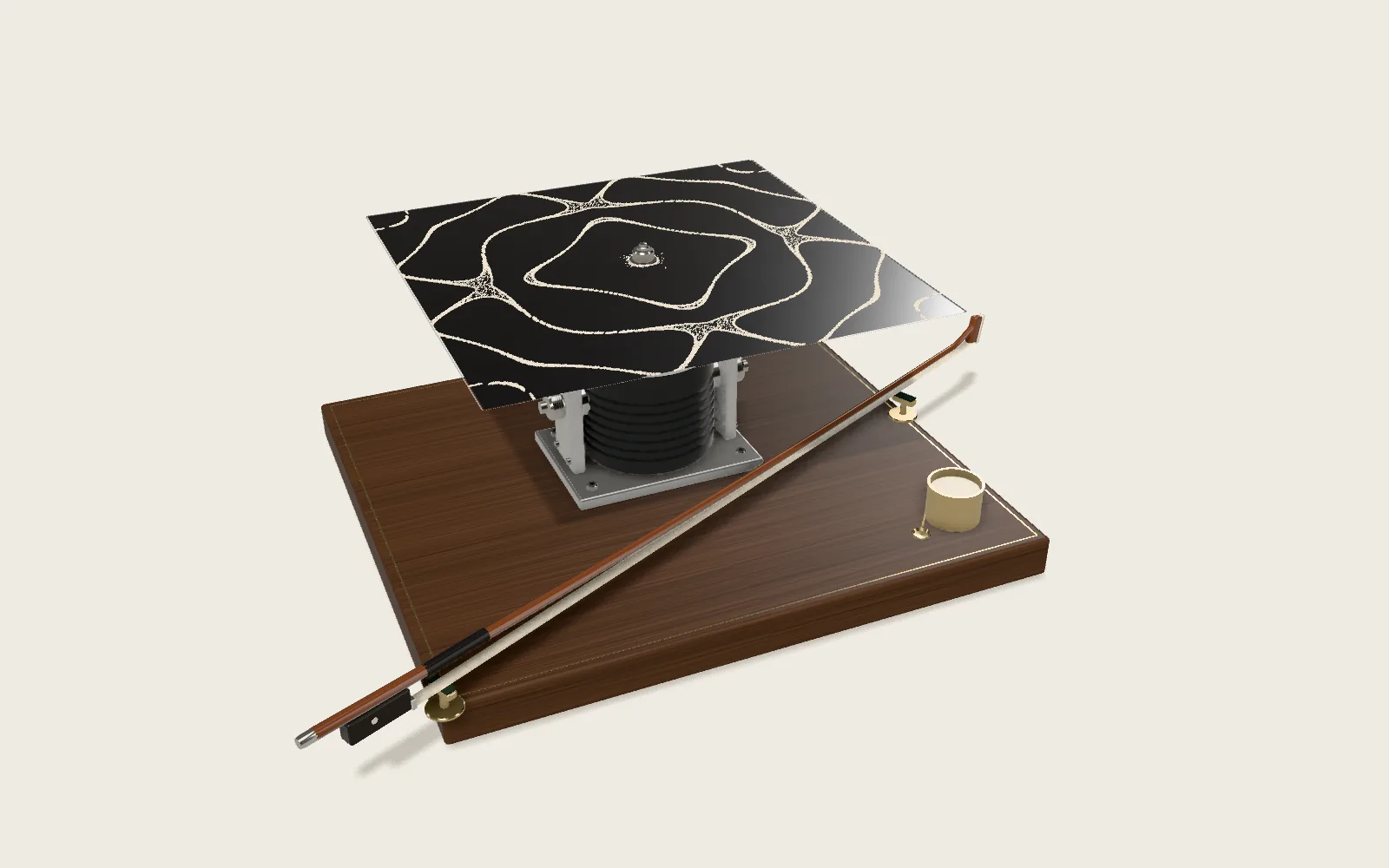
- Plate 47 Sand That Draws a Sound Light & SoundStart here Sprinkle sand on a metal plate and make it ring. The sand jumps away from the moving parts and gathers on the lines that stay still, drawing the shape of the vibration. Open →
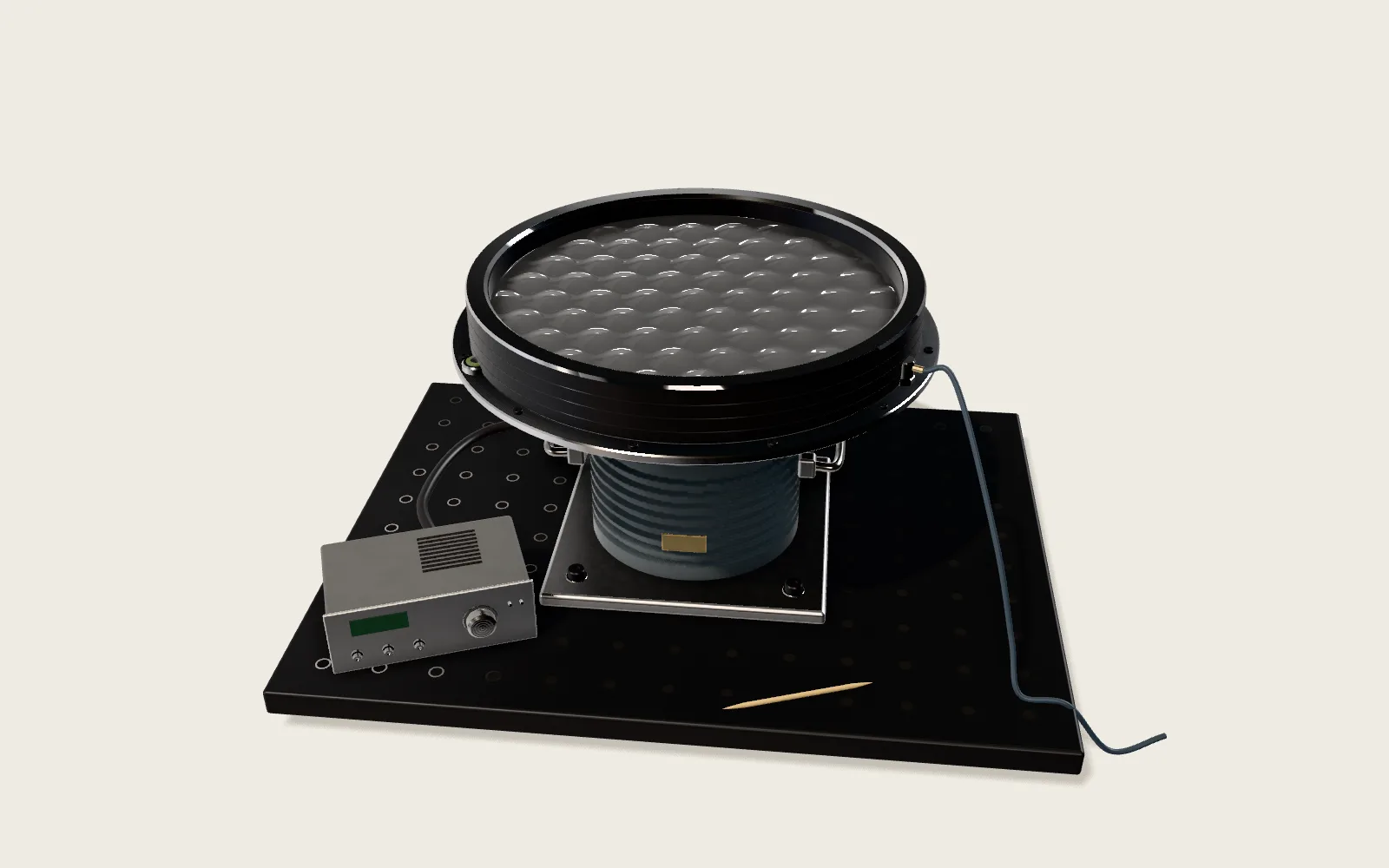
- Plate 51 Patterns Shaken Out of Oil MatterGoing further Shake a dish of oil up and down hard enough and the still surface suddenly wrinkles into squares, hexagons or stripes. It rises and falls at half the rate of the shaking. Open →