Mathematics
Circles, numbers, collisions and chance. Each page is a mathematical model in motion.
22 plates
Plates 22
- Plate M01 Life from a Smooth Rule EmergenceGoing further Melt the squares, the ticks and the life-or-death of Conway’s Game of Life, and a small thing swims out of the numbers, with a body and a tail, healing when it is bitten. Its whole law is one ring and one bell-shaped curve. Open →
- Plate M02 Counting Clacks, Finding π DynamicsGoing further Two blocks and a wall, and a count of the collisions. Each time the large block gets 100 times heavier, the count gains another digit of π. Open →
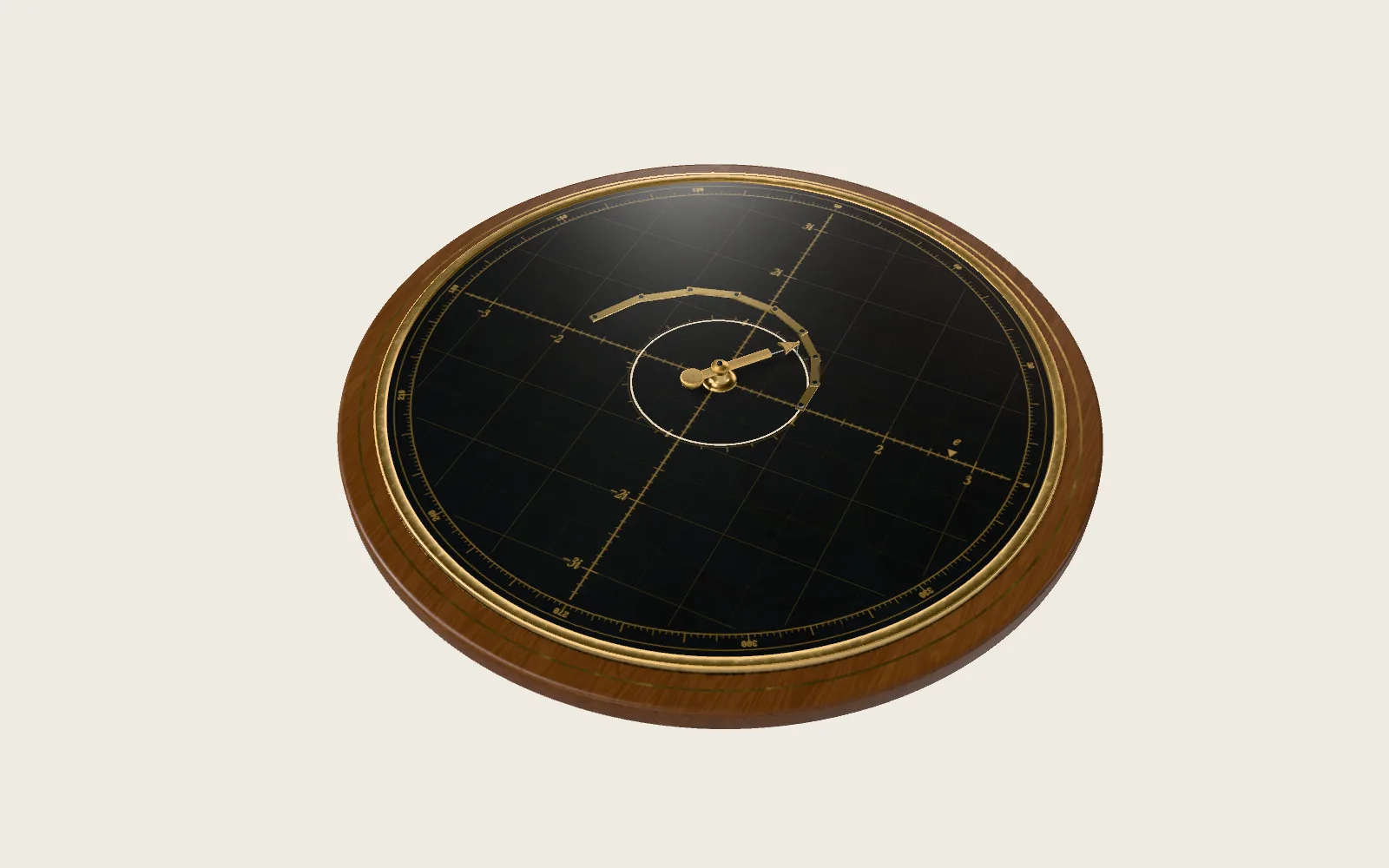
- Plate M03 Any Closed Line, Drawn by Turning Circles AnalysisGoing further A chain of arrows, head to tail, each turning at a whole-number speed: the last tip can draw any closed line. Open →
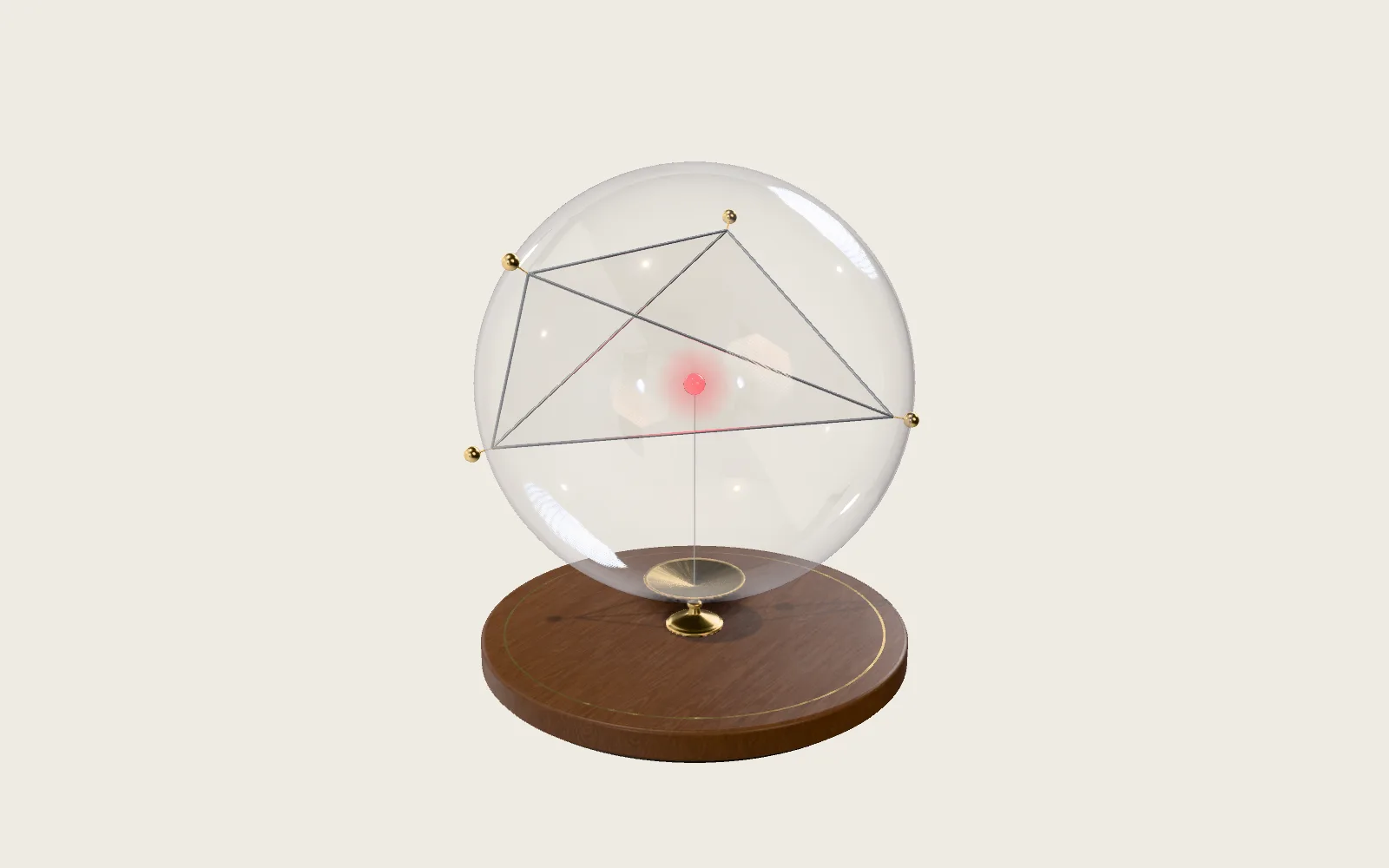
- Plate M04 One in Eight Random Tetrahedra Hold the Centre ProbabilityGoing further Four random points on a sphere make a tetrahedron that holds the centre one time in eight. Three points on a circle: one in four. Open →
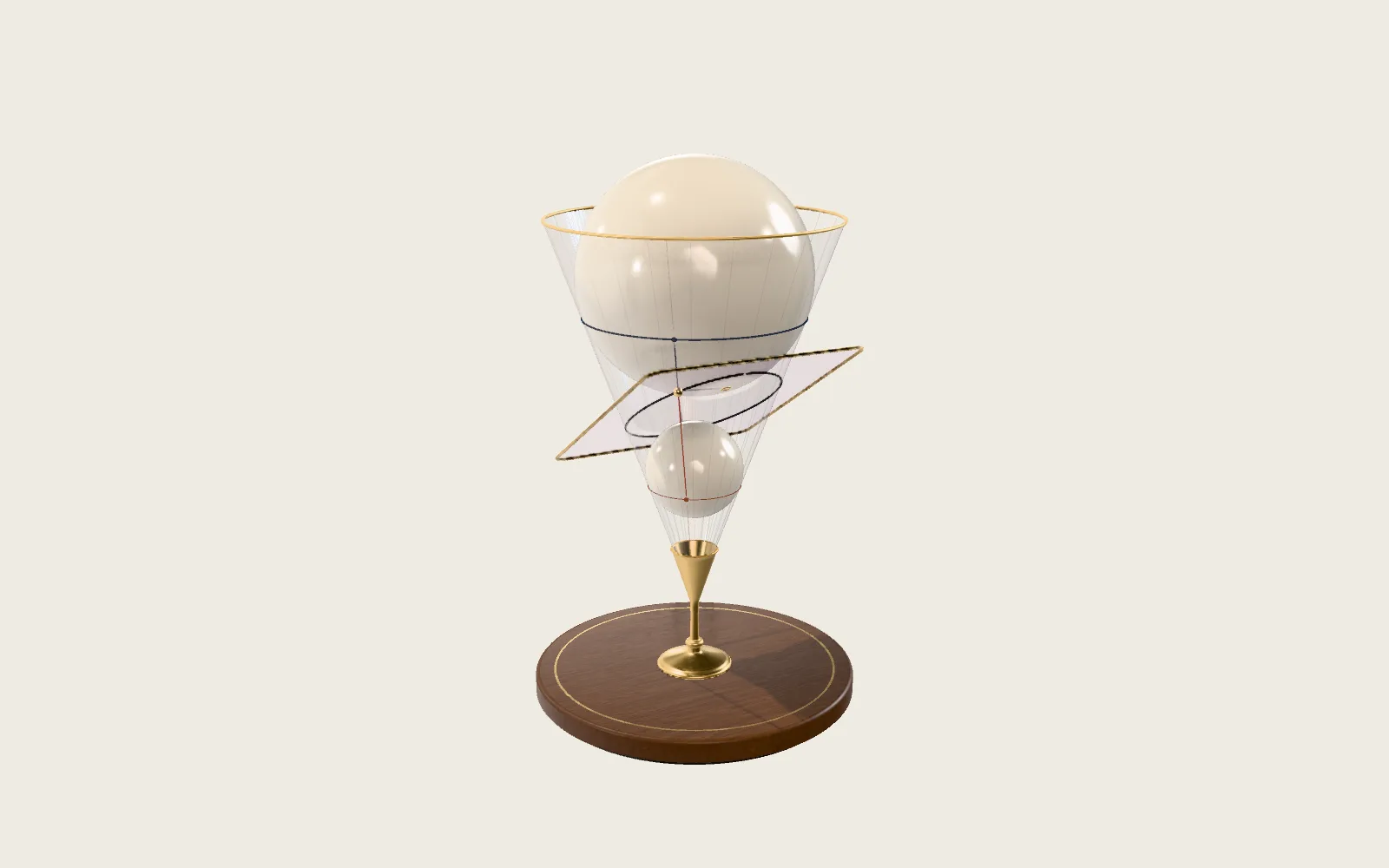
- Plate M05 Why a Slanted Cut Through a Cone Is an Ellipse GeometryGoing further Slice a cone at a slant and the cut is the same curve two pins and a string draw. Two spheres prove it. Open →
- Plate M06 Half a Turn Is e to the iπ AnalysisGoing further eⁱᵗ is a point walking round the unit circle at a steady pace, its velocity always i times its position. After time π it is at −1. Open →
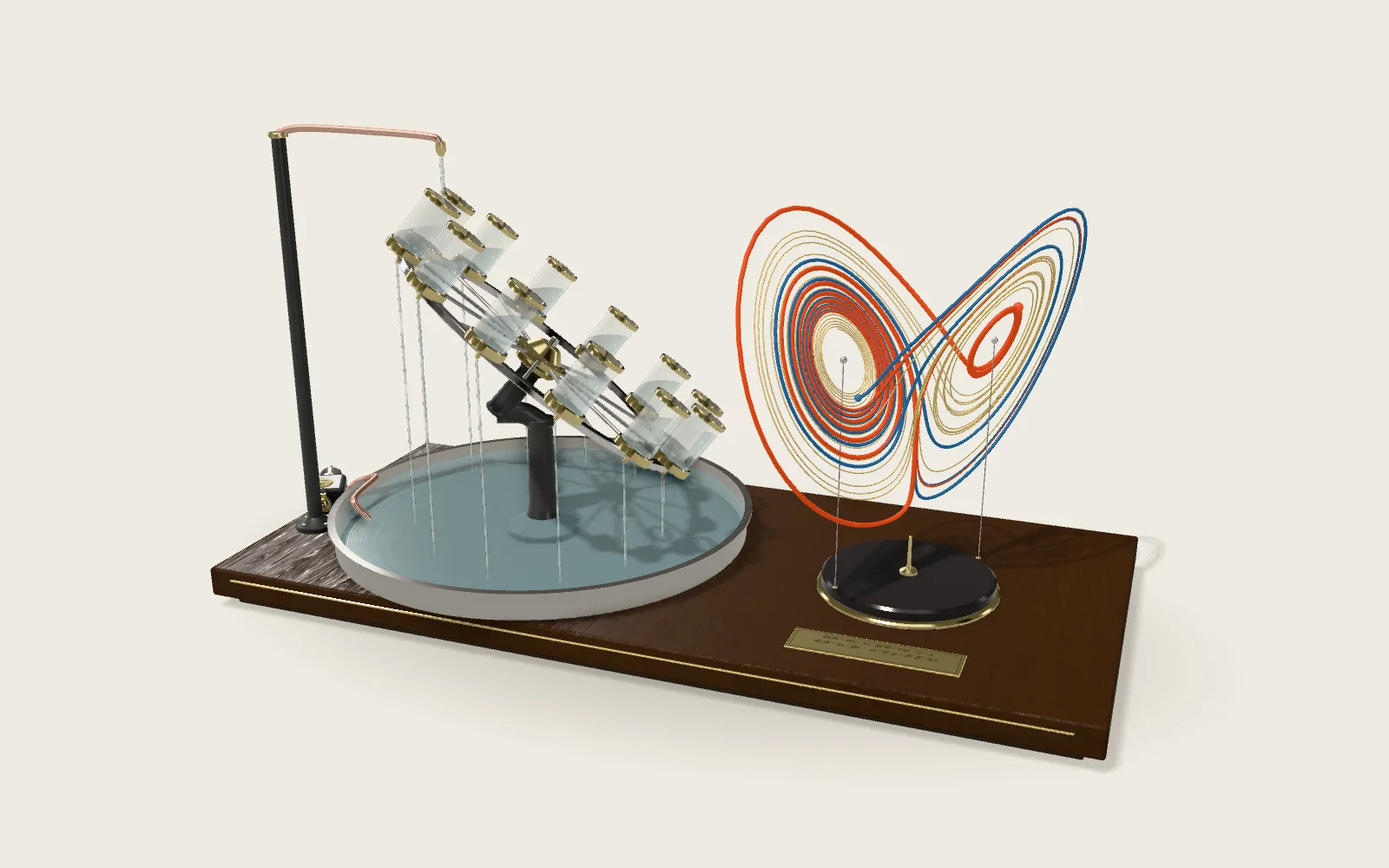
- Plate M07 Determined, Yet Unpredictable DynamicsGoing further Three simple equations, nothing random in them. Two starts a millionth apart have nothing in common twenty time units later. Open →
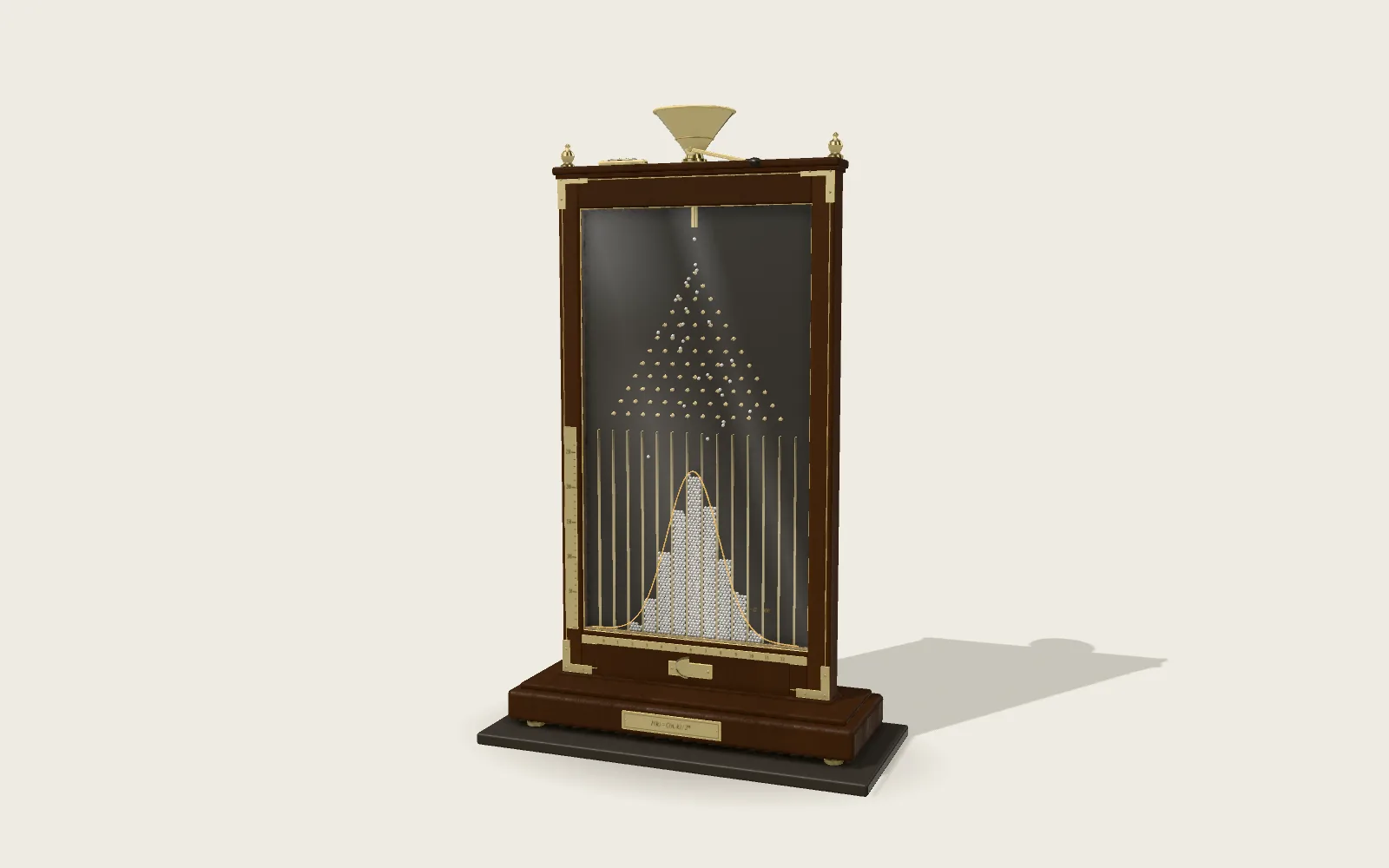
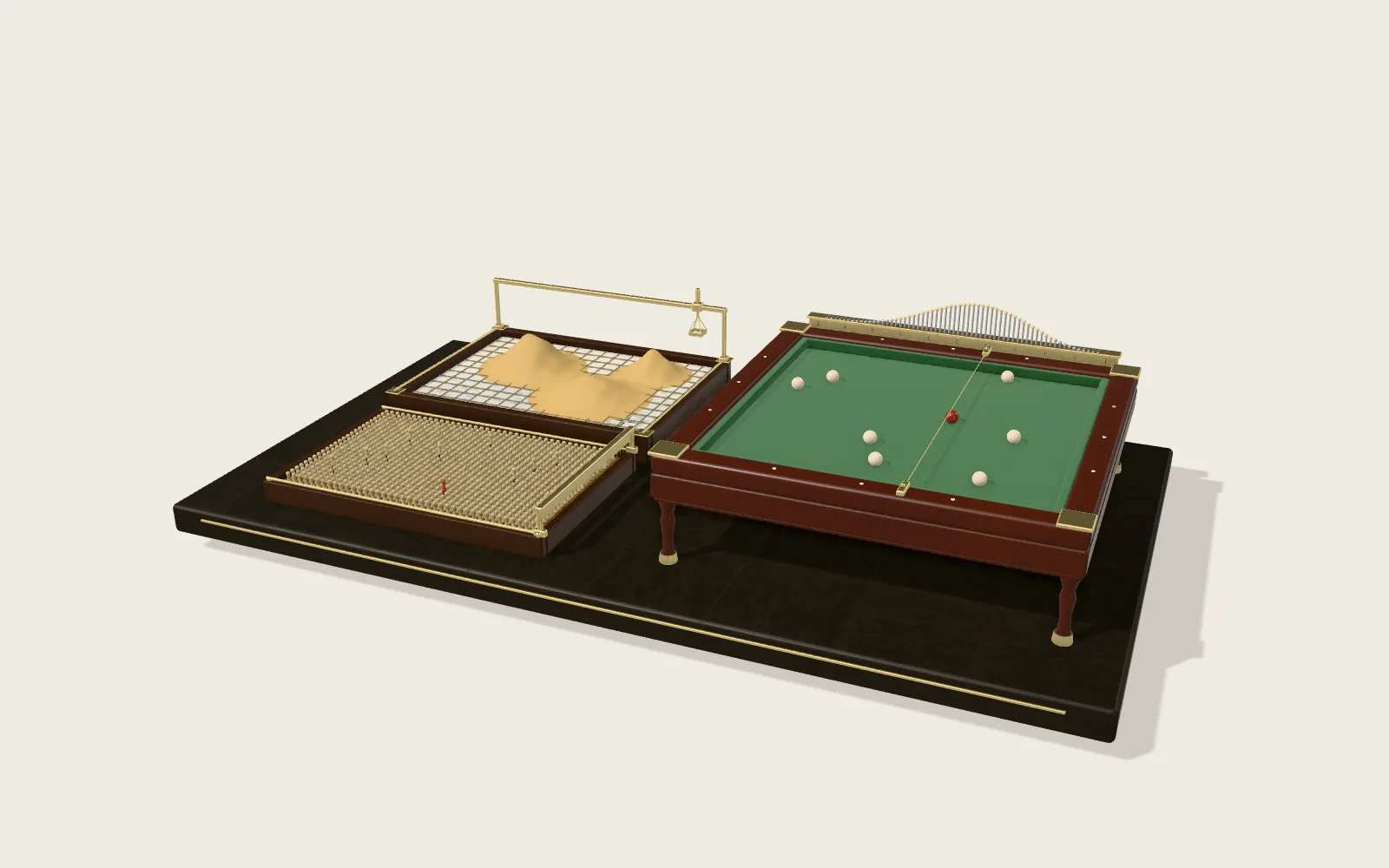
- Plate M08 Random Bounces Pile Up into a Bell Curve ProbabilityGoing further On a Galton board each steel ball goes left or right at random at every pin. After a thousand balls, the bins always show the same bell curve. Open →
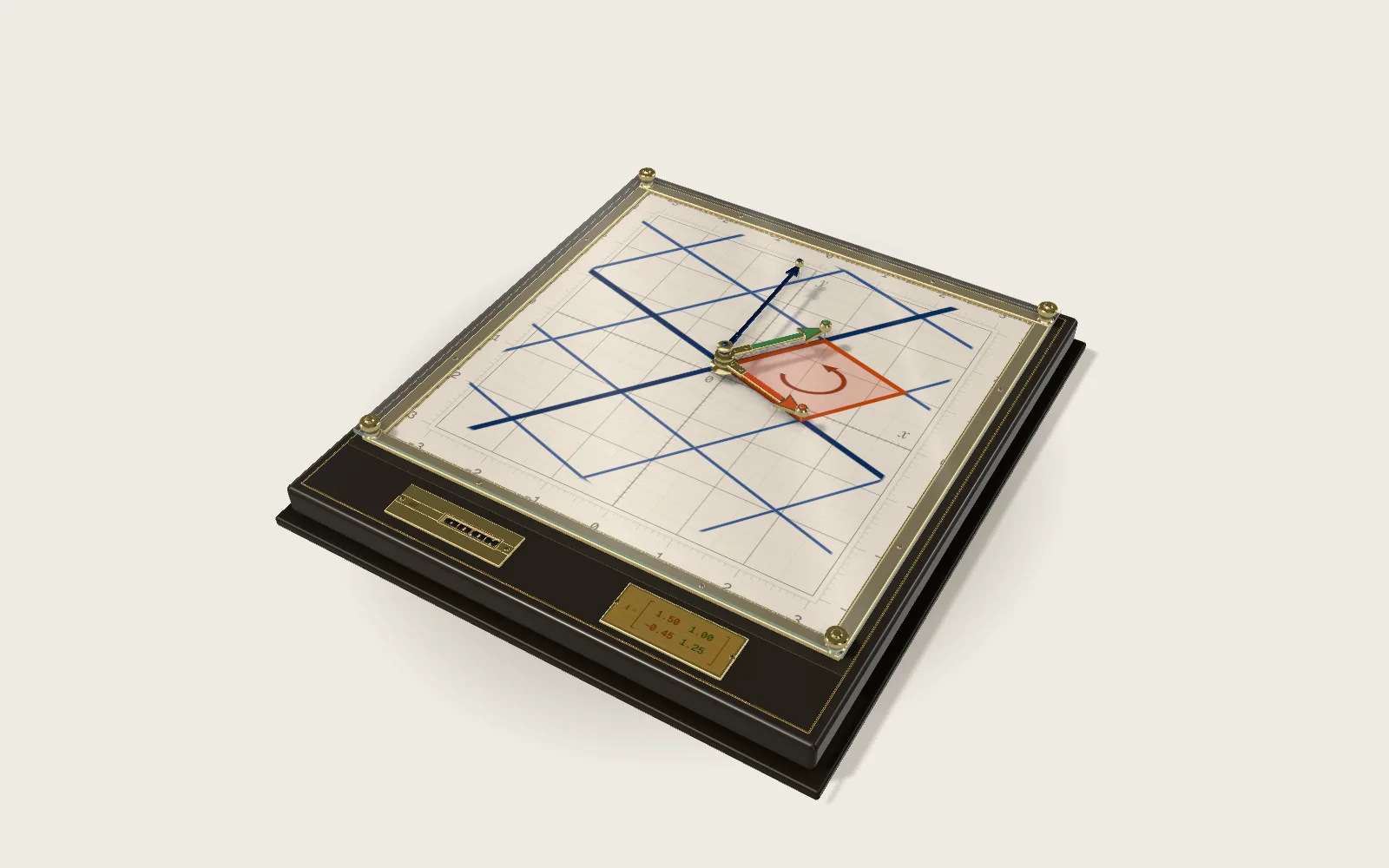
- Plate M09 A Matrix Moves the Whole Plane GeometryGoing further A 2 × 2 matrix moves the whole plane at once: grid lines stay straight, parallel and evenly spaced, and the origin stays put. Its columns are where the two basis arrows land; its determinant is the factor by which areas grow. Open →
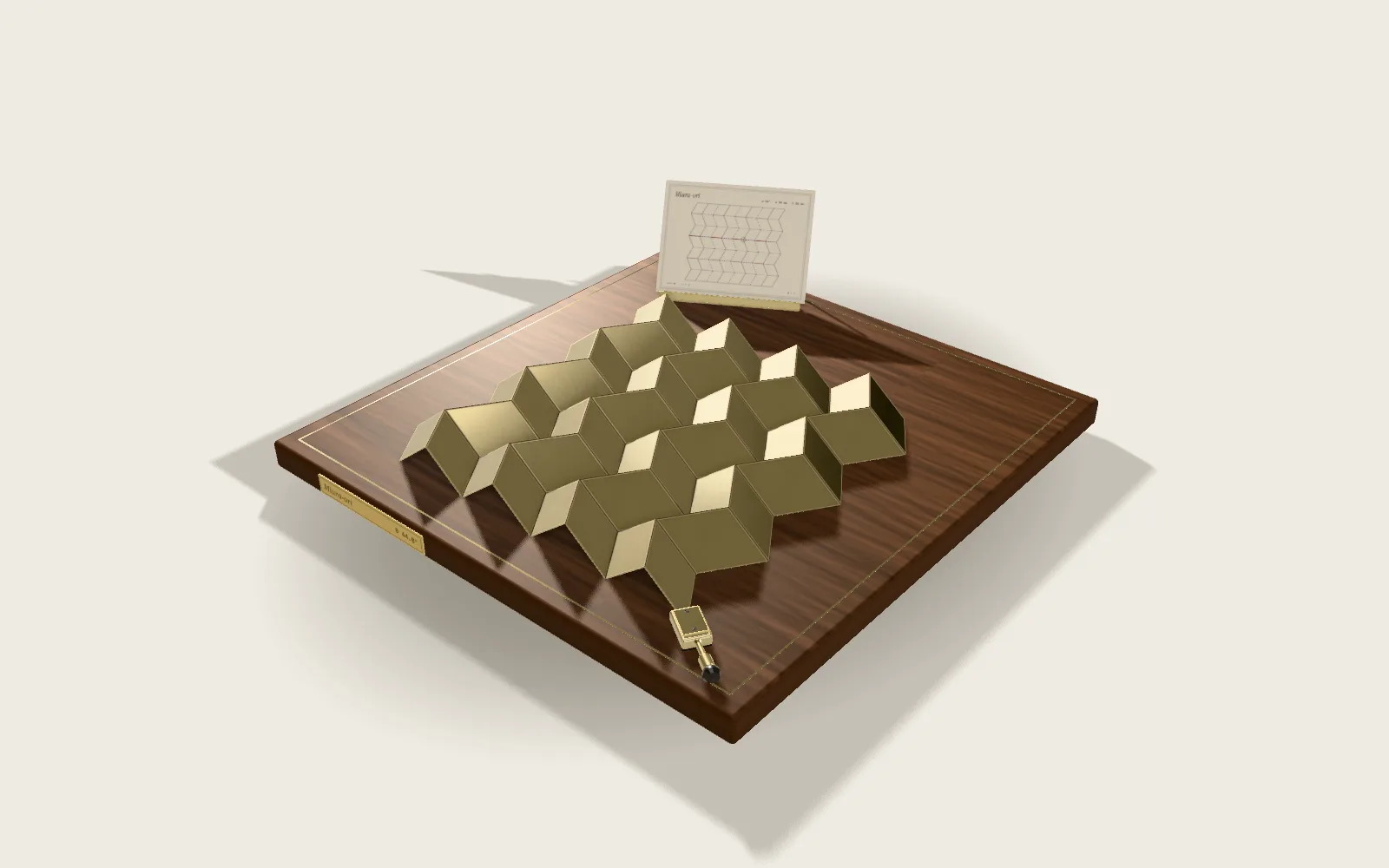
- Plate M10 A Fold That Opens in One Pull GeometryGoing further A sheet folded into parallelograms opens all at once when one corner is pulled, and closes all at once when it is pushed back. One angle sets every crease. Open →
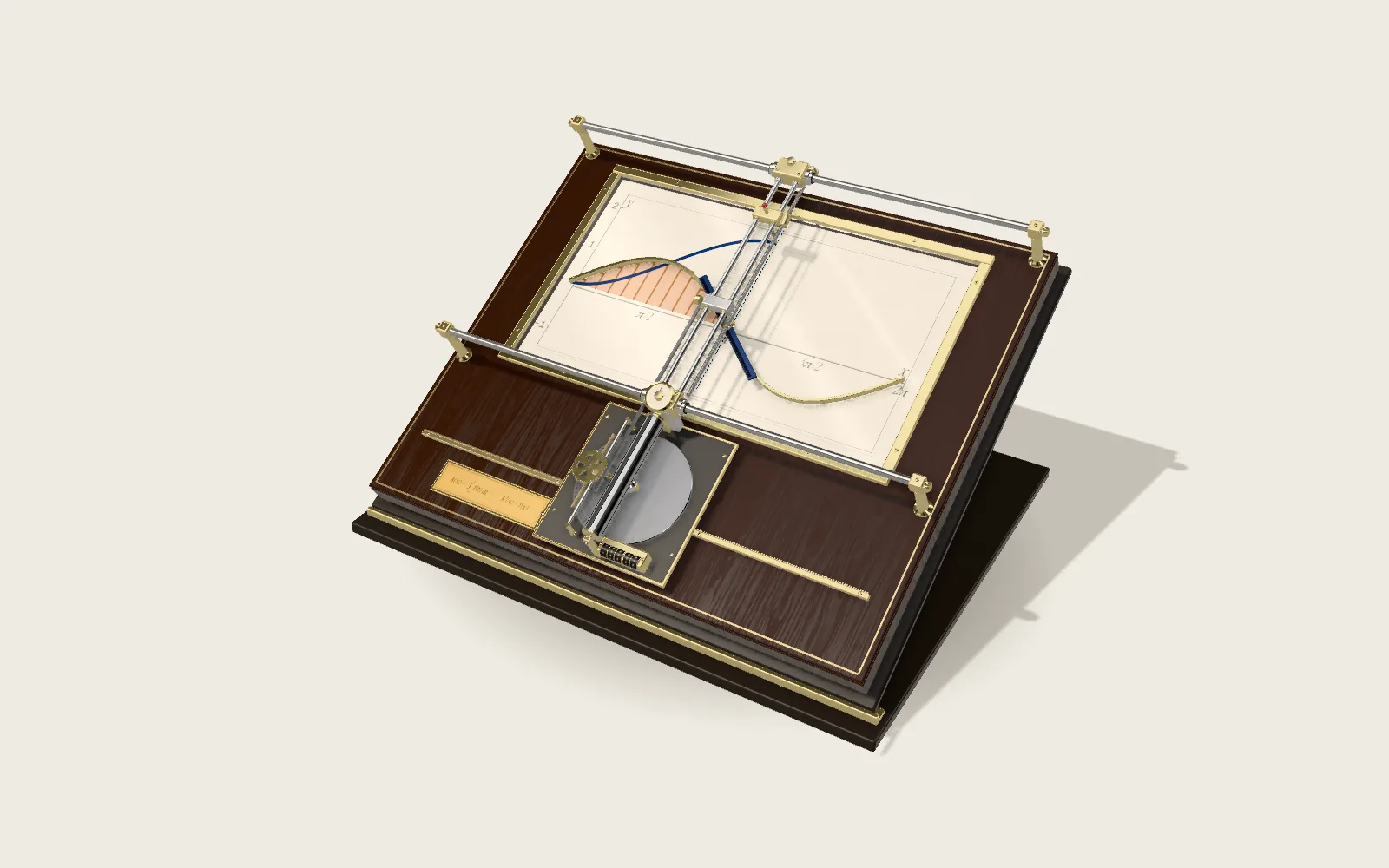
- Plate M11 Slope and Area Undo Each Other AnalysisGoing further The derivative is the slope of a curve at a point; the integral is the area under it. The rate at which the area grows as the right edge moves is exactly the curve’s height there, so each operation undoes the other. Open →
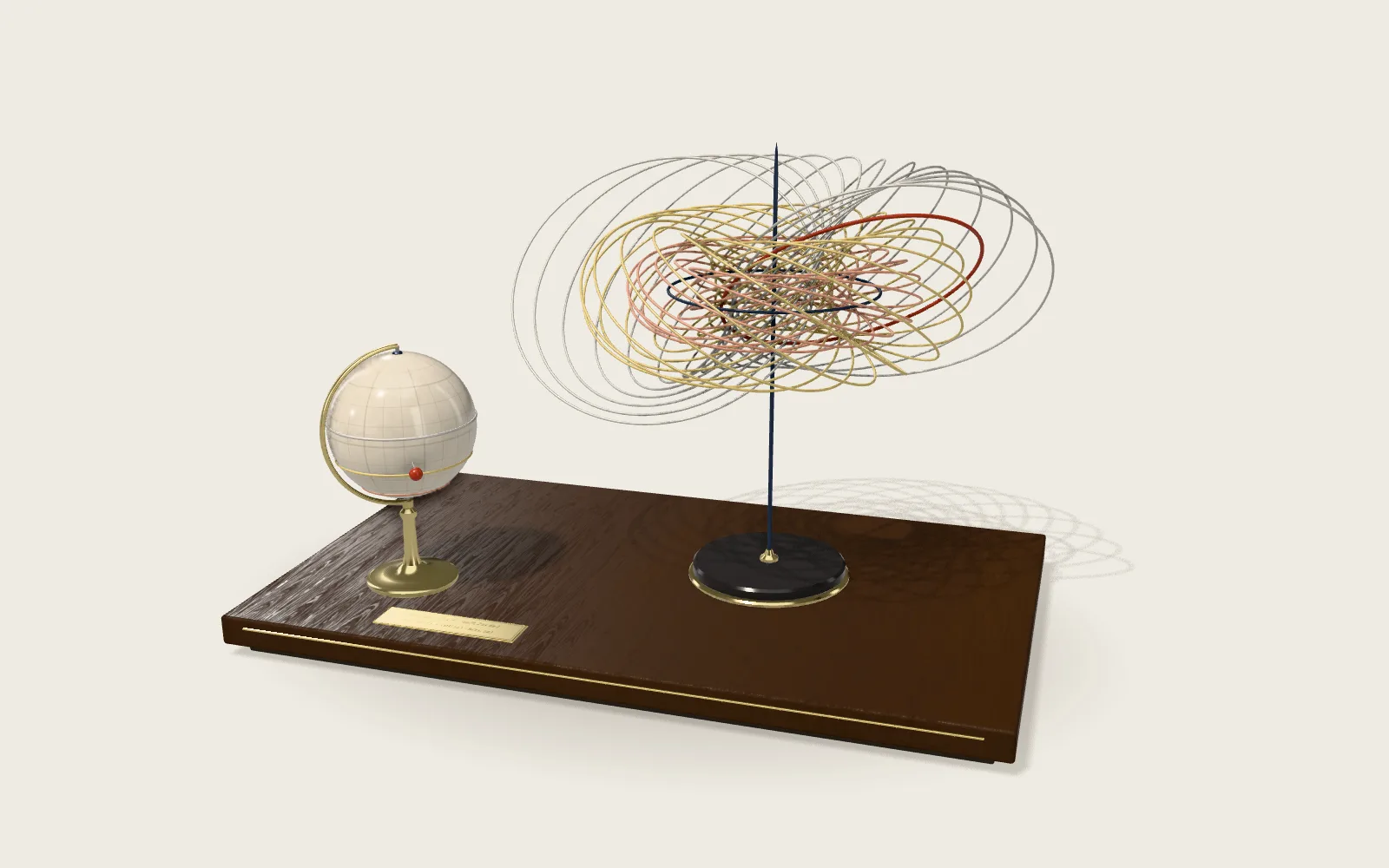
- Plate M12 Every Two Circles Linked TopologyGoing further The three-dimensional sphere in four-dimensional space falls apart into circles that never meet, one for each point of an ordinary sphere. Projected into three dimensions, every two of them are linked. Open →
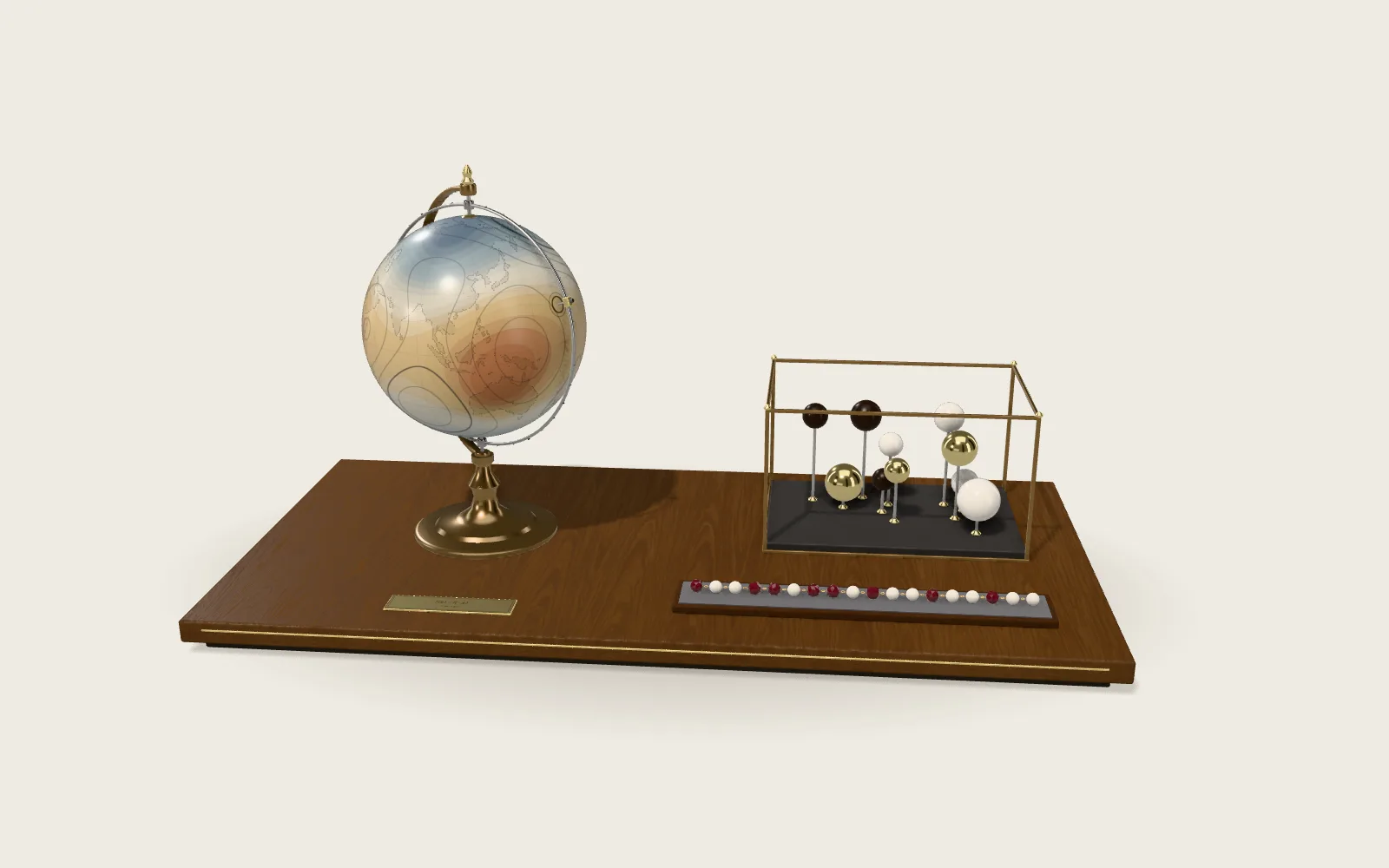
- Plate M13 Opposite Points, Same Weather TopologyGoing further At any moment there are two exactly opposite points on Earth with the same temperature and the same pressure. That is the Borsuk–Ulam theorem: a continuous map from the sphere to the plane always sends some pair of opposite points to the same place. Open →
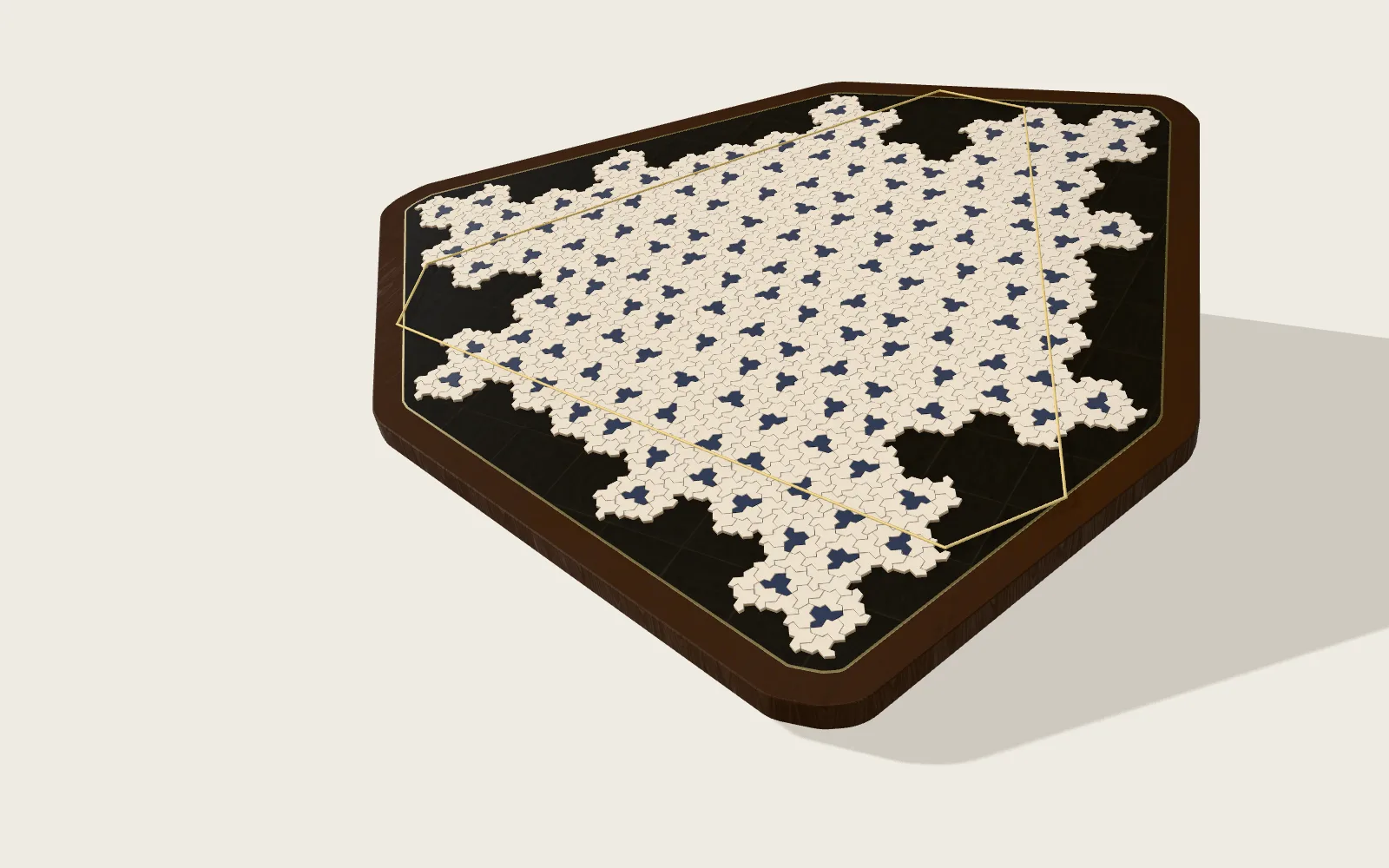
- Plate M14 One Shape, Never Repeating GeometryGoing further A thirteen-sided shape made of eight kites covers the whole plane, yet however it is laid, the pattern never repeats periodically. Open →
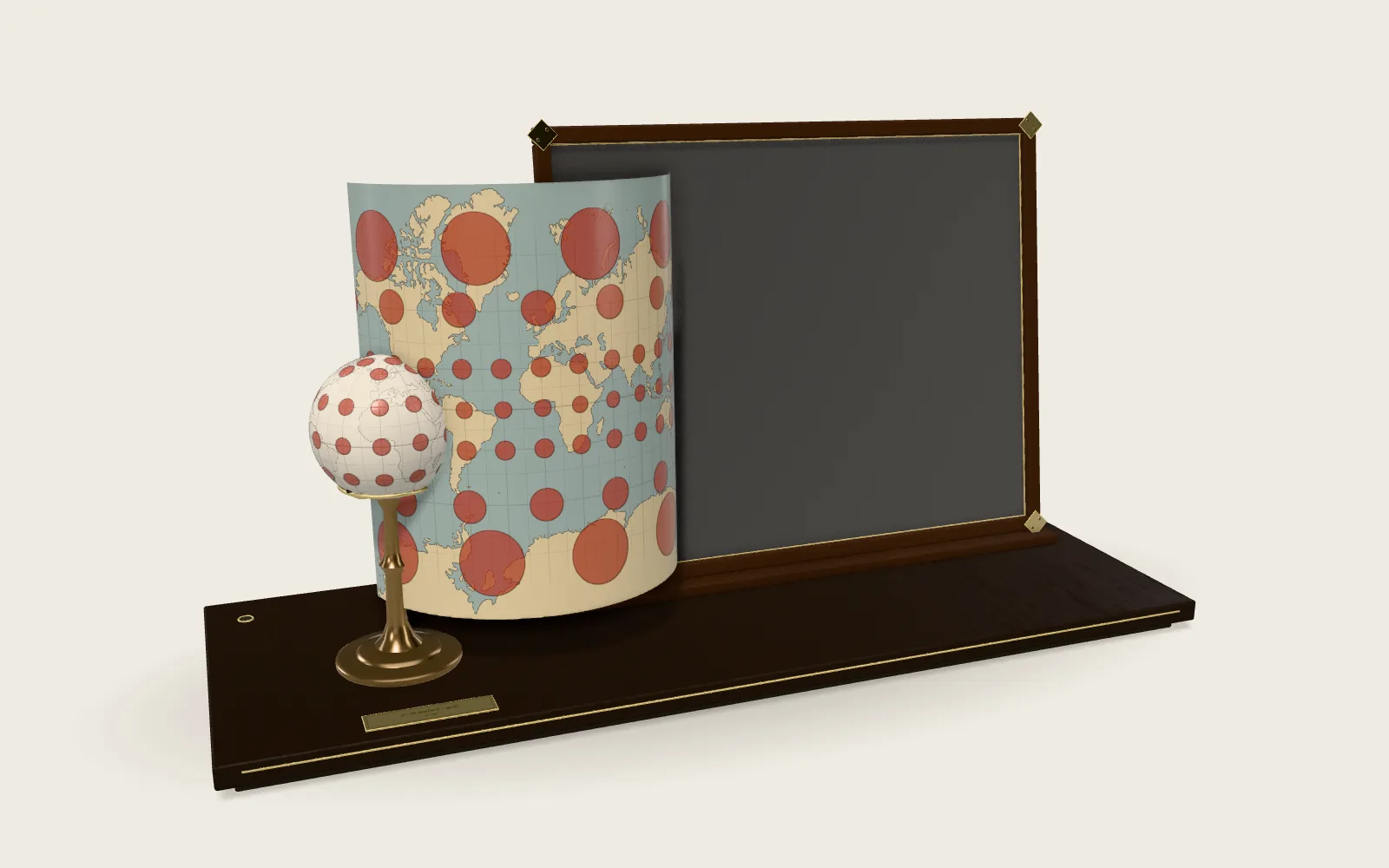
- Plate M15 A Sphere Will Not Lie Flat GeometryStart here A sphere cannot be flattened without distortion. Every map projection gives something up: area, angles, distance or straight lines. Open →
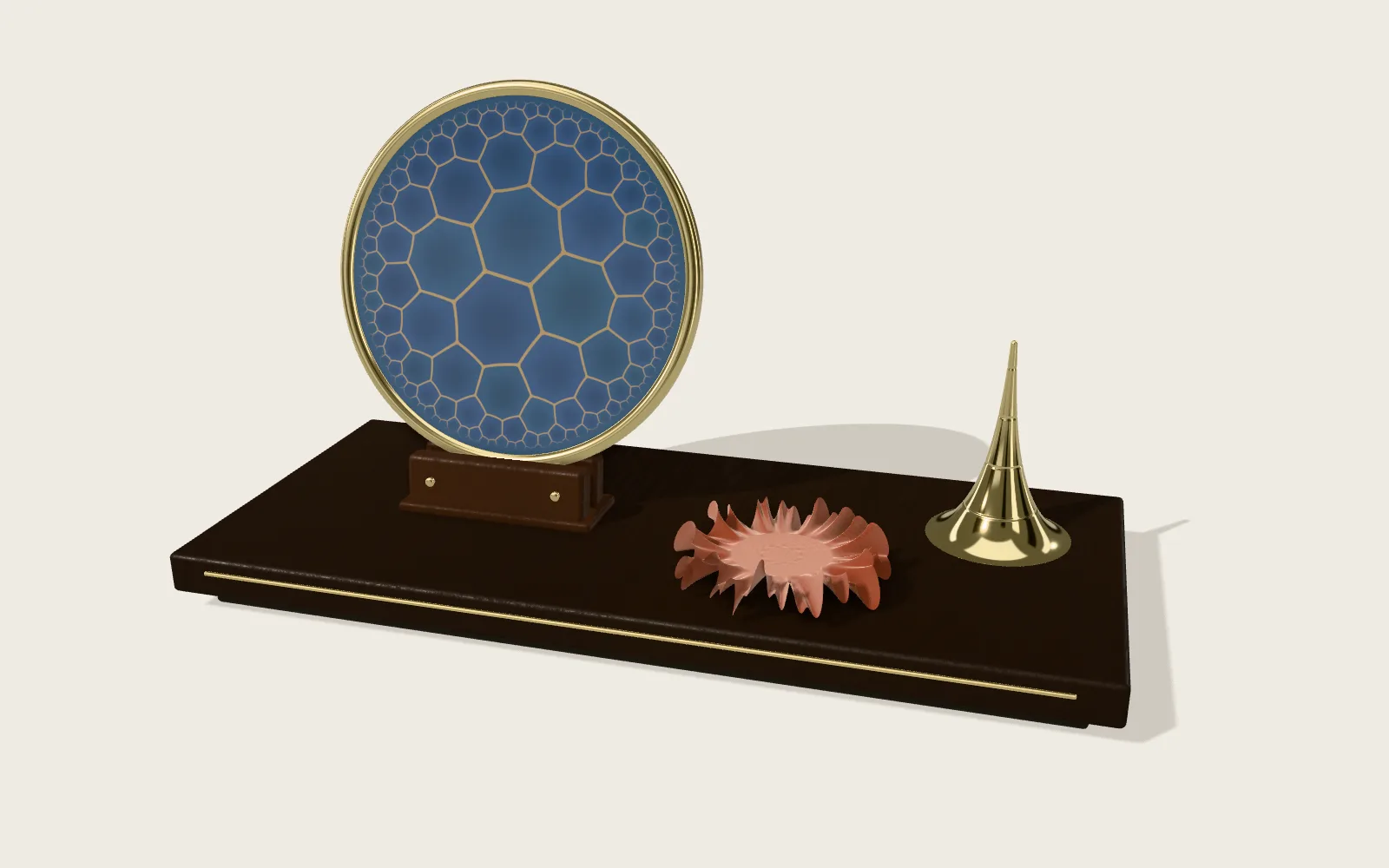
- Plate M16 More Than One Parallel GeometryGoing further Replace Euclid’s fifth postulate by “through a point off a line there is more than one parallel”, and you get a world just as consistent: triangles add up to less than 180°, and space grows exponentially. Open →
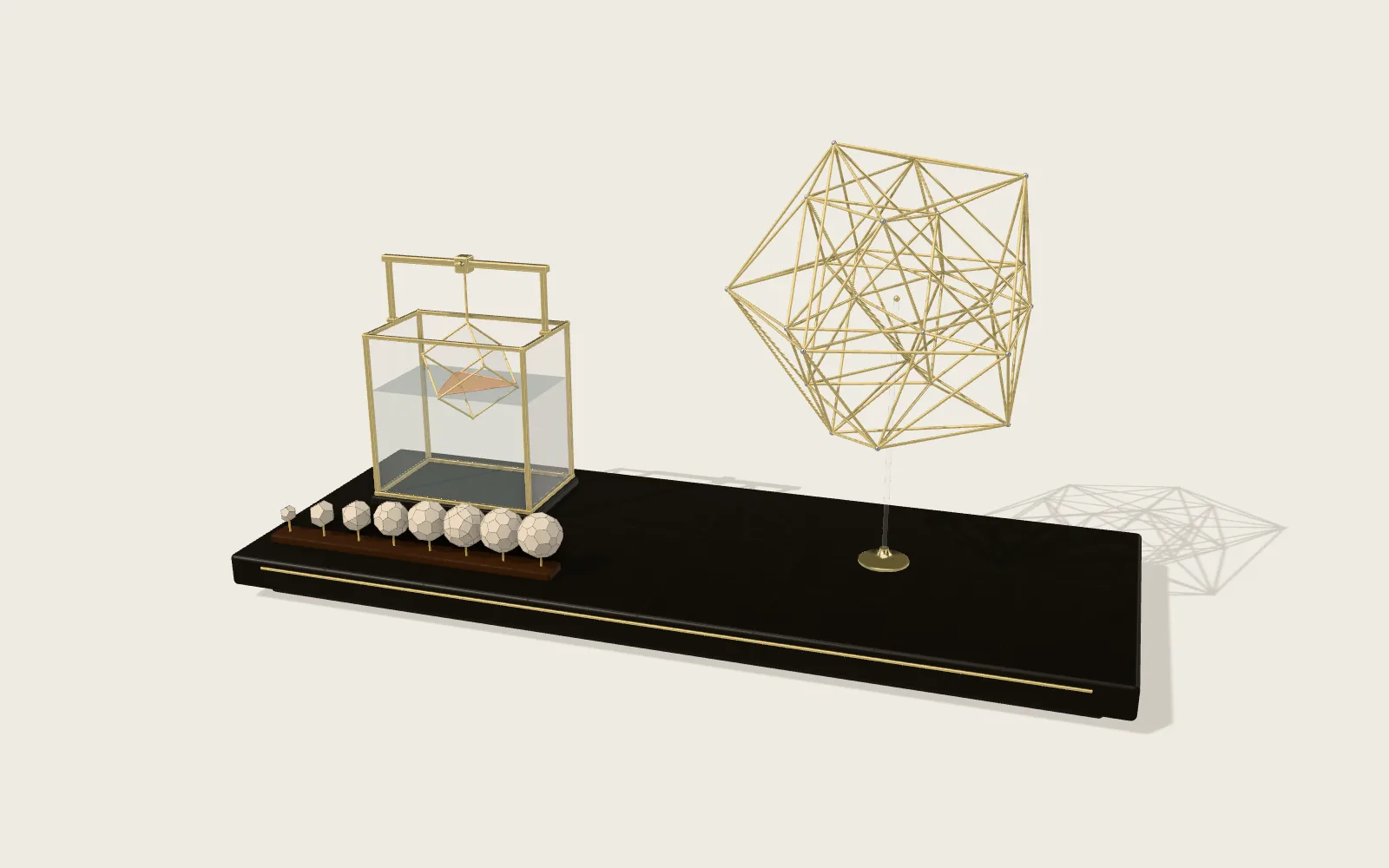
- Plate M17 The Fourth Direction GeometryGoing further Four-dimensional space holds six regular polytopes. We cannot see them, only their slices and their shadows: a three-dimensional hyperplane passing through, or a projection into our space. Open →
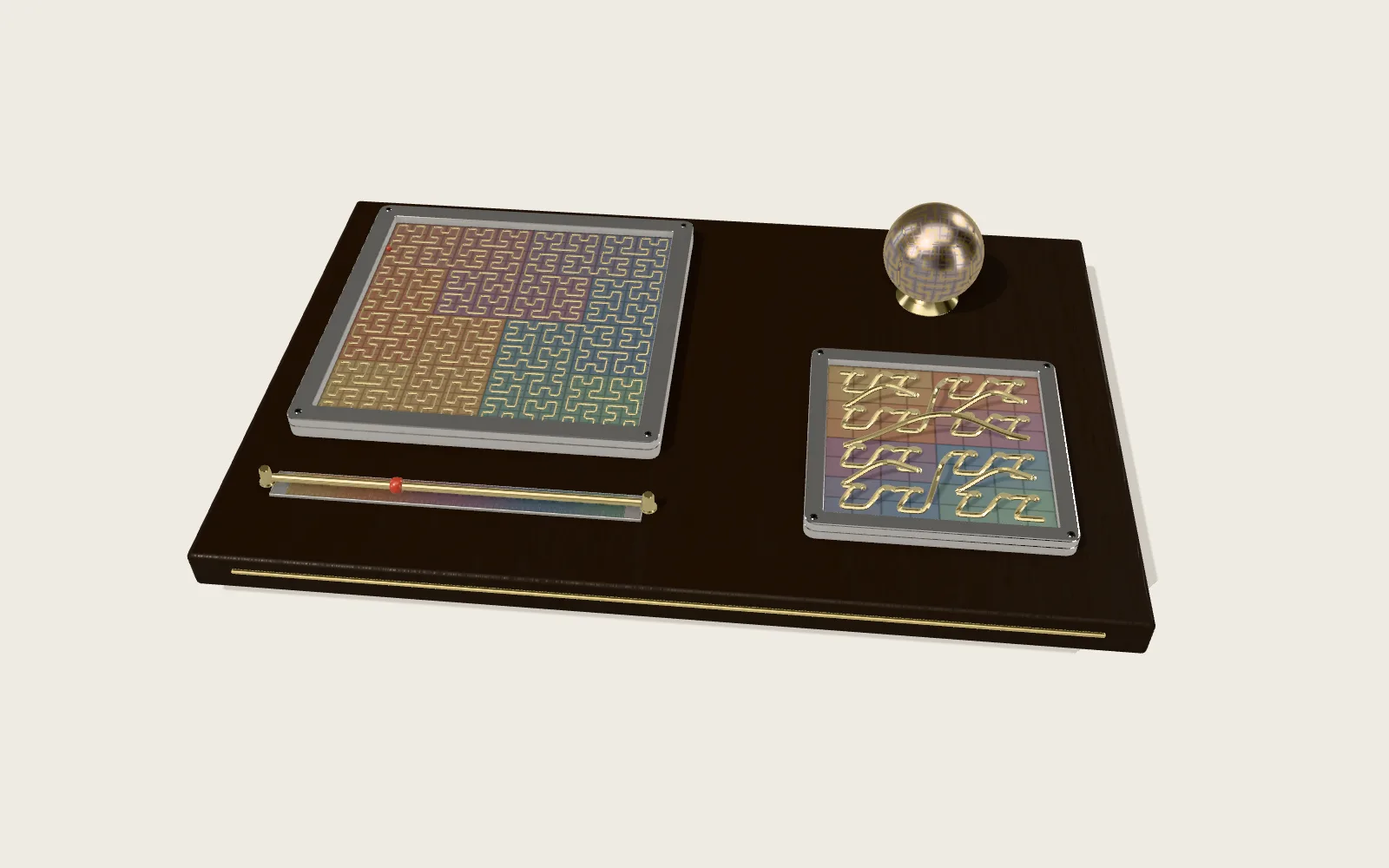
- Plate M18 A Line That Fills a Square AnalysisGoing further A continuous curve can pass through every point of a square. In 1891 Hilbert drew how: split into four, then four again, without end. Open →
- Plate M19 How Evidence Moves Belief ProbabilityGoing further Start with how much you believe something, see some evidence, and change your belief by the weight of that evidence. Bayes’ theorem says exactly how: the posterior is proportional to the prior times the likelihood. Open →
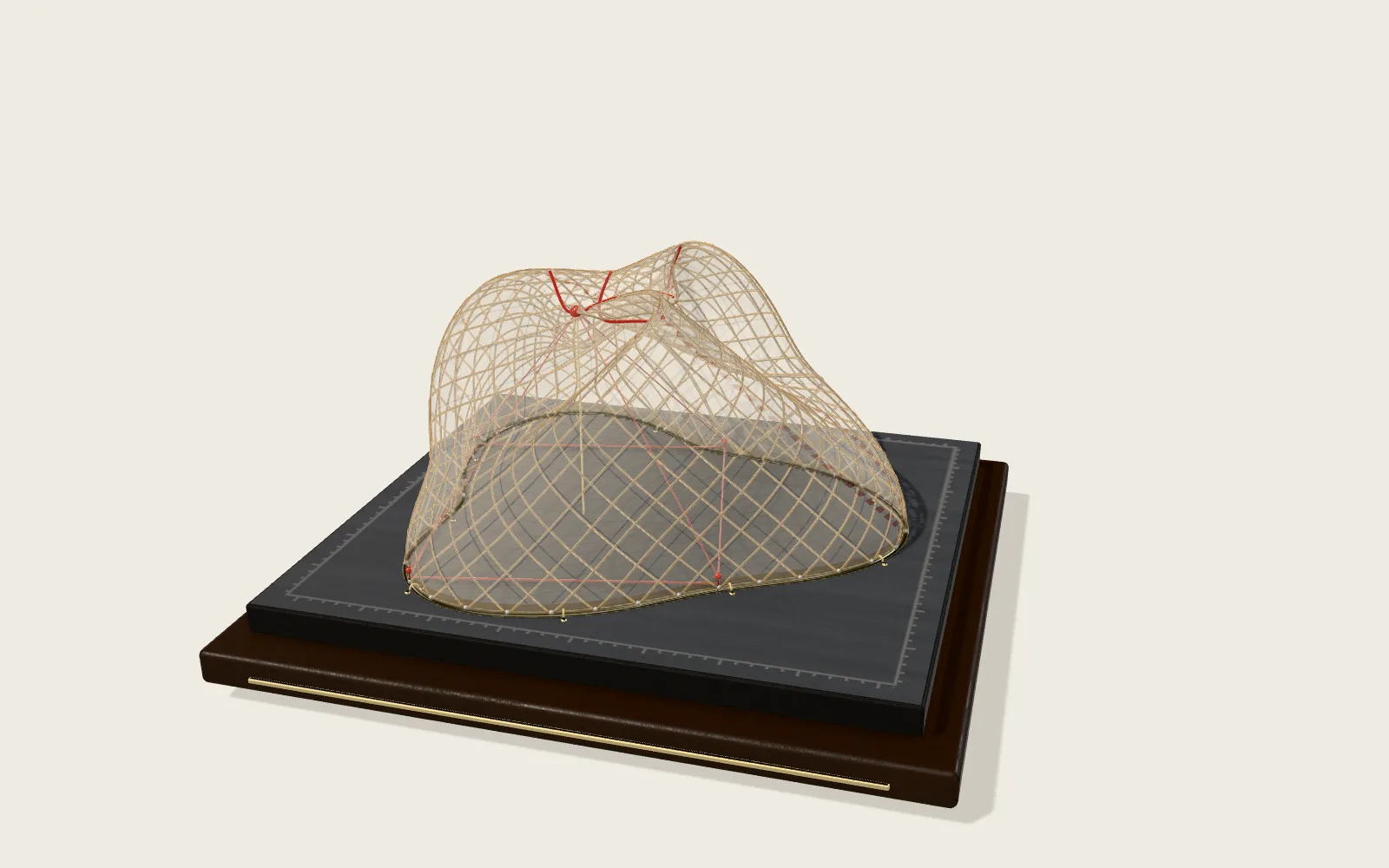
- Plate M20 Every Loop Holds a Rectangle TopologyGoing further Every closed curve in the plane has four points that form a rectangle. The proof lifts the pairs of points on the curve into space, where they make a Möbius strip; the strip cannot lie flat, it has to pass through itself, and where it does is a rectangle. Open →
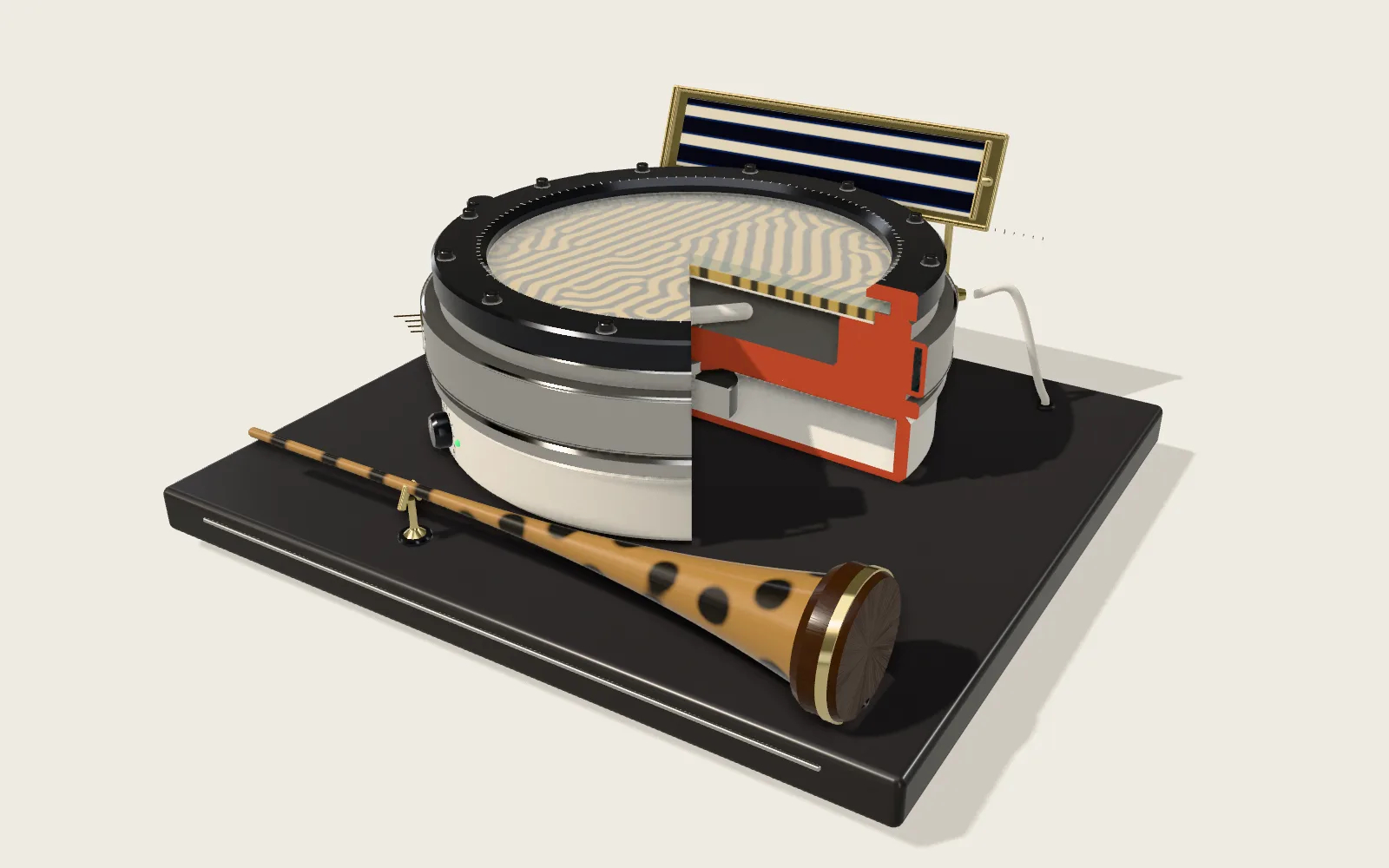
- Plate M21 Patterns Drawn by Diffusion DynamicsGoing further Two substances: one makes more of itself, the other holds it down, and the one that holds it down spreads faster. An even mixture then breaks into spots or stripes on its own, at a spacing the equations set. Open →
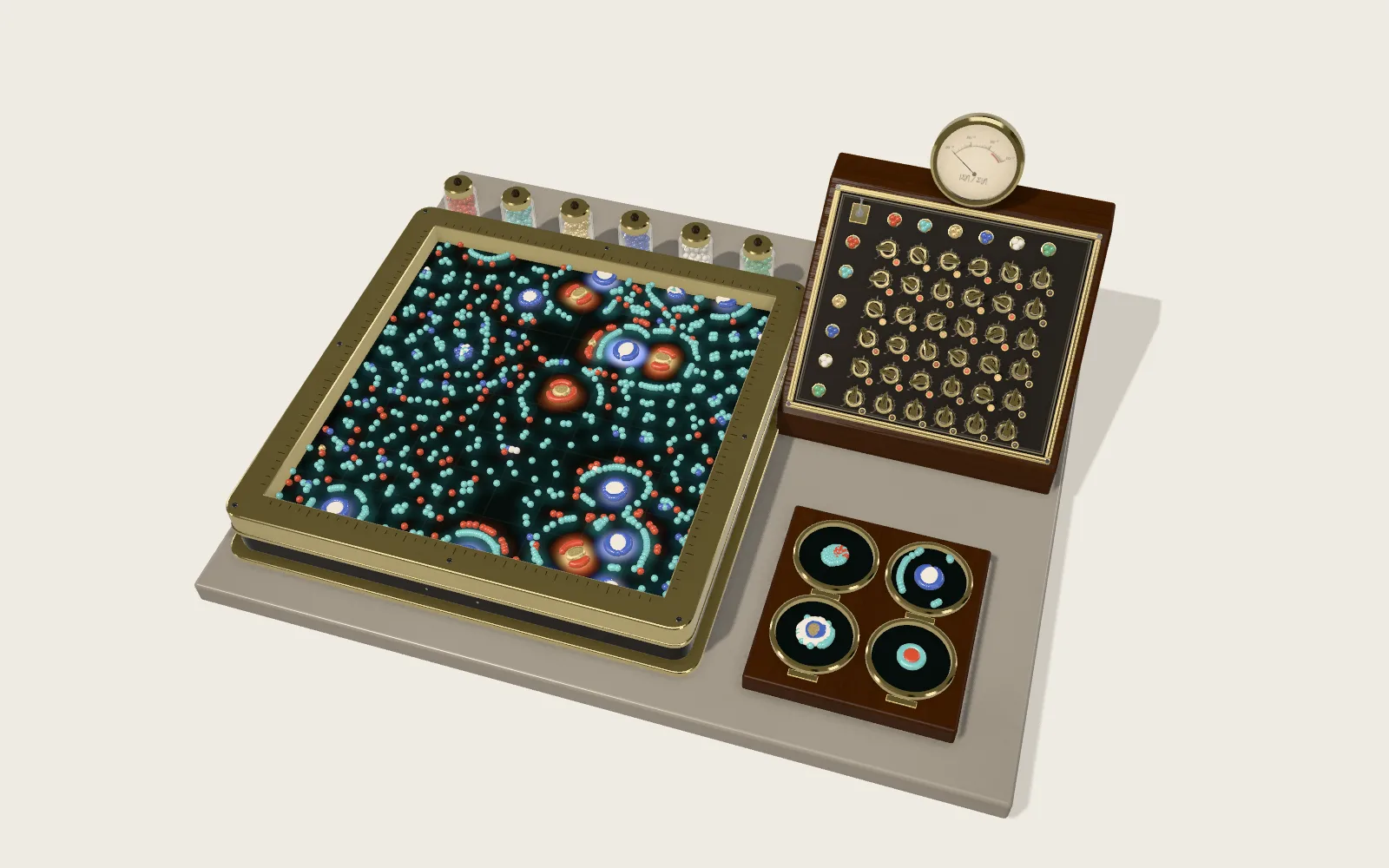
- Plate M22 Life from a Table of Numbers EmergenceGoing further A few kinds of beads, and one number between every two kinds: pull or push. Make the table lopsided and Newton’s third law fails; the tank never settles again. Open →