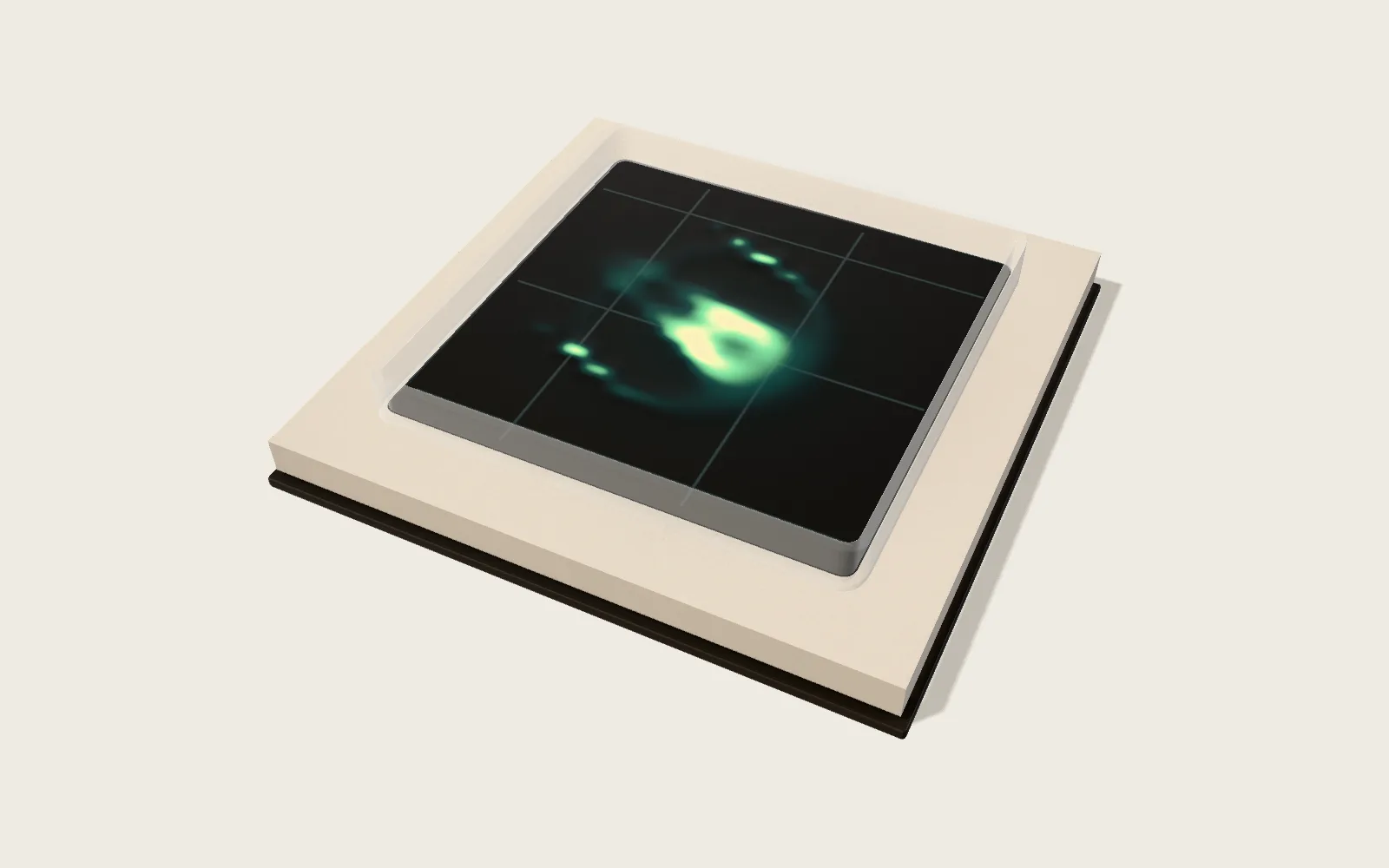
Half a Turn Is e to the iπ
eⁱᵗ describes a motion: the velocity is always the position times i, which means at right angles to the radius and of length 1. Such a point walks round the unit circle at a steady pace, so after time t it has covered an arc t. Half the circle is an arc of π, so e^(iπ) = −1.
Scroll
Times i: a Quarter Turn
A complex number a + bi is a point in the plane: a across, b up. By the rule for multiplying, i·(a + bi) = −b + ai. For example, 2 + i times i is −1 + 2i.
The new point is as far from the origin as before, and its direction has turned 90° anticlockwise. Every complex number behaves this way under i. Twice is half a turn, so i·i = −1; four times brings it home.
The brass arm on the instrument can extend. It points at z, and each multiplication by i turns it 90° about the centre, its length unchanged.
Growth at the Rate of Itself
Start at 1 and let a quantity grow at a rate always equal to its size: at 2 it grows at rate 2, at 3 at rate 3. After one unit of time it has reached e ≈ 2.718. This is eˣ: the function whose rate of change is itself.
Compound interest is the same thing in steps. Lend 1 at 100% a year, paid once, and you get 2; paid twice at 50%, 2.25; monthly, 2.613; daily, 2.7146. The more payments n, the closer (1 + 1/n)ⁿ comes to e.
Each link of the brass rule is one step: 1/n of the size so far, in the direction of the position. So each link is a little longer than the one before.
Velocity at Right Angles
The rule of eˣ is that velocity equals position. Replace x with it, and by the rules of differentiation the velocity of eⁱᵗ is i times its position.
Times i is a 90° turn, so the velocity is always at right angles to the radius. The start is 1, of length 1, so the velocity has length 1 too. The point always moves sideways, never away from the centre and never towards it: it walks the unit circle at speed 1.
At speed 1, after time t the arc covered is t. The unit circle is 2π round, so half of it is π. At t = π/2 the point is at i; at t = π it is on the far side, e^(iπ) = −1; at t = 2π it is back at 1.
A Hundred Small Steps
eⁱᵗ can also be worked out in steps, like compound interest. For t = π it is (1 + iπ/n)ⁿ: start at 1, and at each step add iπ/n times where you are.
Adding iπ/n times z means moving at right angles to the radius, by π/n of its length. Each step turns by the same small angle and stretches a little. Each link of the brass rule is one such step.
With n = 1 it is one big step, from 1 straight to 1 + πi. With n = 4 the four links already pass halfway round. With n = 100 the rule almost lies on the unit circle and ends just 0.0506 from −1. The gap is about π²/(2n): double n and it halves.
The end always lands a little outside −1. Each step stretches by √(1 + π²/n²), which over n steps comes to about 1 + π²/(2n); the angle turned falls short of π by only about π³/(3n²), far less.
Rotation as a Motion
The across of eⁱᵗ is cos t and the up is sin t, so eⁱᵗ = cos t + i sin t. The two brass riders on the real and imaginary axes follow the shadows of the arrow’s tip.
Change the speed and the motion changes with it: e²ⁱᵗ turns twice as fast, e⁻ⁱᵗ turns the other way, and r·eⁱᵗ walks a circle of radius r.
Join many such arrows head to tail, each turning at a whole-number speed, and the last tip can draw any closed line. That is a Fourier series.
The Bench
t runs from 0 to 2π and the arrow points at eⁱᵗ; it also turns by hand on the slate. The brass rule folds to (1 + it/n)ⁿ, with n from 1 to 100. The readout is the distance between the two.
Try thisWith t = 2π, where does the arrow stop? And with t = π/2?
What the model leaves out
The instrument is a model of the idea. The two riders follow the shadows of the arrow’s tip; a real instrument would need linkages for that, left out here. Every link of the rule is placed exactly at (1 + w/n)ᵏ, and its width is only for seeing; with n = 100 each link is about 1.6 mm long. Time t has no units; the scene runs at about 0.8 per second. eⁱᵗ is computed from cos t and sin t, and (1 + it/n)ⁿ by repeated complex multiplication, each without the other.
Two common misreadings
e^(iπ) is not e multiplied by itself iπ times: “how many times” only makes sense for whole numbers. eⁱᵗ means the motion that starts at 1 with velocity always i times its position; it is also the limit of (1 + it/n)ⁿ as n grows, and the series 1 + it + (it)²/2! + (it)³/3! + …, and all three give the same number. And a rule with finitely many steps is not on the unit circle: each step leans slightly outwards, so it ends outside −1, closer as n grows.
Sources
- Leonhard Euler (1748), Introductio in analysin infinitorum, volume 1, Lausanne: Bousquet (Euler Archive E101)
- J. J. O’Connor and E. F. Robertson, The number e, MacTutor History of Mathematics (compound interest and (1 + 1/n)ⁿ; the Introductio of 1748)
- J. J. O’Connor and E. F. Robertson, Leonhard Euler, MacTutor History of Mathematics
Data
Leonhard Euler printed e^(+v√−1) = cos v + √−1 · sin v in 1748, in the Introductio in analysin infinitorum, where he defines eˣ through (1 + x/n)ⁿ with n infinitely large. Jacob Bernoulli met the limit of (1 + 1/n)ⁿ in 1683, in a question about compound interest. Reading eⁱᵗ as a motion whose velocity is i times its position is the approach of Grant Sanderson (3Blue1Brown) in “e^(iπ) in 3.14 minutes, using dynamics”; his videos are under Watch next. The slate instrument and its jointed rule are our own model of the idea.
Watch next
The player comes from YouTube and loads only when you press play.
Follow the question
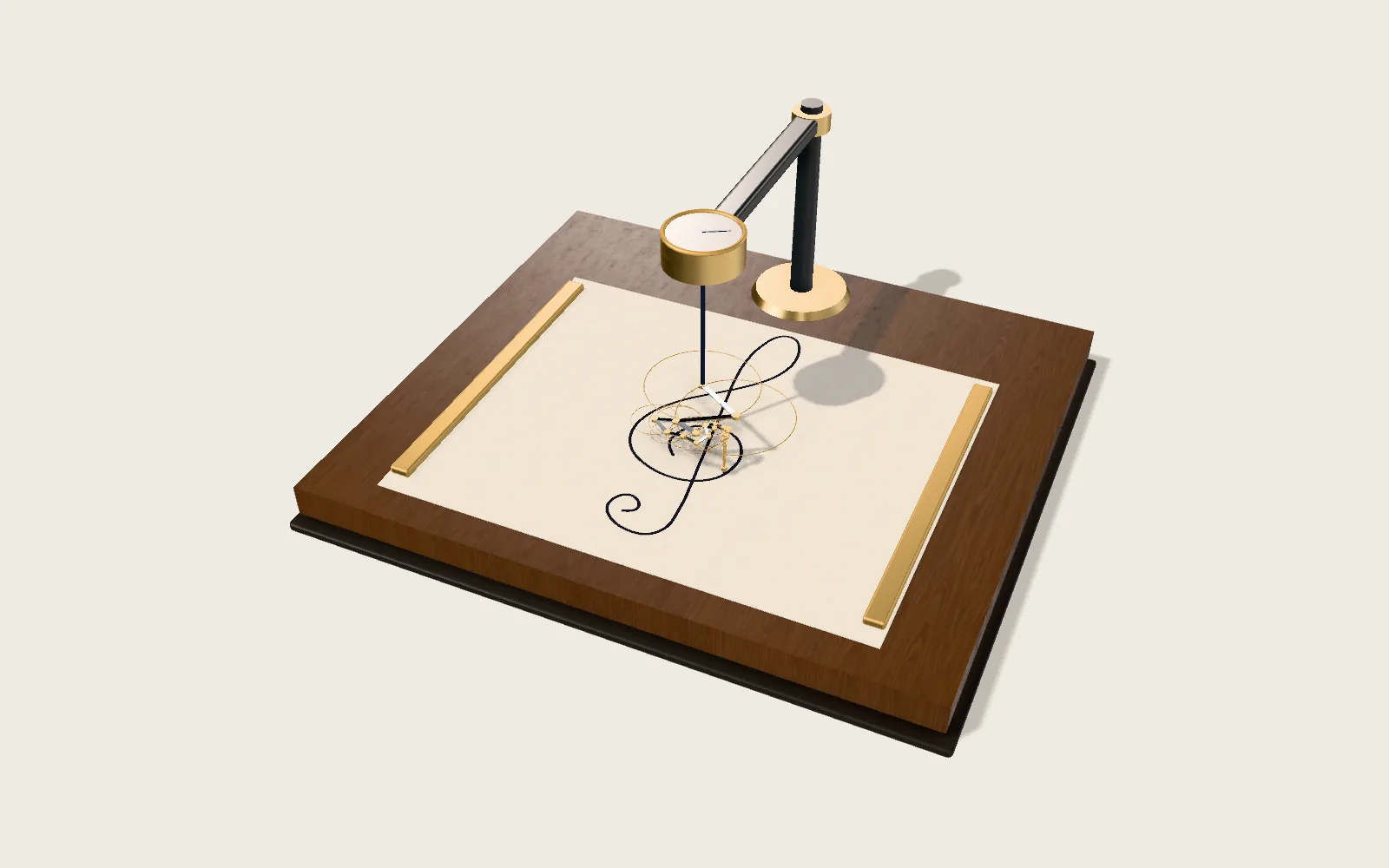 Plate M03Any Closed Line, Drawn by Turning CirclesA chain of arrows, head to tail, each turning at a whole-number speed: the last tip can draw any closed line.
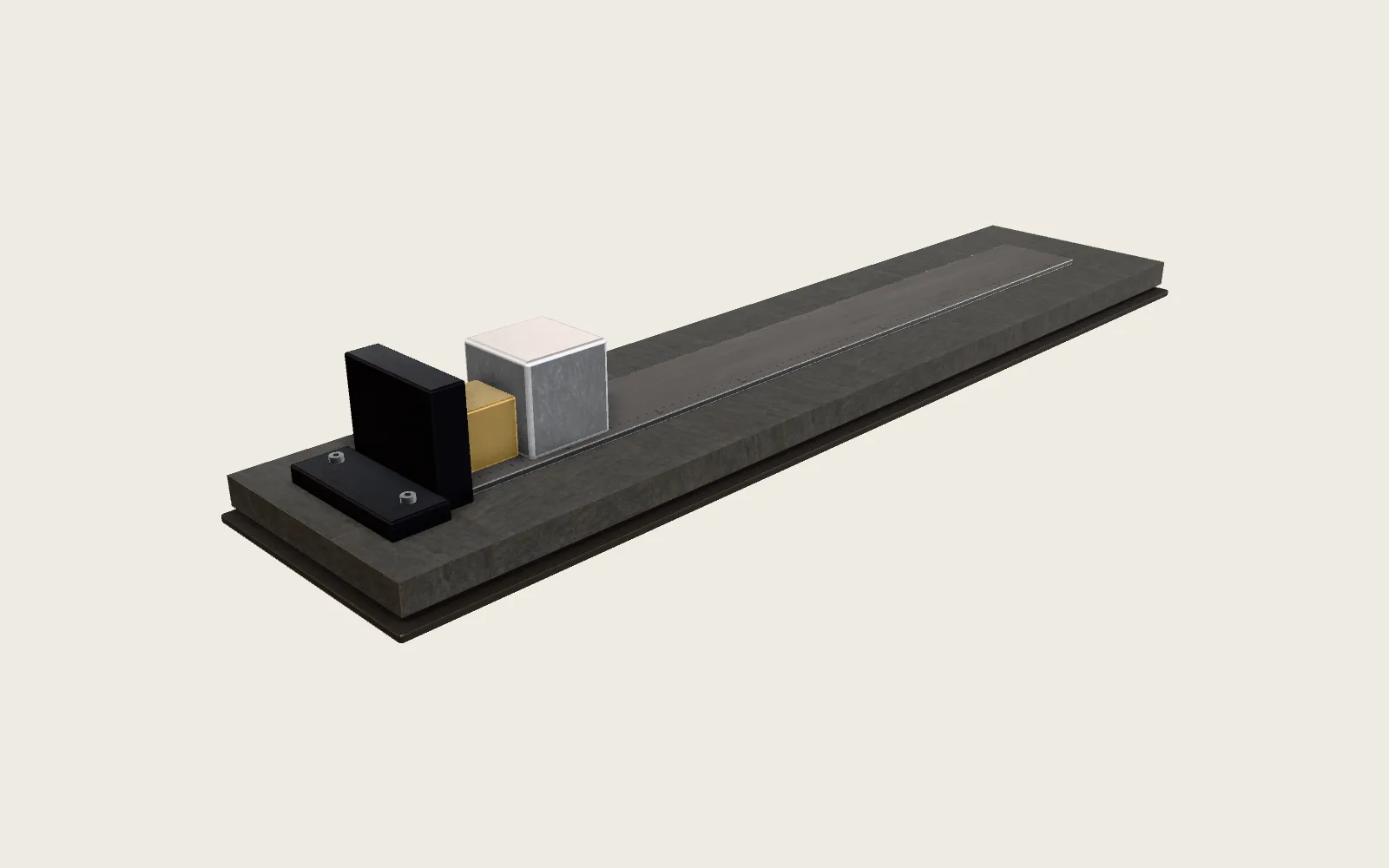 Plate M02Counting Clacks, Finding πTwo blocks and a wall, and a count of the collisions. Each time the large block gets 100 times heavier, the count gains another digit of π.