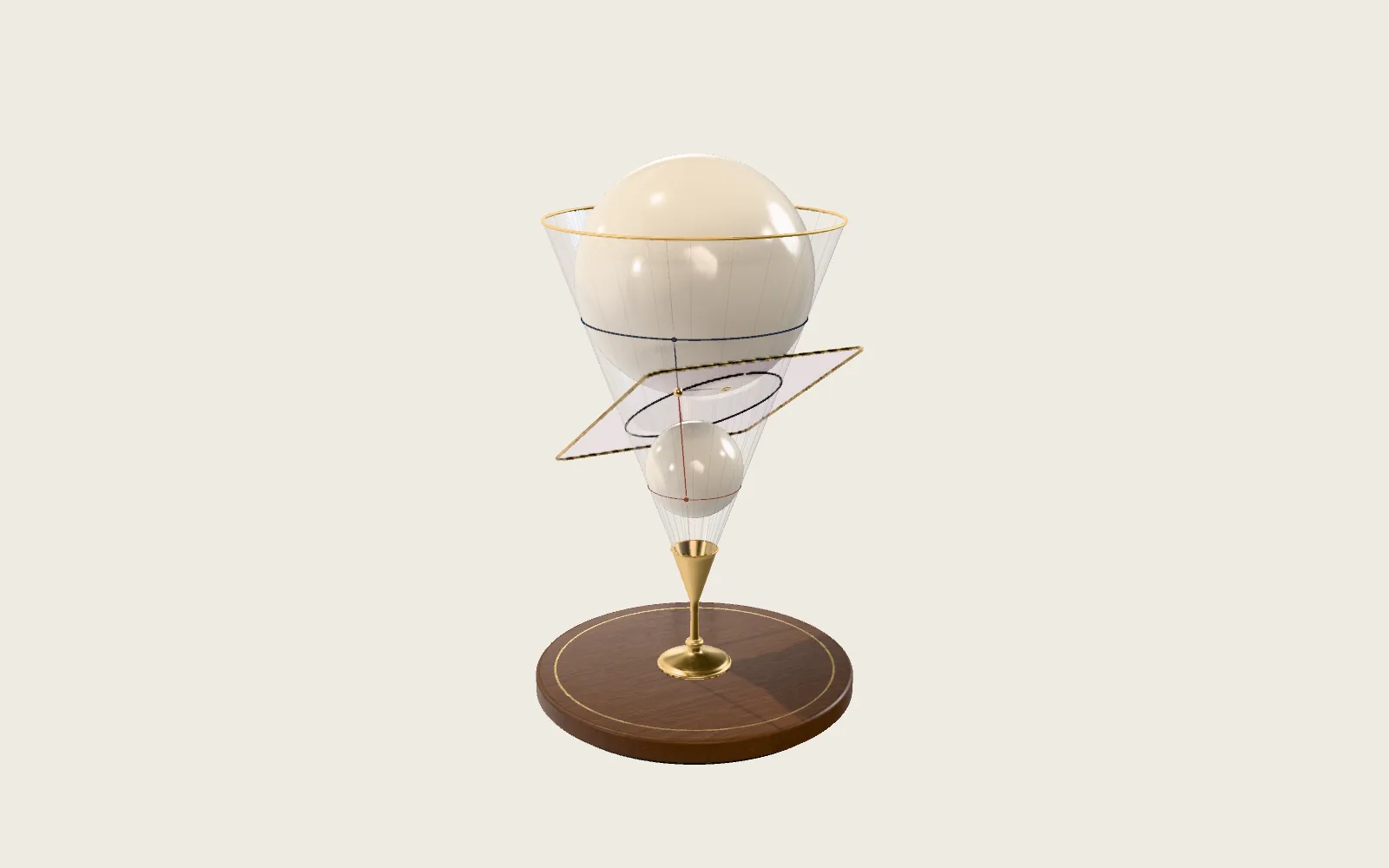
One in Eight Random Tetrahedra Hold the Centre
Pick four points at random on a sphere and join them into a tetrahedron. The centre lies inside it with probability exactly 1/8. Three random points on a circle make a triangle that holds the centre with probability 1/4. Both answers can be counted out the same way.
Scroll
Three Points on a Circle
Pick three points on a circle, every place equally likely, and join them into a triangle. Sometimes the centre is inside, sometimes not. The model picks new points again and again, and the counter keeps the share that hold the centre.
Fix P₁ and P₂ first. Draw a line from each through the centre, and the circle is cut into four arcs. The triangle holds the centre only when P₃ lands on the arc opposite P₁ and P₂.
The angle θ between P₁ and P₂ is spread evenly from 0 to 180°, so the opposite arc, θ/360° of the circle, is spread evenly from 0 to a half. On average it is a quarter. So the probability is 1/4.
Lines First
There is another way to pick a point, with exactly the same result: pick a random line through the centre, then flip a coin to choose one of its two ends. Every place on the circle is still equally likely.
Pick two lines, then P₃, and flip the two coins last. Once the lines and P₃ are set, the coins have four outcomes, all equally likely. Exactly one of them puts both P₁ and P₂ opposite P₃, and the triangle holds the centre.
Wherever the two lines and P₃ fall, it is one outcome in four. So the probability is 1/4.
Four Points on a Sphere
Up one dimension: pick four random points on a sphere and join them into a tetrahedron. Problem A6 of the 53rd Putnam competition, in 1992, asked how likely the centre is to lie inside. The counter settles near 1/8.
The first way carries over: fix P₁, P₂ and P₃, and P₄ has to land in the spherical triangle with corners −P₁, −P₂ and −P₃. That triangle is sometimes large, sometimes small, and on average exactly an eighth of the sphere, but finding that average directly takes a hard integral.
Eight Outcomes
Switch to lines: pick three lines through the centre, then P₄, and flip three coins last to choose which end of each line to use. Three coins have eight outcomes, all equally likely.
Write −P₄ as a mix of the three line directions, −P₄ = a₁u₁ + a₂u₂ + a₃u₃. When every line takes the end on the side of its aᵢ’s sign, the centre is inside the tetrahedron; flip any one and it is outside. Exactly one outcome in eight, so the probability is 1/8.
A Different Question
The two ways ask different questions. The first asks how large the target is, and in three dimensions it runs into an integral. The second takes the way the points are picked apart and puts it back together in a new order, lines first and coins after, and the question becomes counting: one in four, one in eight.
The lines through the centre were first drawn only to see which arc counts. Made into the first step of the random choice, they take away the need for the hard average. Here the model does only that: three lines and P₄, and of the eight outcomes it lights the one that works.
The same count works in any dimension and for any number of points. In 1962 J. G. Wendel proved that n random points on the unit sphere in d dimensions (the circle is d = 2) all lie in some half-sphere with probability 2⁻⁽ⁿ⁻¹⁾·Σ C(n−1, k), for k from 0 to d−1. Their hull holds the centre with 1 minus that: one half for four points on a circle, 5/16 for five on a sphere.
The Bench
The bench switches between the circle and the sphere, with 3 to 8 points. With more points than the dimension plus one, the test is whether their hull holds the centre. Each bar of the histogram is the share in one group of 200 trials; the vertical line is the exact value.
Try thisFour points on a circle: how often does the quadrilateral hold the centre?
What the model leaves out
The model is a model of the idea: a glass sphere about 20 cm across, brass pins for the points, fine steel rods for the edges, and a ruby bead at the centre that lights when the tetrahedron holds it. The counter runs a few hundred trials a second; the sphere shows only a few of them. The random numbers come from a seeded pseudorandom generator. Each point is a few independent normal random numbers divided by the length of the vector they make, which makes every direction equally likely. Whether the centre is inside is read from the signs of its barycentric coordinates: all positive means inside.
Two common misreadings
The answer does not depend on the points lying on the circle or the sphere. Any rule for picking points that is symmetric about the centre keeps the coin argument working: three points spread evenly over the whole disc still make a triangle that holds the centre with probability 1/4. A lopsided rule does not. And “exactly one” leaves out the cases where a point lands exactly on one of the lines or planes; those have probability zero and do not change the answer.
Sources
- The 53rd William Lowell Putnam Mathematical Competition (5 December 1992), problems, A–6 (Kiran Kedlaya’s Putnam archive)
- Mathematical Association of America, The William Lowell Putnam Mathematical Competition
- J. G. Wendel (1962), A Problem in Geometric Probability, Mathematica Scandinavica 11: 109–111
- Mervin E. Muller (1959), A note on a method for generating points uniformly on n-dimensional spheres, Communications of the ACM 2(4): 19–20
- A. van Oosterom and J. Strackee (1983), The Solid Angle of a Plane Triangle, IEEE Transactions on Biomedical Engineering 30(2): 125–126
Data
The problem is A6 of the 53rd William Lowell Putnam Mathematical Competition (5 December 1992), run by the Mathematical Association of America (MAA). The solution by lines and coin flips is the one Grant Sanderson (3Blue1Brown) walks through in “The hardest problem on the hardest test” (2017); the video is under Watch next. The glass sphere and its pins are our own model of the idea.
Follow the question
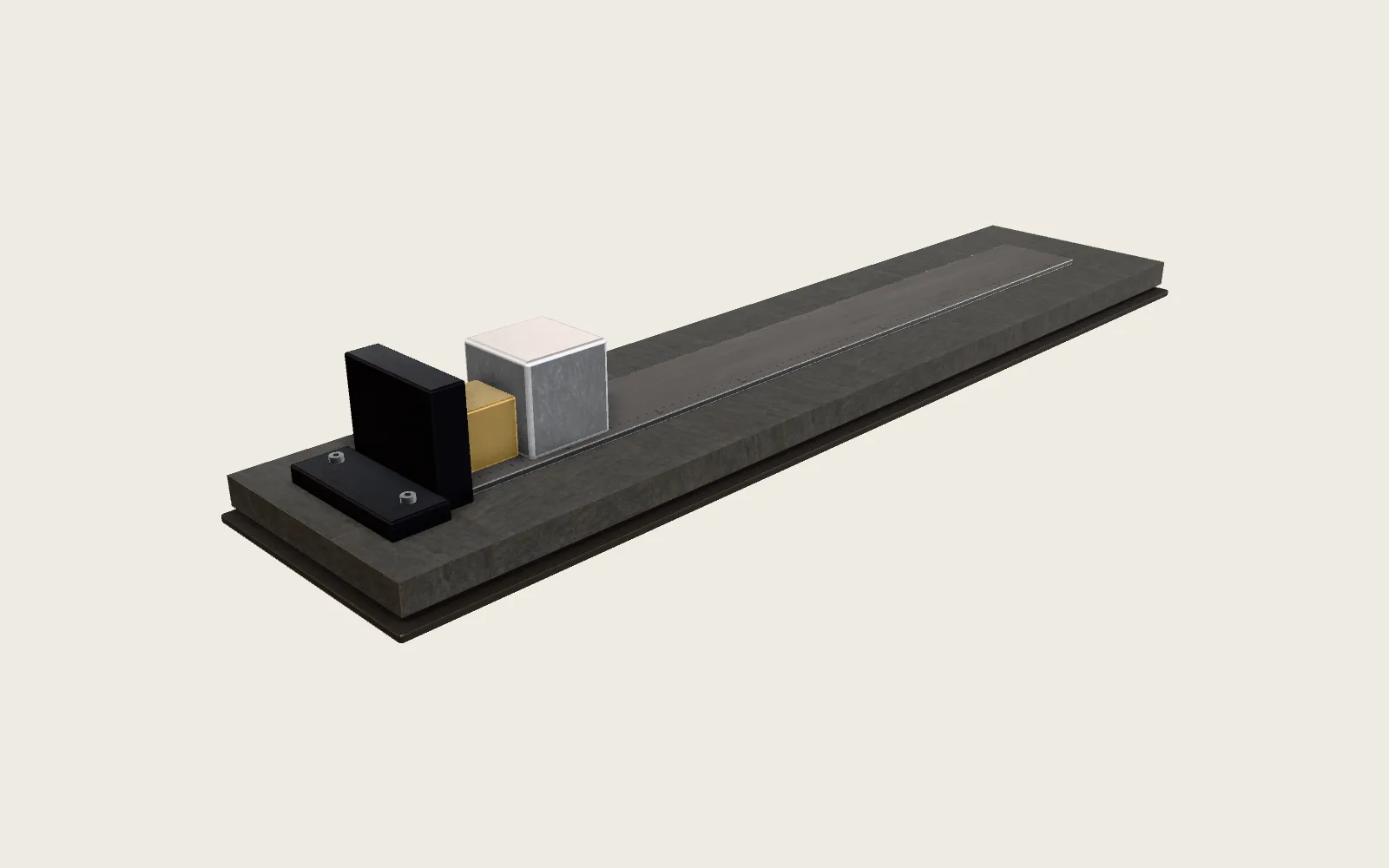 Plate M02Counting Clacks, Finding πTwo blocks and a wall, and a count of the collisions. Each time the large block gets 100 times heavier, the count gains another digit of π.
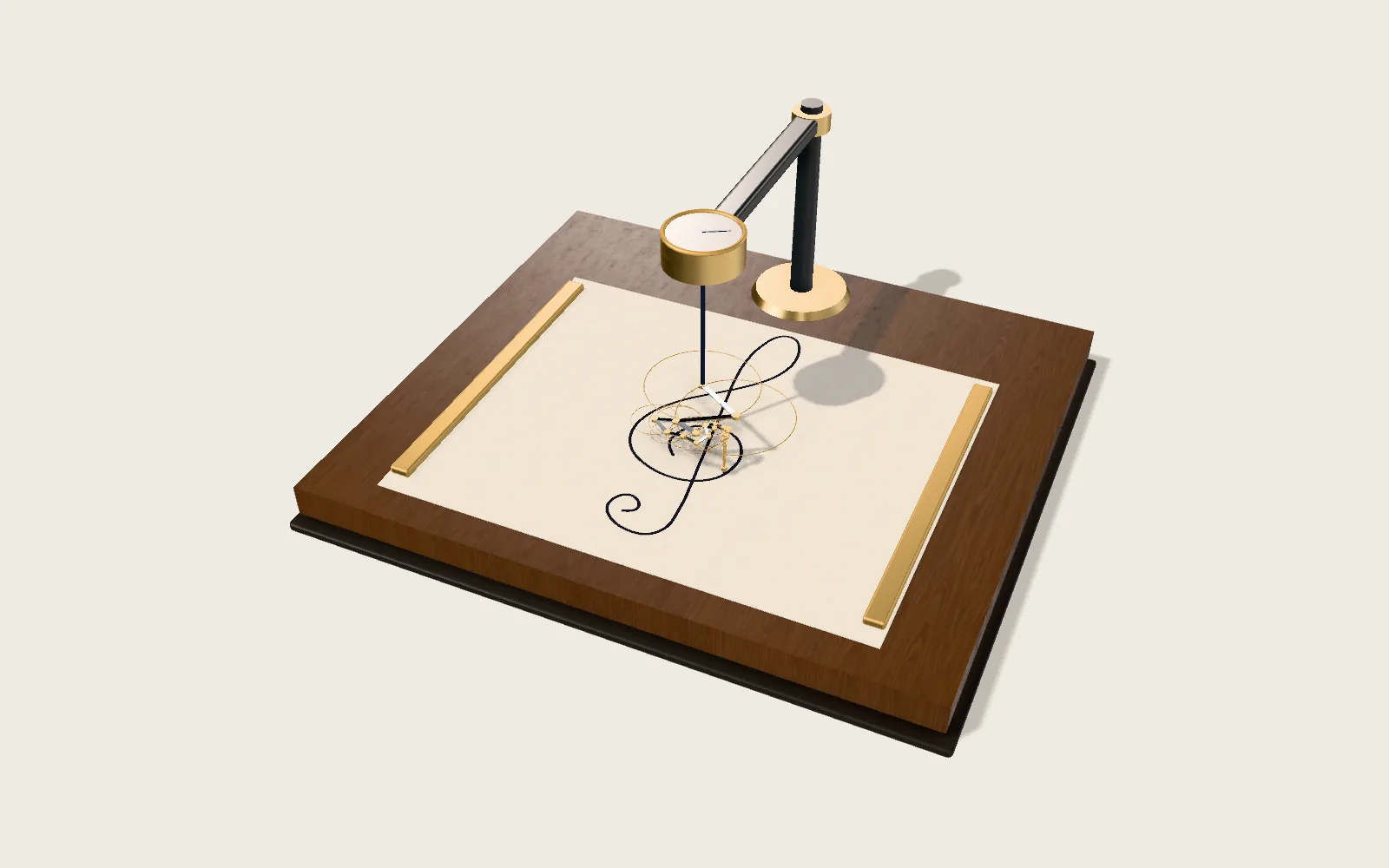 Plate M03Any Closed Line, Drawn by Turning CirclesA chain of arrows, head to tail, each turning at a whole-number speed: the last tip can draw any closed line.