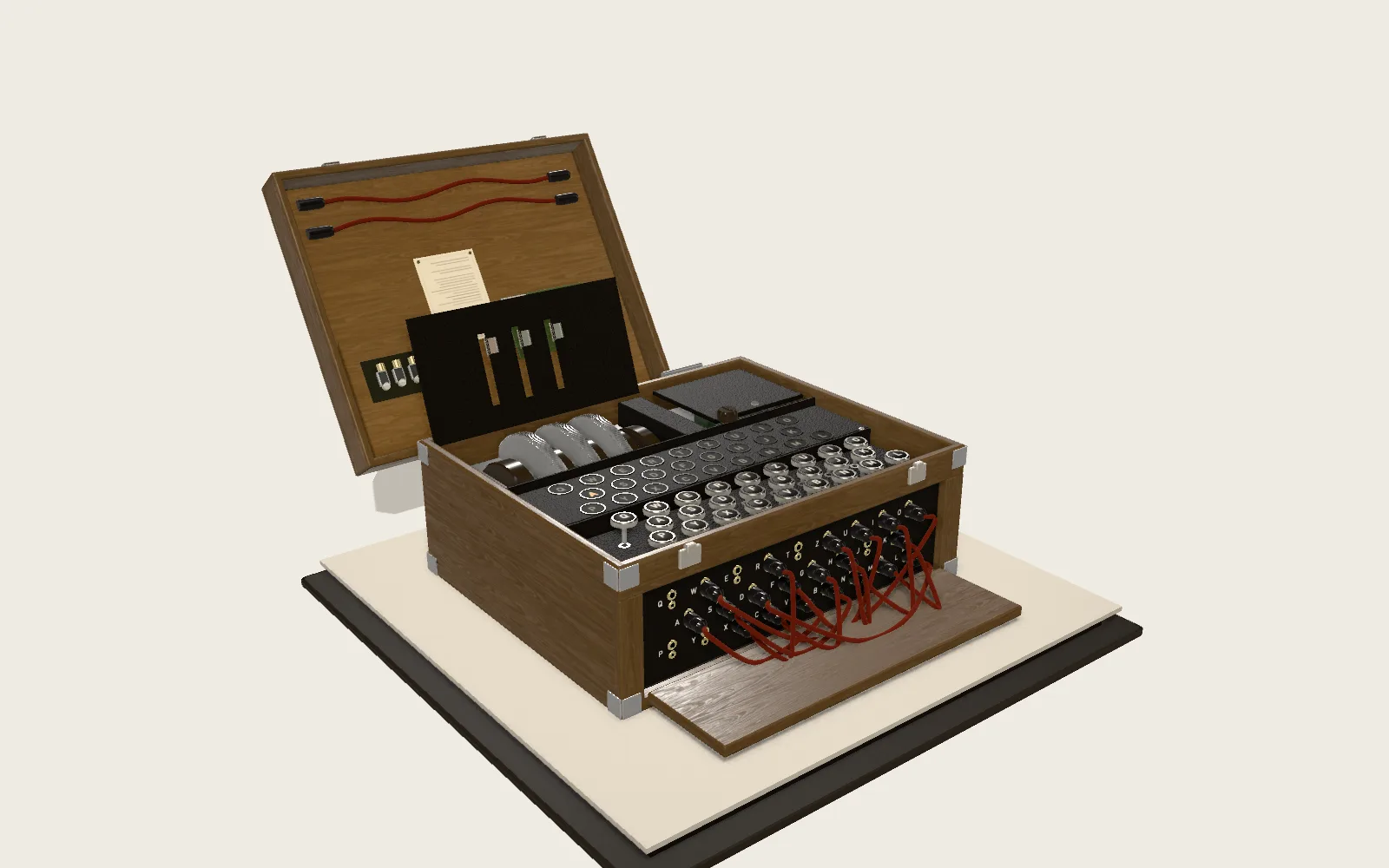
The Lockstitch Sewing Machine
By hand, a few dozen stitches a minute. A sewing machine has its needle’s eye at the point and two threads, one above the cloth and one below, that lock in the middle of it, hundreds of times a minute. The model is a black japanned household machine with gold decals; the hook and bobbin sit under the cloth.
Scroll
How Slow Sewing by Hand Is
Hand sewing means pushing one needle back and forth through the cloth. In the mid-nineteenth century a skilled seamstress made about two dozen stitches a minute in fine linen, and about forty in plainer work. A man’s shirt took more than fourteen hours.
Elias Howe’s machine of 1846 made about two hundred and fifty stitches a minute. Machines a few years later were several times faster again.
The Eye at the Point
A hand needle has its eye at the blunt end, and the whole needle goes through the cloth. A machine needle has its eye near the point: it carries the thread into the cloth, leaves a loop underneath, and comes back out without passing through.
Under the cloth is a second thread, wound on a bobbin. The loop of upper thread has to be passed round it so the two threads lock together: the lockstitch. Howe’s patent of 1846 joined the eye-pointed needle to a shuttle carrying a second thread. Down one side of the needle runs a long groove that holds the thread on the way down; on the other side, just above the eye, is a hollow, the scarf, which the hook’s point brushes past.
How One Stitch Locks
At the bottom of its stroke the needle starts back up. After about 2 mm, the thread on the scarf side is held back by the cloth and stands out as a small loop. The hook’s point passes the needle just then and enters the loop.
The hook turns on and spreads the loop wider and wider, one side over the front of the bobbin case and one behind it, all the way round. The take-up lever is at its lowest, giving thread. The loop slips off the hook, the take-up lever rises, and the loop closes round the lower thread coming out of the case and draws the crossing up into the middle of the cloth. Red is the upper thread, blue the lower. It is slowed down many times here; drag the bar to step through it.
The Feed Dogs
Under the throat plate is the feed dog, a row of fine teeth. Once the needle is out of the cloth, the dog rises about a millimetre through slots in the plate, grips the cloth and carries it back one stitch length, then drops and returns forward under the plate. Up, back, down, forward: four motions to a turn.
The presser foot holds the cloth down on the dog. The stitch length sets how far it goes: on this machine 6 to 30 stitches to the inch, about 0.85 to 4.2 mm a stitch.
One Turn, One Stitch
One turn of the handwheel takes the needle bar down and up once and makes one stitch. A crank on the front end of the arm shaft drives the needle bar; a cam on the same shaft drives the take-up lever, which reaches its top only after the needle bar has, and pulls the stitch tight then.
A pair of gears on the bed shaft drives the hook at twice the handwheel’s speed. The hook turns twice for each stitch: once carrying the loop round the bobbin case, once idle, while the needle is above the cloth. An eccentric on the bed shaft moves the feed dog, only while the needle is out of the cloth.
Through one turn: the needle’s point, the take-up lever, the hook’s catch and the feed. The line is now
Taken Apart
Above are the arm and the head: the needle bar, the presser bar, the take-up lever and the tension are all in the head, and the handwheel at the right-hand end. The arm shaft runs inside the arm, and a vertical shaft in the pillar takes the drive down under the bed.
Under the bed are the bed shaft, the hook, the bobbin case and the bobbin, and under the throat plate the feed dog. Tap a part to take it out on its own.
Inside the Machine
The arm and bed cut open: the handwheel turns the arm shaft; a crank on its left end drives the needle bar and a cam drives the take-up lever. Bevel gears take the drive from the arm shaft to the vertical shaft in the pillar, and from that to the bed shaft. At the bed shaft’s left end a pair of gears, two to one, turns the hook twice.
What It Changed
By machine, a man’s shirt took a little over an hour instead of more than fourteen. Clothes could be made in quantity, and sewing moved from the home into factories. By 1876 Singer alone sold more than 260,000 machines a year.
At first a machine cost $125, when an American family earned less than $500 a year. In 1856 Singer began selling by instalments: a small sum down and the rest month by month. That brought the machine into the home, and made buying on instalments common.
Through the 1850s Howe, Singer and other makers fought over patents for years: the Sewing Machine War. In 1854 Singer settled with Howe, paying him and a royalty on every machine. In October 1856 four parties, Howe, Singer, Grover & Baker and Wheeler & Wilson, signed the Albany Agreement and pooled their patents: $15 on every machine sold, $5 of it to Howe. The pool lasted until its last patent ran out in 1877.
Time to sew by hand and by machine (experiments reported in Once a Week, 1862–63)
Sew a Few Stitches
Drag the handwheel on the model, or push the speed lever, and stitches form one by one on the cloth. The stitch-length lever makes them longer or shorter; X-ray shows the hook and bobbin case under the plate.
Try thisThe hook turns once for every half turn of the handwheel. Why does it need to go twice as fast?
What the model leaves out
The machine is invented, with no maker’s name, in the proportions of black household machines of the 1930s to 1950s. The hook stands upright on a horizontal axis, as in Singer’s 221; the two turns per stitch are from Singer’s service manual for the 201, whose hook lies flat. The loop’s shape is computed from the geometry of each moment, not simulated; the threads are drawn a little thicker than real ones, to be seen. The upper thread is red and the lower blue to tell them apart; on a real machine they are usually the same colour. The take-up cam’s profile, the gear train and the needle-bar link’s length are the model’s. The bobbin winder, reverse stitching, the springs inside the tension and the presser-foot pressure are not shown.
Some common misreadings
No one person invented the sewing machine: by 1830 Barthélemy Thimonnier had chain-stitch machines making army clothing in Paris; Walter Hunt built a lockstitch machine in 1833–34 but did not patent it; Howe’s patent came in 1846 and Singer’s in 1851. Singer did not patent the presser foot or the treadle. A lockstitch is not a knot: the two threads only loop round each other, and the crossing is pulled into the middle of the cloth, so the seam looks the same on both sides.
Sources
- US Patent 4,750 (10 September 1846, Elias Howe): an eye-pointed needle with a shuttle
- US Patent 8,294 (12 August 1851, Isaac M. Singer)
- US Patent 8,296 (12 August 1851, Allen B. Wilson): the rotary hook
- US Patent 12,116 (19 December 1854, Allen B. Wilson): the four-motion feed
- Smithsonian National Museum of American History: Howe’s patent model, 1846
- Smithsonian National Museum of American History: Singer’s patent model, 1851
- Smithsonian National Museum of American History: Wilson’s patent model, 1852 (rotary hook and stationary bobbin)
- Smithsonian National Museum of American History: Walter Hunt’s patent model (his lockstitch machine of 1833 was not patented)
- Science Museum Group: copy of Thimonnier’s chain-stitch sewing machine, 1830
- Science Museum Group: Howe’s sewing machine, about 1846
- Science Museum Group: Singer lockstitch sewing machine, model of 1851
- Victoria and Albert Museum: Singer sewing machine (Clark’s hire purchase, 1856)
- Adam Mossoff, “The Rise and Fall of the First American Patent Thicket”, 53 Ariz. L. Rev. 165 (2011): forty stitches a minute by hand, 250 by Howe’s machine, the 1854 settlement, the Albany Agreement of 1856 and its $15 fee, $125 against family income, Singer’s sales
- Manley Hopkins, “Sewing-machines”, Once a Week, vol. 8 (1862–63): 23 stitches a minute in fine linen by hand; times for shirts and other garments by hand and machine
- Singer 201 Service and Adjuster’s Manual: the rotating hook makes two revolutions to each stroke
- Singer 221-1 Adjuster’s Manual: the hook point at the centre of the needle, about 1/16 in above the eye
- Singer 15-91 instructions: 15x1 needles, 6 to 30 stitches to the inch
- Dürkopp Adler 868 service instructions: a looping stroke of about 2 mm
- US Patent 4,632,048 (Juki): the take-up lever’s top about 67° after the needle bar’s top dead centre
- Singer: bobbin sizes (class 15, 21 mm across and 12 mm high)
Follow the question
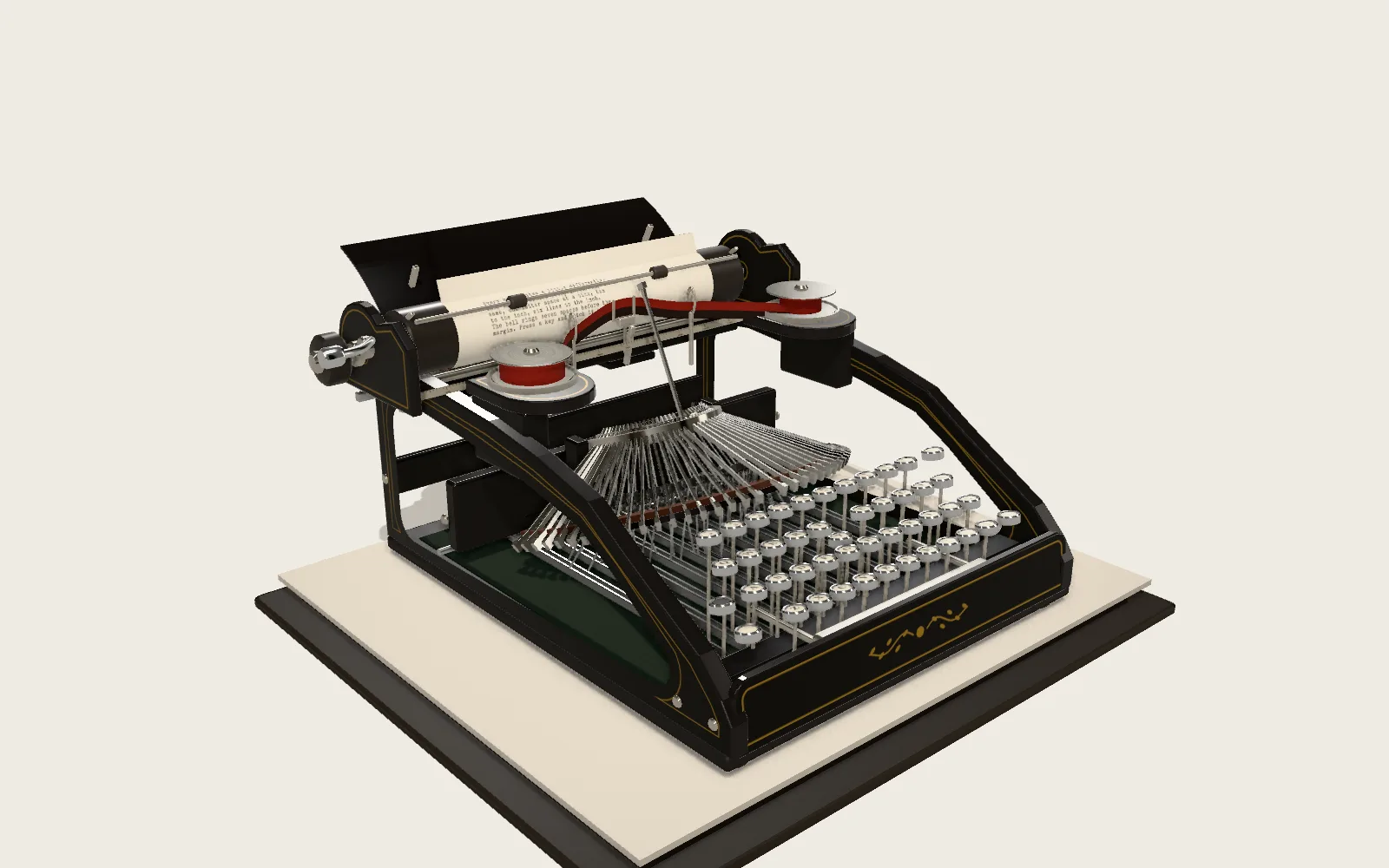 Plate C07The TypewriterPress a key and a typebar swings up and strikes the paper through the ribbon; let go and the carriage steps one space to the left.
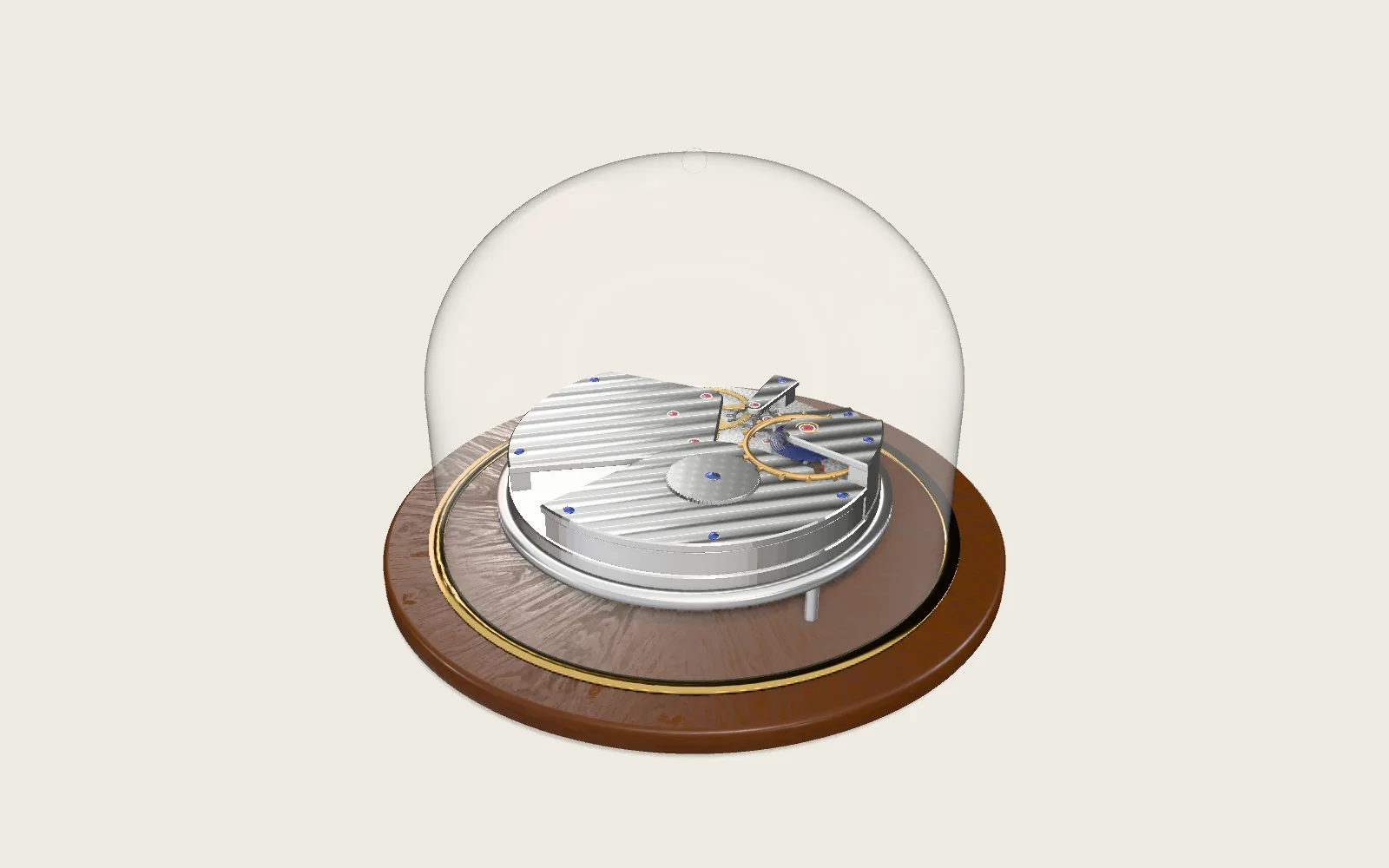 Plate C03The EscapementA spring or a falling weight, let go, gives up its energy all at once. The escapement lets it out in equal small steps, one per beat, timed by something that swings back and forth.