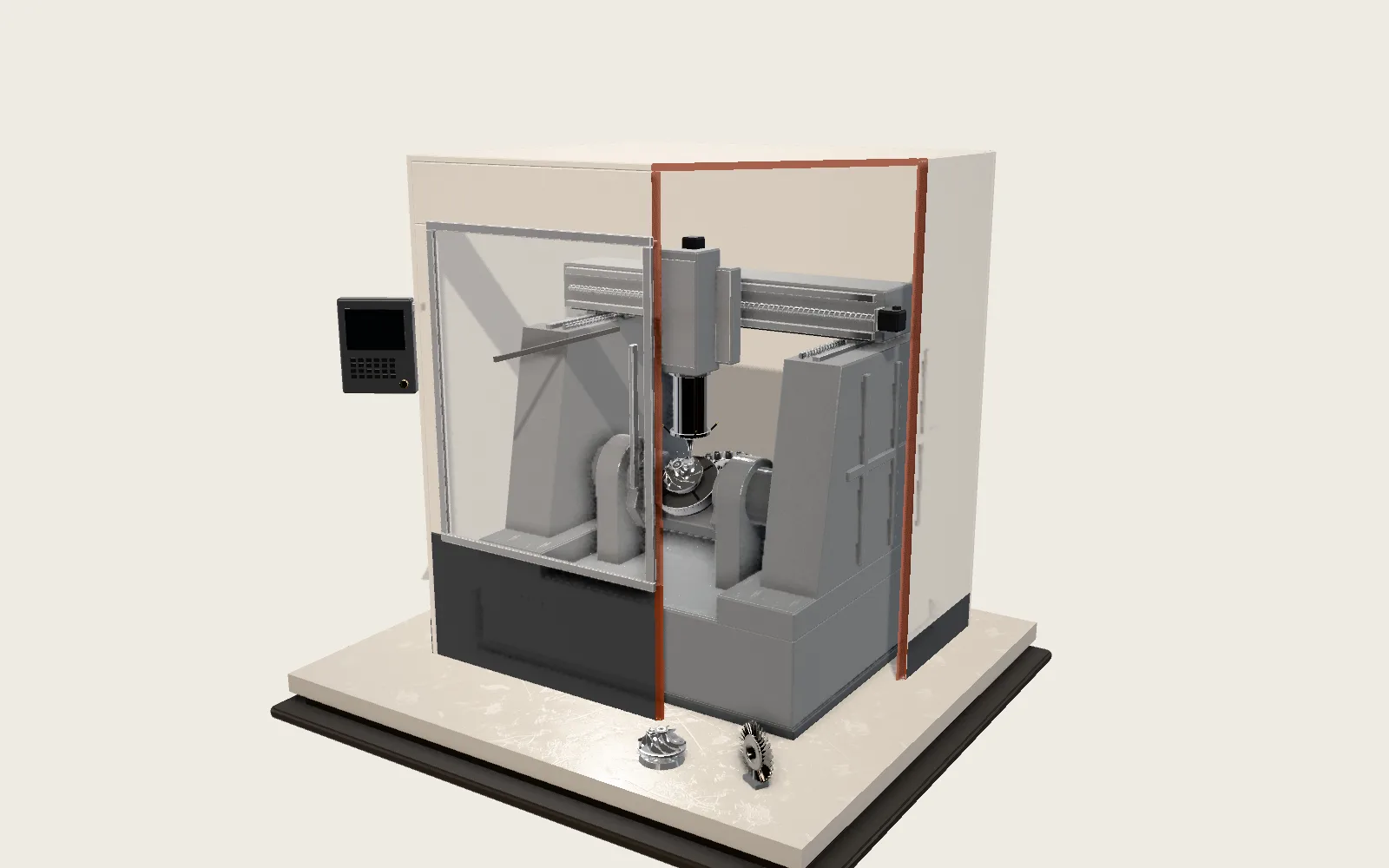
EUV Lithography Machine
The finest lines on a chip are a dozen nanometres wide. The machines that print them use extreme ultraviolet light with a wavelength of 13.5 nm. Everything absorbs this light, air included, so the whole path from source to wafer runs in vacuum and is passed along by about a dozen mirrors.
Scroll
Thirteen Nanometres
This is a wafer of silicon 300 mm across, filled with chips. A standard EUV machine prints lines at a half-pitch of 13 nm; the new high-NA generation reaches 8 nm.
A human hair is about 80,000 to 100,000 nm wide: more than six thousand 13 nm lines fit across it. Chips are printed layer upon layer, and the newest machines are specified to line each layer up with the last to under 1 nm.
Half-pitch 13 nm (NA 0.33) · 8 nm (NA 0.55) · overlay about 0.9 nm
Why 13.5 Nanometres
How fine a line can be depends on the wavelength and on the angle of light the lens takes in: CD = k₁ × λ / NA. The shorter the wavelength, the finer the line. The previous generation uses deep ultraviolet at 193 nm; EUV cuts it to 13.5 nm.
The price: almost anything this light touches absorbs it. No glass lenses, and no air. The inside of the machine is a vacuum, the light path is all mirrors, and even the mask is a mirror carrying a pattern.
CD = k₁ × λ / NA · λ = 13.5 nm
A Mirror of Forty Layers
An ordinary mirror reflects almost no EUV light. These mirrors are coated with alternating films of molybdenum and silicon, each a few nanometres thick; one pair is about 7 nm, roughly half the wavelength.
Each interface reflects only a little light, but the reflections from dozens of interfaces come back in step and add up. With forty to fifty pairs, one mirror returns about 70 % of the light; more layers add little.
Mo / Si multilayer · about 40–50 pairs · about 70 % per mirror
Cut Open: Mirror after Mirror
Cut the vacuum vessel open and the whole path shows. The collector brings the light to an intermediate focus; the illuminator shapes it into an even band and lays it on the mask; the mask reflects the pattern, and the six mirrors of the projection optics shrink it four times onto the wafer.
Each reflection keeps about seven tenths of the light. Between source and wafer there are about a dozen reflections, and what reaches the wafer is one or two per cent of what set out.
About 70 % kept at each reflection · about 1–2 % after a dozen (estimate)
Tin Droplets and Plasma
In the source, a nozzle fires about 50,000 droplets of molten tin a second, each 25 to 30 µm across, travelling at about 70 m/s.
Each droplet is first struck by a weaker pre-pulse that flattens it into a pancake; then the main pulse of a CO₂ laser heats it into a plasma of about 500,000 K, which gives off light at 13.5 nm. An ellipsoidal collector mirror behind it gathers the light to the intermediate focus. The droplets here are enlarged and slowed down.
About 50,000 droplets a second · flattened, then turned to plasma
Illuminator, Mask, Projection
The illuminator’s mirrors turn the source’s light into a band of the right shape and angles, and lay it at a slant on the mask, which is held face down. The pattern on the mask is four times larger than on the chip.
The projection optics shrink it four times. The angle of light gathered by its last mirror is given by the numerical aperture, NA: 0.33 on standard machines, 0.55 on the new generation, a wider cone that prints finer lines. The new generation shrinks 8× along the scan and 4× across it, so each exposure covers half the area.
4× reduction · NA 0.33 and 0.55
Scanning Opposite Ways
The band of light stands still; the mask and the wafer move. During an exposure the mask stage and the wafer stage travel in opposite directions at once. The pattern on the mask is four times larger, so the mask stage moves four times as fast.
When one field is done, the wafer stage steps to the next and scans back the other way. On high-NA machines the wafer stage accelerates at about 8 g and the mask stage at about 32 g; the wafer stage corrects its position about 20,000 times a second, to within a quarter of a nanometre.
Mask stage speed = 4 × wafer stage speed, the opposite way
Taken Apart
The machine is built from a few large modules: the source, the illuminator, the mask stage, the projection optics and the wafer stage, inside a vacuum vessel. A standard machine weighs about 150 to 200 tonnes and ships in about 40 containers.
Each module moves apart; whichever one the pointer rests on is lifted out and named.
Source Power
At a fixed dose, the stronger the light, the less time each point needs, and the faster the two stages can scan. Production machines run sources of about 250 W; newer ones have reached 600 W.
Try thisRaise the source from 250 W to 600 W at the same dose: how much faster must the two stages scan?
What the model leaves out
This is a model of the principle, not of any machine’s design. The mirrors’ positions and tilts, and the number of mirrors in the illuminator, are drawn so the path reads clearly; the light really meets the mask at only about 6°, drawn steeper here. The wafer, the mask and the fields share one scale; the other parts are not to scale. The droplets, the laser and the plasma are enlarged and slowed down. Only one wafer stage is drawn; real machines have two, one measuring while the other exposes. The low-pressure hydrogen that protects the optics is not drawn. Power and scan speed are linked only by “in proportion at a fixed dose”; the numbers are not real throughput.
Some common misreadings
EUV light is invisible; the violet only marks its path. “13 nm” is the smallest half-pitch the machine prints; it is not the “few-nanometre process” of chip makers’ names, which have long ceased to be any real dimension. How much light reaches the wafer is not published; at about 70 % per mirror over a dozen or so reflections it comes to one or two per cent, an estimate. The theoretical reflectance of the multilayer is about 72–74 %; in practice it is about 70 %.
Sources
- ASML: Light and lasers (13.5 nm, tin droplets, pre-pulse and main pulse, 50,000 a second)
- ASML: Hot machines (vacuum, mirrors and reflective masks, plasma of about 500,000 K, wafer stage precision)
- ASML: The Rayleigh criterion, CD = k₁·λ/NA
- ASML: EUV lithography systems (resolution 13 / 8 nm, NA 0.33 / 0.55, 300 mm wafers)
- ASML: 5 things you should know about High NA EUV (4× / 8×, half field, 8 g and 32 g)
- ZEISS SMT: EUV lithography (about 70 % reflectivity, Mo/Si multilayers, six projection mirrors)
- I. Fomenkov et al. (2017): Light sources for high-volume manufacturing EUV lithography, Adv. Opt. Technol.
- SPIE 11609 (2021): Laser produced plasma EUV sources for N5 HVM and beyond (250 W field data)
- ASML, EUVL Workshop 2023: roadmap (half-pitch, overlay)
- TRUMPF: CO₂ lasers for EUV lithography
- heise online: ASML’s plan to raise source power from 600 to 1,000 W
- Laser Focus World (2017): The secret of EUV generation
- CXRO, Lawrence Berkeley National Laboratory: X-ray optical constants (for the multilayer reflectance)
- US National Nanotechnology Initiative: Just how small is nano? (hair width)
- Reuters: Explainer on ASML’s lithography machines (weight, containers)
Follow the question
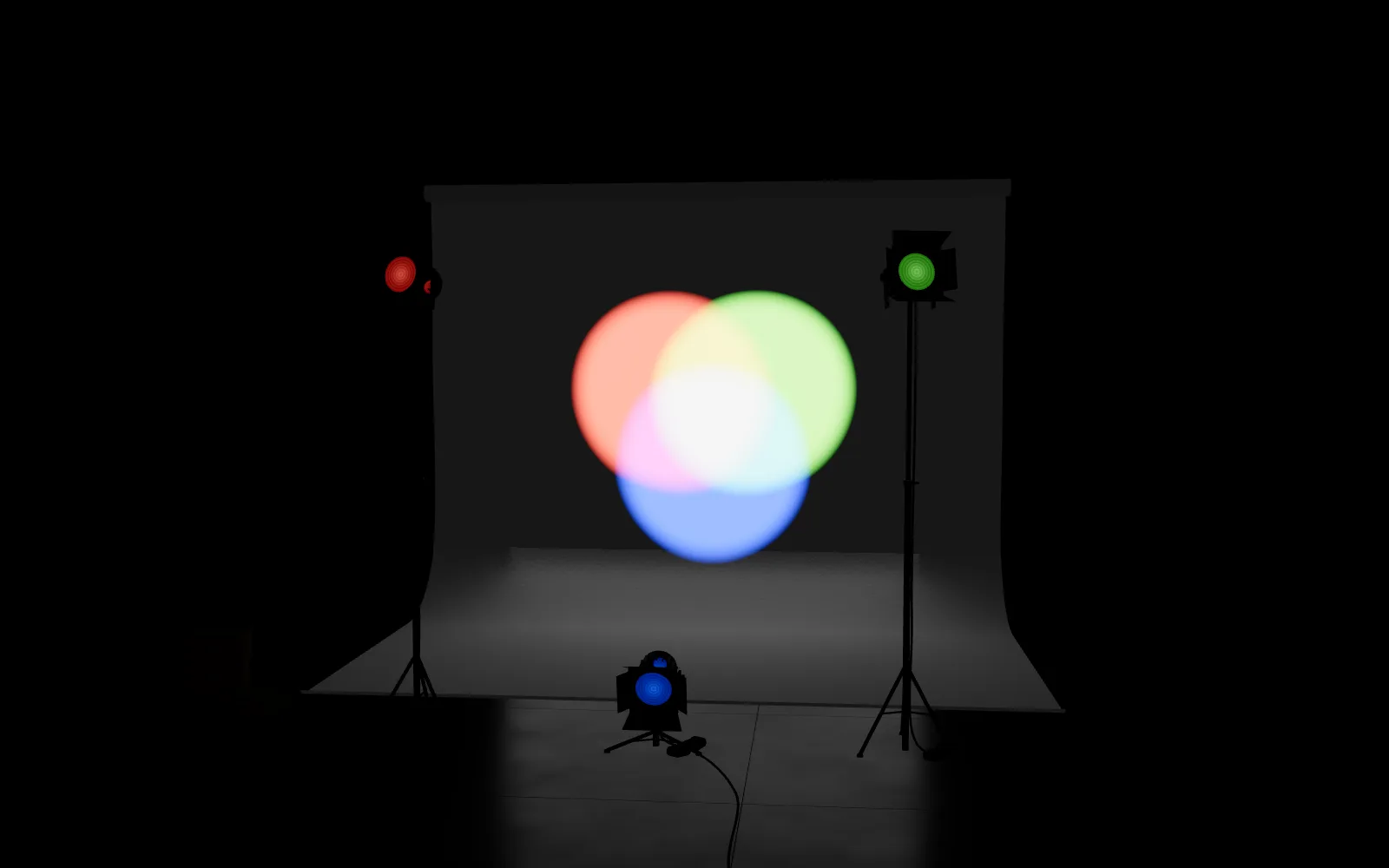 Plate 21Three Cones, a Million ColorsSunlight holds a smooth sweep of colors, but our eyes see it with just three kinds of cells. Every color you see is those three cells taking a vote.
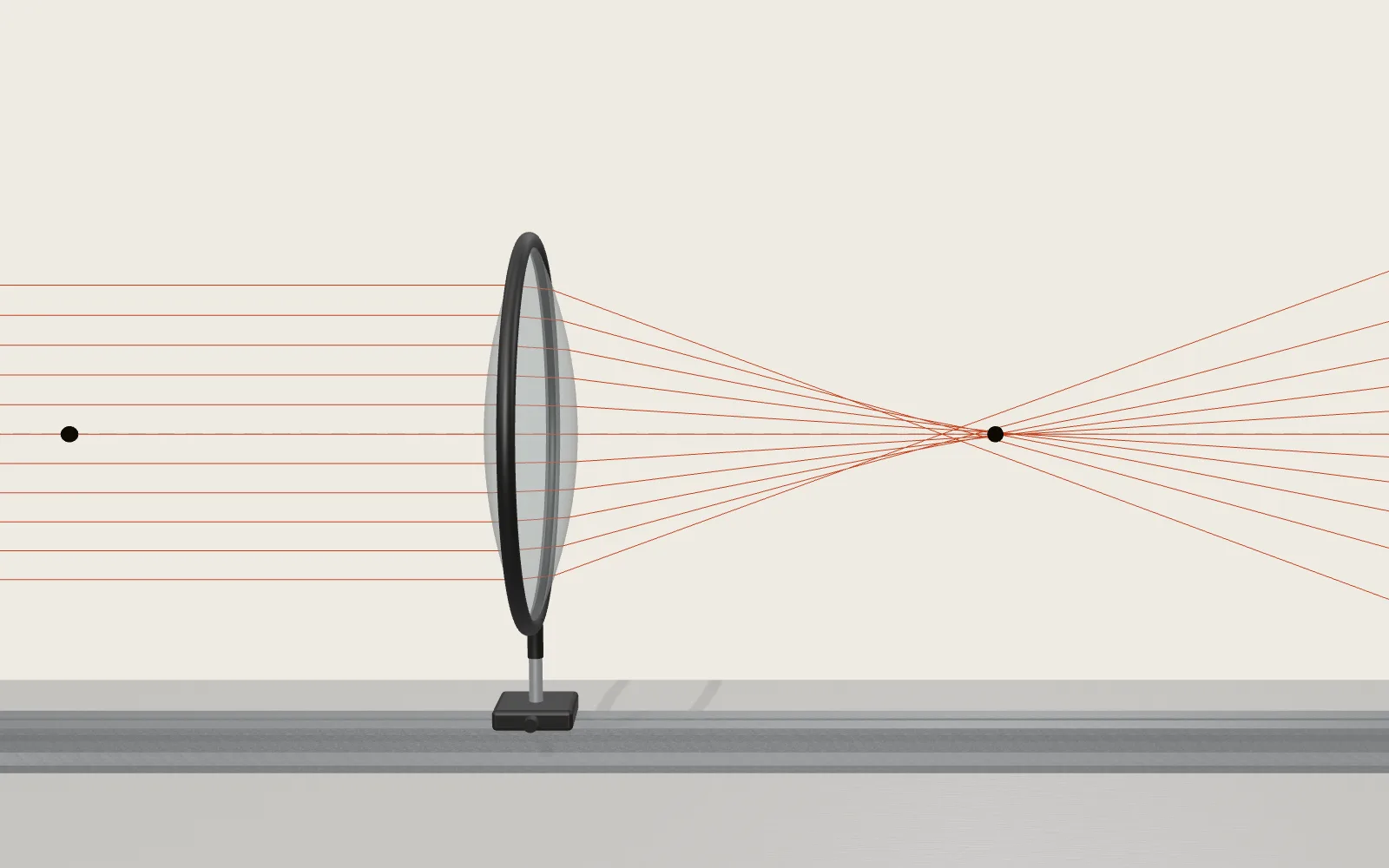 Plate 29A Curved Piece of GlassLight bends a little as it passes from air into glass. Shape the glass into a curve and light passing through every part of it can meet at one point — which is how magnifying glasses, cameras and your eyes work.