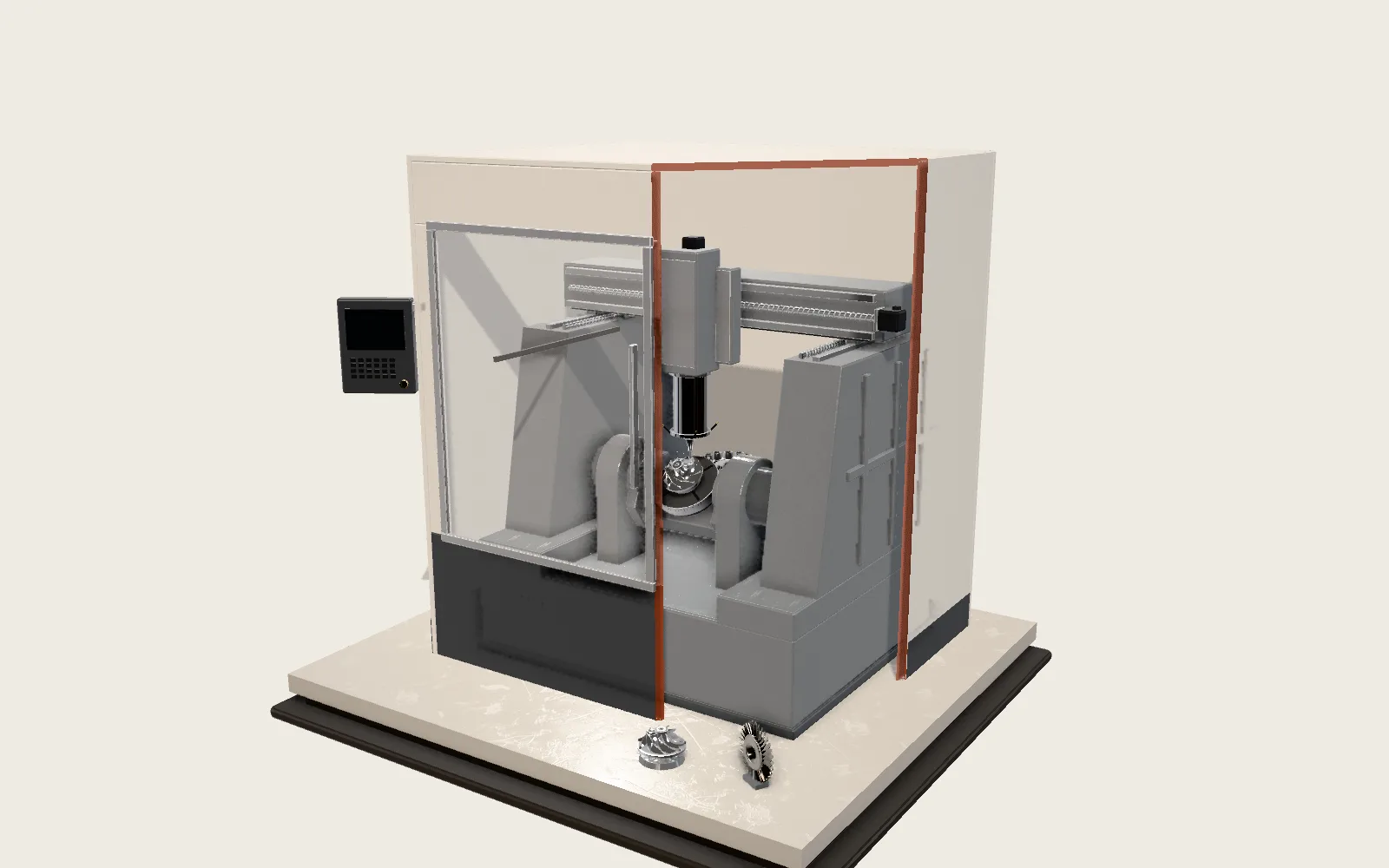
Thorium-229 Nuclear Clock
Thorium-229’s nucleus has a strangely low energy level. A laser first excited it in 2024; in 2026 the first nuclear clocks began to run.
Chapters · 14
- 01A Nucleus’s Frequency
- 02Why a Nucleus
- 03An Oddly Low Level
- 04Nearly Fifty Years of Searching
- 05Cut Open: the Crystal Chamber
- 06The First Hit
- 07A Comb in the Vacuum Ultraviolet
- 08Tied to Strontium
- 09One Line Becomes Five
- 10The First Nuclear Clocks
- 11Do the Constants Drift?
- 12How Far to Go
- 13Taken Apart
- 14Laboratory: One Comb Tooth
Scroll
A Nucleus’s Frequency
In September 2024 a team from JILA in the United States, TU Wien and others published one number: to lift the thorium-229 nucleus from its ground state to its isomer takes light at 2 020 407 384 335 kHz, give or take 2 kHz. These were thorium nuclei held in a calcium fluoride crystal at 150 K.
The frequency was not measured on its own but against the strontium lattice clock in the same institute: the ratio of the two is 4.707 072 615 078, uncertain by 5 in the last digit. A few months earlier, when a laser first found this line, the uncertainty was 7 GHz; this was about six orders of magnitude smaller.
2 kHz out of about 2 million billion hertz is about 10⁻¹². It is the statistical uncertainty; the paper leaves the systematic one to future studies. On the stand: at the back, the cavity that makes the vacuum-ultraviolet light; at the right, the vacuum chamber with the crystal; in front, under glass, the thorium-229 nucleus enlarged.
Thorium nucleus: 2 020 407 384 335 ± 2 kHz · Th / Sr = 4.707 072 615 078(5) · about 10⁻¹² (statistical)
Why a Nucleus
A clock needs a pendulum whose every swing takes the same time. In an optical atomic clock the pendulum is an outer electron’s jump between two levels. The electron cloud is far bigger than the nucleus, and outside electric and magnetic fields and heat radiation all nudge it; the best strontium clocks work each of these shifts out and take it off.
The thorium-229 nucleus has a charge radius of about 5.76 femtometres; a thorium atom’s radius is about 2 ångströms, thirty to forty thousand times more. The nucleus’s magnetic moment is small too, about 0.36 nuclear magnetons, some five-thousandth of a Bohr magneton. In the researchers’ words: the nucleus is much smaller and much less polarizable than the atom, so outside electric fields and field gradients can be expected to affect it much less.
That is half the story. In a crystal the nucleus still feels the field gradient of the ions around it, and follows the crystal’s temperature, as later chapters show. The nucleus under the glass is enlarged about 4 × 10¹² times; at that scale the whole atom would be about two kilometres wide.
Charge radius 5.76 fm · atomic radius about 2 Å · nuclear moment about 0.36 nuclear magnetons
An Oddly Low Level
A nucleus’s excited states usually lie thousands to millions of electronvolts up, and it gives off gamma rays; no laser reaches such frequencies. The strontium clock’s photons carry only about 1.78 eV.
Thorium-229 is the exception. Its first excited state, called the isomer, lies only about 8.36 eV above the ground state, which is 148.4 nm light in the vacuum ultraviolet, swinging about 2.02 × 10¹⁵ times a second. Of more than 176,000 known nuclear excited states, only two lie below 100 eV; the other is uranium-235’s at 76.7 eV, which almost never gives off light and is no use to a laser.
Light at 148 nm does not get far in air, which absorbs it, so the whole light path is pumped to vacuum, with lenses and windows of crystals like magnesium fluoride. The calcium fluoride crystal that holds the thorium lets this light through as well.
Th-229m: 8.356 eV · 148.38 nm · strontium clock photon 1.775 eV · usual nuclear transitions 0.1–1 MeV
Nearly Fifty Years of Searching
In 1976, in the gamma rays given off as uranium-233 decays, researchers first saw that thorium-229 had a very low excited state; all they knew was that it lay below 100 eV. An indirect measurement in 1994 gave 3.5 ± 1.0 eV. In 2003 two physicists at Germany’s PTB proposed making a clock of it.
A 2007 measurement moved the energy to 7.6 ± 0.5 eV, and the light to look for jumped into the vacuum ultraviolet. In 2016 LMU Munich saw the state directly for the first time, through the electrons it gives off in neutral atoms; in 2019 it was measured at 8.28 ± 0.17 eV; in 2023 CERN’s ISOLDE saw its light for the first time: 8.338 ± 0.024 eV, 148.71 nm.
The uncertainty had shrunk from 1 eV to 0.024 eV, still far too wide for a laser: 0.024 eV is about 5.8 trillion hertz, to be swept a step at a time.
1994: 3.5 · 2007: 7.6 · 2019: 8.28 · 2020: 8.10 · 2023: 8.338 · 2024: 8.3557 eV
Cut Open: the Crystal Chamber
In a neutral thorium atom the isomer has a half-life of only about 7 microseconds: it hands its energy to an outer electron and knocks it out. Thorium’s first ionization energy is just 6.31 eV, less than 8.36. Make the thorium an ion and set it in a crystal with a wide band gap, like calcium fluoride, and no electron can take the energy: the nucleus can only give off a photon.
JILA’s crystal is a small piece cut from an ingot grown in Vienna: 1.8 × 0.7 × 1.4 mm, with about 5 × 10¹⁸ thorium-229 nuclei per cubic centimetre. Liquid nitrogen cools it to 150 K, and it sits at the focus of a parabolic mirror; the mirror turns the light it gives off into a parallel beam that passes several multilayer filters to a photomultiplier, which counts the photons one by one.
In the crystal the isomer lives about 640 seconds. So the experiment shines first and counts after: 400 s of light, then the light off and 200 s of counting. On the stand one round runs tens of times faster; top right, a decay curve measured by a Tsinghua University team in 2026.
1.8 × 0.7 × 1.4 mm · 5 × 10¹⁸ per cm³ · 150 K · lifetime in the crystal 641 ± 4 s
The First Hit
The first to excite it with a laser were Germany’s PTB and TU Wien: they saw the signal on 21 November 2023 and published on 29 April 2024. The vacuum-ultraviolet light came from a tabletop system: two continuous titanium–sapphire lasers, dye amplifiers and a frequency tripler, then four-wave mixing in xenon, 30 pulses a second, no more than 10 GHz wide.
Each step lit the crystal for 120 s, then a photomultiplier counted the light for 150 s. Sweeping from 148.2 to 150.3 nm in about 20 runs of about 50 steps, they saw one peak at 148.38 nm: 2020.409 ± 0.007 THz, or 148.3821 nm.
A crystal doped with thorium-232 instead, grown the same way with even more thorium, showed nothing across 1 THz there: the light really came from thorium-229 nuclei. The lifetime in the crystal came out at 630 ± 15 s.
2020.409 ± 0.007 THz · 148.3821 ± 0.0005 nm · 8.35574 eV
A Comb in the Vacuum Ultraviolet
To measure a frequency to kilohertz, the light cannot be pulses 10 GHz wide; it has to be a row of very regular, very fine lines: a frequency comb (the optical lattice clock plate shows how one counts light’s swings). There is no ready-made comb at 148 nm, so JILA multiplied the frequency of an infrared comb by 7.
The infrared comb is a ytterbium-doped fibre laser centred at 1038 nm, 75 million pulses a second, amplified to 40–50 W and fed into an enhancement cavity: the pulses circle between a few mirrors and pile up to 5–7 kW. Two curved mirrors focus them onto a jet of xenon at about 10¹³ W per square centimetre, and the xenon atoms give off high harmonics (the attosecond pulse plate shows how); the 7th falls right at 148.4 nm.
A plate at grazing incidence leads the harmonics out of the cavity, about half of them. About 200 microwatts reach the crystal, spread over some 180,000 comb teeth: about 1 nanowatt per tooth.
1038 nm ÷ 7 ≈ 148.4 nm · 75 MHz · 5–7 kW in the cavity · about 1 nW per tooth
Tied to Strontium
A comb’s tooth spacing and offset are radio frequencies that electronics can count. JILA locked one tooth of the infrared comb to the 698 nm laser of its strontium lattice clock, so every tooth of the 7th harmonic has its frequency set by the strontium clock too.
The harmonic’s teeth are numbered around 2.7 × 10⁷. Change the repetition rate by about 2.8 Hz and, multiplied by that number, tooth N moves to where tooth N + 1 was: the whole row sweeps one spacing while the spectrum’s envelope stays put. Each step was 400 s of light and 200 s of counting, in steps of 240 kHz.
With the line found, they hit it with three teeth of different numbers: only one numbering made the three results agree, to 10 kHz; a numbering off by one made them disagree ten times more. What they report is a ratio: the thorium nucleus’s frequency is 4.707 072 615 078 times the strontium clock’s.
Strontium clock 429 228 004 229 872.99 Hz · times 4.707 072 615 078 · about 2 020 407 384 335 kHz
One Line Becomes Five
The scan does not show one line. The thorium-229 nucleus has an electric quadrupole moment, its charge not spread out as a sphere; in calcium fluoride the ions around it, and the extra fluoride ions, make a strong electric field gradient where it sits. So the ground state, spin 5/2, and the isomer, spin 3/2, each split into several levels.
Five transitions are allowed, spread over about 410 MHz. The four strong ones had their centres measured to about 4 kHz; the fifth is a tenth as strong as the strongest, so its place was worked out first with a sum rule and then scanned, and there it was.
Each line is about 300 kHz wide, which the paper puts down mostly to the width of the comb tooth itself. Averaging the four strong lines 1 : 2 : 2 : 1 cancels the field gradient and gives the unsplit frequency of the first chapter. The ratio of the two states’ quadrupole moments comes out too: 0.570 03.
Five lines a–e · spread over about 410 MHz · about 300 kHz wide · quadrupole ratio 0.570 03
The First Nuclear Clocks
The 2024 measurement used a strontium clock to measure the thorium nuclei; the laser did not listen to the nuclei. A clock works the other way round: the laser stays locked to the nuclear transition, and the nuclei correct it. That takes continuous, narrow 148 nm laser light, which did not exist in 2024.
In 2026 it did. In February a Tsinghua University team reported a continuous source made by four-wave mixing in cadmium vapour, over 100 nanowatts with a projected linewidth well below 100 Hz; in September the Vienna team, with continuous light under 1 nanowatt, saw the nuclear transition in absorption for the first time, with no ten-minute wait for fluorescence.
On 7 October the same issue of Nature carried two nuclear clocks. One, from TU Wien and PTB, has a fractional frequency instability of 3 × 10⁻¹²/√τ and can run a whole day unattended; the Tsinghua team’s reaches 5 × 10⁻¹³/√τ, with two separately grown crystals about 10⁻¹³ apart. Both clocks’ crystals are at room temperature.
October 2026 · 3 × 10⁻¹²/√τ (Vienna / PTB) · 5 × 10⁻¹³/√τ (Tsinghua) · τ in seconds
Do the Constants Drift?
The fine-structure constant α, about 1/137, sets how strong the electromagnetic force is. Some theories allow it to change very slowly over time. Atomic clocks compared with one another for years have found no change: the 2021 limit is (1.0 ± 1.1) × 10⁻¹⁸ a year.
Sensitivity is written K: change α by some fraction and a clock’s frequency changes by K times that fraction. For thorium-229, K is the difference between the two states’ Coulomb energies divided by the transition energy. Both Coulomb energies are around a billion electronvolts and nearly equal; a 2025 estimate puts K at about 5,900, uncertain by 2,300 and dependent on the nuclear model. The most sensitive atomic-clock transition has K of about 6.
In 2026 the Vienna nuclear clock was compared with an ytterbium-ion clock: their frequency ratio drifted by (2 ± 4) × 10⁻¹⁴ a day, consistent with zero. Its limit on α is like those of the best comparable atomic-clock experiments.
δν / ν = K · δα / α · thorium-229: K ≈ 5,900 ± 2,300 (model estimate) · most sensitive atomic-clock transition: about 6
How Far to Go
Optical atomic clocks have reached systematic uncertainties around 10⁻¹⁹: JILA’s strontium clock 8.1 × 10⁻¹⁹ in 2024, NIST’s aluminium-ion clock 5.5 × 10⁻¹⁹ in 2025. The nuclear clock is far from that: between two crystals its frequency reproduces to about 1.1 × 10⁻¹³ (JILA, January 2026). The Vienna team writes that the nuclear clock does not yet reach the same level of frequency instability as the best atomic clocks.
The crystal has its costs. The lines move with temperature: between 150 and 293 K the steadiest, line b, moves only about 62 kHz, about 0.4 kHz per kelvin, and the others about 2 MHz. Reaching 10⁻¹⁸ would need the crystal steady to 5 microkelvin. JILA later found that near 196 K the first-order sensitivity to temperature vanishes; top right, their published record of line b.
There are other roads: thorium fluoride films of micrograms, excited for the first time late in 2024, with radioactivity up to about three orders of magnitude lower than doped crystals; single thorium ions in a trap, which a 2012 estimate put near 10⁻¹⁹. That is a projection, not yet done.
Strontium clock systematic uncertainty 8.1 × 10⁻¹⁹ · nuclear reproducibility about 1.1 × 10⁻¹³ · line b about 0.4 kHz / K
Taken Apart
The stand comes apart. The crystal chamber at the right: the liquid-nitrogen dewar on top and its cold finger, the copper clamp and the crystal, the parabolic mirror and two filter mirrors, the Ce:YAG plate that stops the beam, the photomultiplier on its filter block. The enhancement cavity at the back: the lid, the xenon nozzle, the ring’s mirrors, the plate that leads the harmonics out and the mirror that turns them.
The crystal is just 1.8 mm long, held between two copper leaves; the cold finger and a copper braid tie it to the dewar. The parabolic mirror sits right under the crystal, and the beam crosses above it.
Parts are sized like common laboratory hardware (CF flanges, 1-inch optics) and the layout is a schematic; the papers give no drawings of the apparatus.
Dewar · photomultiplier · crystal and clamp · parabolic mirror · Ce:YAG plate · lid · nozzle · ring mirrors · out-coupler
Laboratory: One Comb Tooth
The lever picks a line, and the slider sets the comb tooth within 1.2 MHz either side of that line’s centre at 150 K. Each press of “Excite” runs a round from the start: light for a while, light off, fluorescence counted, and the result is one point in the figure at the top right.
The crystal can be set to 150, 229 or 293 K, with the lines where the papers measured them. At 293 K line b moves only about 60 kHz and stays in the window; lines a, c and d move about 2 MHz, out of it. Line e was measured only at 150 K.
This is a model: the line shape is a Gaussian 310 kHz wide at half maximum; the four strong lines are drawn alike and line e at a tenth of them; the fluorescence is relative, with a little counting noise.
Readouts: offset from the line · fluorescence (relative)
Try thisWarm the crystal from 150 K to 293 K: which line barely moves? How far do the others go, and do they stay inside the window the tooth sweeps?
What the model leaves out
The apparatus follows the papers’ descriptions as a schematic: the enhancement cavity, the xenon nozzle, the grazing-incidence out-coupler, the turning cube, the gate valve, the crystal chamber, the parabolic mirror, the filter mirrors, the photomultiplier and the liquid-nitrogen dewar are all there, but sized like common laboratory parts, and their places and numbers are not the papers’; the cavity is drawn with four ring mirrors. The crystal is drawn at 1.8 × 0.7 × 1.4 mm. The nucleus is enlarged about 4 × 10¹² times, its protons and neutrons drawn as hard balls; real nucleons have no such sharp edges or fixed places. Vacuum-ultraviolet and infrared light are invisible: the violet and red beams, the crystal’s violet glow and the dots flying to the photomultiplier are drawn; only the yellow-green light where the beam hits the Ce:YAG plate is visible light. One round of the experiment is 400 s of light and 200 s of counting; the stand runs it tens of times faster.
Easy to get wrong
A nuclear clock does not keep time by radioactive decay: thorium-229 is radioactive, with a half-life of about 7,900 years, but the clock counts the swings of a laser, and the nuclei set the laser right. The 2024 experiments were not yet clocks: one excited the line with a laser for the first time, the other compared its frequency with a strontium clock; nuclear clocks that run on their own came in 2026 and are not yet as steady as the best atomic clocks. “About 10⁻¹²” is the statistical uncertainty of the line’s centre, not a clock’s accuracy. In the crystal the isomer lives about 10 minutes; the 1,740 s often quoted is the half-life worked out for a bare nucleus in vacuum. The nucleus is not immune to its surroundings: in a crystal its line splits and moves with temperature. No change in α has been found. Nor was this the first time a laser excited a nucleus: laser plasmas and an X-ray free-electron laser had done so before; 2024 was the first time a tabletop laser excited thorium-229.
Common questions · 5
- What is special about thorium-229’s nuclear transition?
Its first excited state, called the isomer, lies only about 8.36 eV above the ground state, which is 148.4 nm light in the vacuum ultraviolet, swinging about 2.02 × 10¹⁵ times a second.
03An Oddly Low Level ↑- Why could a nucleus make a steadier clock?
The thorium-229 nucleus has a charge radius of about 5.76 femtometres; a thorium atom’s radius is about 2 ångströms, thirty to forty thousand times more.
02Why a Nucleus ↑- What is the frequency of the thorium-229 nuclear transition?
In September 2024 a team from JILA in the United States, TU Wien and others published one number: to lift the thorium-229 nucleus from its ground state to its isomer takes light at 2 020 407 384 335 kHz, give or take 2 kHz.
01A Nucleus’s Frequency ↑- When was the thorium-229 nucleus first excited with a laser?
The first to excite it with a laser were Germany’s PTB and TU Wien: they saw the signal on 21 November 2023 and published on 29 April 2024.
06The First Hit ↑- Is the nuclear clock already better than atomic clocks?
The Vienna team writes that the nuclear clock does not yet reach the same level of frequency instability as the best atomic clocks.
12How Far to Go ↑
Sources
- Tiedau et al. (2024): Laser Excitation of the Th-229 Nucleus, Physical Review Letters 132, 182501
- Elwell et al. (2024): Laser excitation of the ²²⁹Th nuclear isomeric transition in a solid-state host, Physical Review Letters 133, 013201
- Zhang et al. (2024): Frequency ratio of the ²²⁹ᵐTh nuclear isomeric transition and the ⁸⁷Sr atomic clock, Nature 633, 63–70 (preprint arXiv:2406.18719)
- Zhang et al. (2024): ²²⁹ThF₄ thin films for solid-state nuclear clocks, Nature 636, 603–608
- Higgins et al. (2025): Temperature Sensitivity of a Thorium-229 Solid-State Nuclear Clock, Physical Review Letters 134, 113801
- Beeks et al. (2025): Fine-structure constant sensitivity of the Th-229 nuclear clock transition, Nature Communications 16, 9147
- Ooi et al. (2026): Frequency reproducibility of solid-state thorium-229 nuclear clocks, Nature 650, 72–78
- Xiao et al. (2026): Continuous-wave narrow-linewidth vacuum ultraviolet laser source, Nature 650, 852–856
- Morawetz et al. (2026): Continuous-wave laser absorption spectroscopy of the thorium-229 nucleus, Nature 657, 626–631
- Toscani De Col et al. (2026): A thorium-229 optical nuclear clock with feedback loop, Nature 658, 897–902
- Huang et al. (2026): A nuclear clock synchronized to ²²⁹Th, Nature 658, 903–908
- Peik, Tamm (2003): Nuclear laser spectroscopy of the 3.5 eV transition in Th-229, Europhysics Letters 61, 181
- Kroger, Reich (1976): Features of the low-energy level scheme of ²²⁹Th as observed in the α-decay of ²³³U, Nuclear Physics A 259, 29
- Helmer, Reich (1994): An excited state of ²²⁹Th at 3.5 eV, Physical Review C 49, 1845
- Beck et al. (2007): Energy Splitting of the Ground-State Doublet in the Nucleus ²²⁹Th, Physical Review Letters 98, 142501
- von der Wense et al. (2016): Direct detection of the ²²⁹Th nuclear clock transition, Nature 533, 47–51
- Seiferle, von der Wense, Thirolf (2017): Lifetime Measurement of the ²²⁹Th Nuclear Isomer, Physical Review Letters 118, 042501
- Seiferle et al. (2019): Energy of the ²²⁹Th nuclear clock transition, Nature 573, 243–246
- Sikorsky et al. (2020): Measurement of the ²²⁹Th Isomer Energy with a Magnetic Microcalorimeter, Physical Review Letters 125, 142503
- Kraemer et al. (2023): Observation of the radiative decay of the ²²⁹Th nuclear clock isomer, Nature 617, 706–710
- von der Wense, Seiferle (2020): The ²²⁹Th isomer: prospects for a nuclear optical clock, European Physical Journal A 56, 277
- Beeks et al. (2021): The thorium-229 low-energy isomer and the nuclear clock, Nature Reviews Physics 3, 238–248
- Peik et al. (2021): Nuclear clocks for testing fundamental physics, Quantum Science and Technology 6, 034002
- Beeks et al. (2023): Growth and characterization of thorium-doped calcium fluoride single crystals, Scientific Reports 13, 3897
- Campbell et al. (2012): Single-Ion Nuclear Clock for Metrology at the 19th Decimal Place, Physical Review Letters 108, 120802
- Aeppli et al. (2024): Clock with 8 × 10⁻¹⁹ Systematic Uncertainty, Physical Review Letters 133, 023401
- Marshall et al. (2025): High-Stability Single-Ion Clock with 5.5 × 10⁻¹⁹ Systematic Uncertainty, Physical Review Letters 135, 033201
- Lange et al. (2021): Improved Limits for Violations of Local Position Invariance from Atomic Clock Comparisons, Physical Review Letters 126, 011102
- Ponce et al. (2018): Accurate measurement of the first excited nuclear state in ²³⁵U, Physical Review C 97, 054310
- Angeli, Marinova (2013): Table of experimental nuclear ground state charge radii: An update, Atomic Data and Nuclear Data Tables 99, 69 (via IAEA LiveChart)
- BIPM: Recommended values of standard frequencies, Strontium 87 atom (f ≈ 429 THz)
- NIST news (2024-09-04): Major Leap for Nuclear Clock Paves Way for Ultraprecise Timekeeping
- PTB press release (2024-04-29): Laser excitation of a nucleus (via idw)
- Data: Ooi et al., Th-229 nuclear clock frequency record (JILA), Zenodo, CC BY 4.0
- Data: Huang et al., Data supporting “A nuclear clock synchronized to ²²⁹Th”, figshare, CC BY 4.0
Data
The apparatus is a schematic drawn from the descriptions in Zhang et al., Nature 633, 63 (2024) (a Yb-fibre comb, a femtosecond enhancement cavity with a xenon jet, a grazing-incidence out-coupler, a ²²⁹Th:CaF₂ crystal at the focus of a parabolic mirror cooled by a liquid-nitrogen dewar, multilayer filters, a photomultiplier, a Ce:YAG plate). The papers give no drawings to this detail: parts are sized like common laboratory hardware (CF flanges, 1-inch optics, 12.7 mm posts) and placed for the model. The crystal is drawn at its published size, 1.8 × 0.7 × 1.4 mm. The nucleus is drawn as 90 protons and 139 neutrons, about 4 × 10¹² times its size. Fluorescence decay in the crystal chapter: Huang et al., Nature 658, 903 (2026), Fig. 2f, data on figshare (10.6084/m9.figshare.33386191), CC BY 4.0, binned to 60 s by this page. Line b against temperature in the limits chapter: T. Ooi, J. F. Doyle, C. Zhang, J. Higgins, J. Ye, K. Beeks, T. Sikorsky, T. Schumm, “Th-229 nuclear clock frequency record (JILA)”, Zenodo (10.5281/zenodo.15751158), CC BY 4.0, averaged per crystal and temperature by this page (docs/plates/nuclearclock/tools/make-data.py). The laboratory is this page’s model (src/topics/nuclearclock/science.js): line positions at 150, 229 and 293 K from Zhang et al. 2024 (Fig. 5) and Higgins et al. 2025 (Table 1), a Gaussian line 310 kHz wide, line e a tenth as strong, and a little counting noise. Material presets, parts and the softbox studio of the site’s model kit are ported from AirsupHQ/machine-skill (MIT, © 2026 Air Supply Technologies Inc.).
The text, pictures and models on this page are licensed CC BY-NC 4.0: free to use and adapt for teaching and other non-commercial purposes, with credit to world.lapla.si. Third-party material listed above keeps its own licence.
Cite this plate
Laplace’s Mini World, Plate F54, “Thorium-229 Nuclear Clock”, https://world.lapla.si/en/nuclearclock/, CC BY-NC 4.0, updated 2026-10-27.
Follow the question
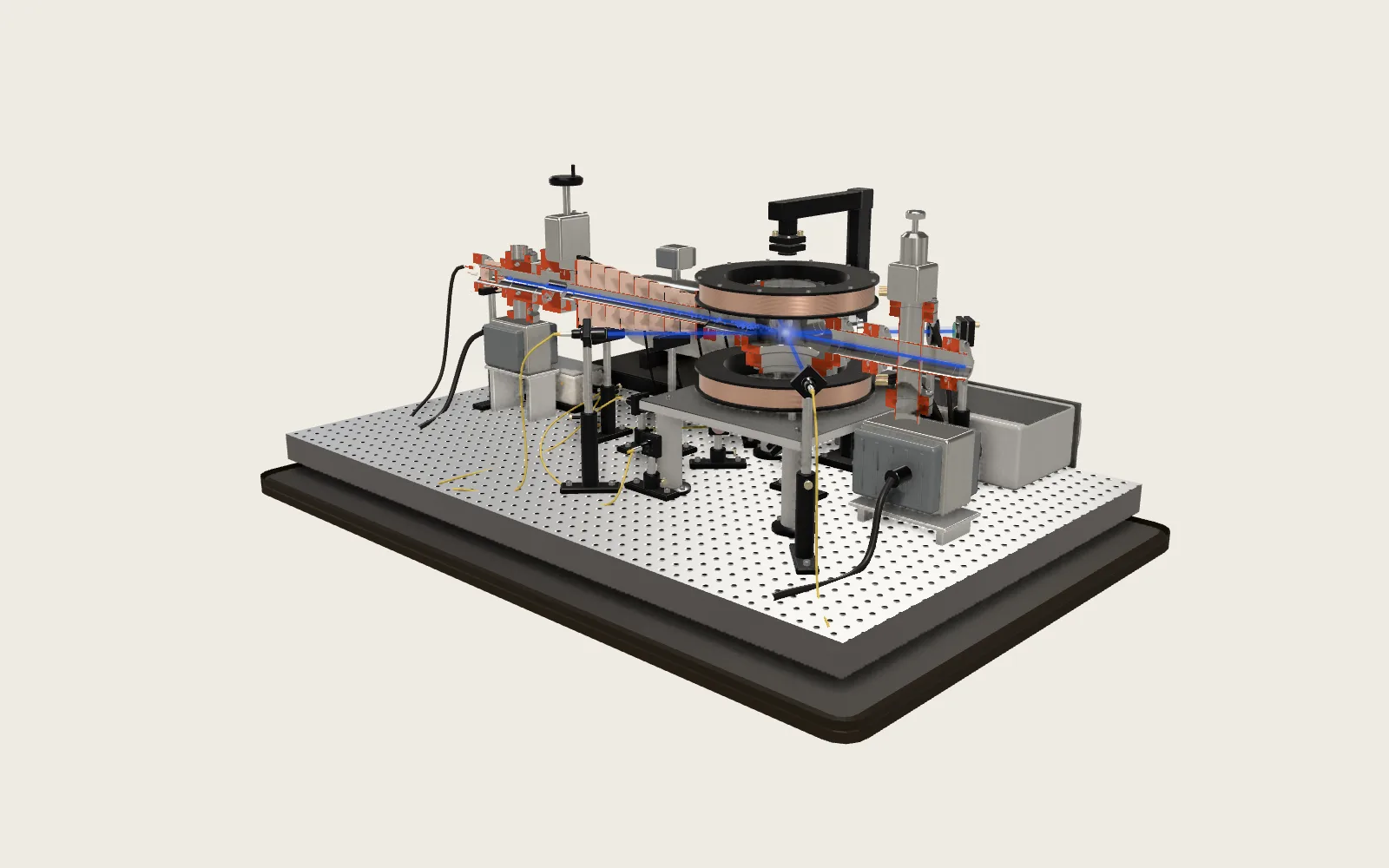 Plate F23The Optical Lattice ClockA laser beam swings about 429 trillion times a second, kept on time by strontium atoms held in a lattice of light. It is good to the eighteenth decimal place: raise the clock by a centimetre and the tiny speed-up can be measured.
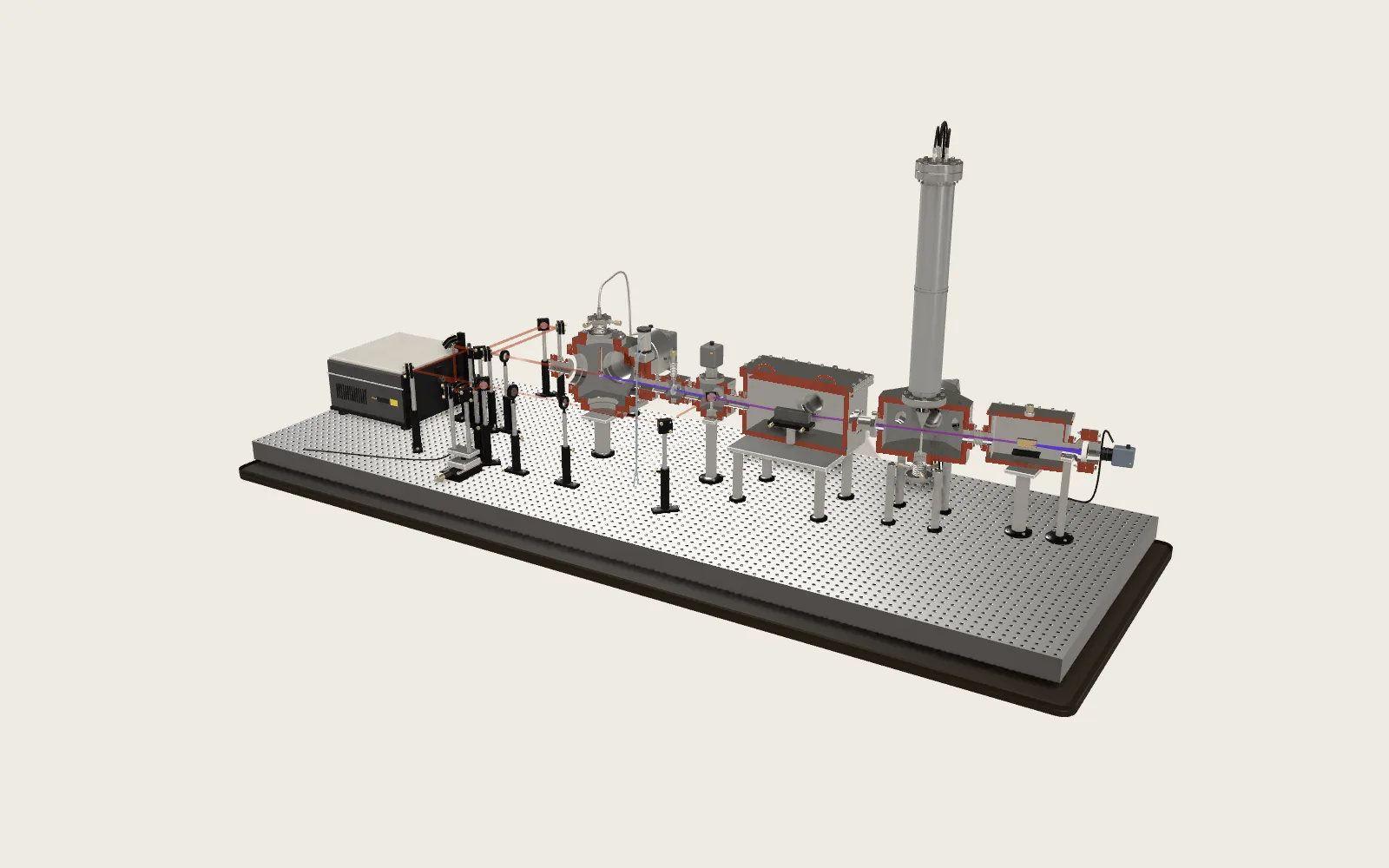 Plate F34Attosecond Light PulsesAn intense infrared laser is fired into a noble gas; electrons in the gas are pulled out and slammed back, and every half cycle of the light they give off a flash of extreme ultraviolet a few hundred attoseconds long. The 2023 Nobel Prize in Physics went to the experimental methods that make these flashes.
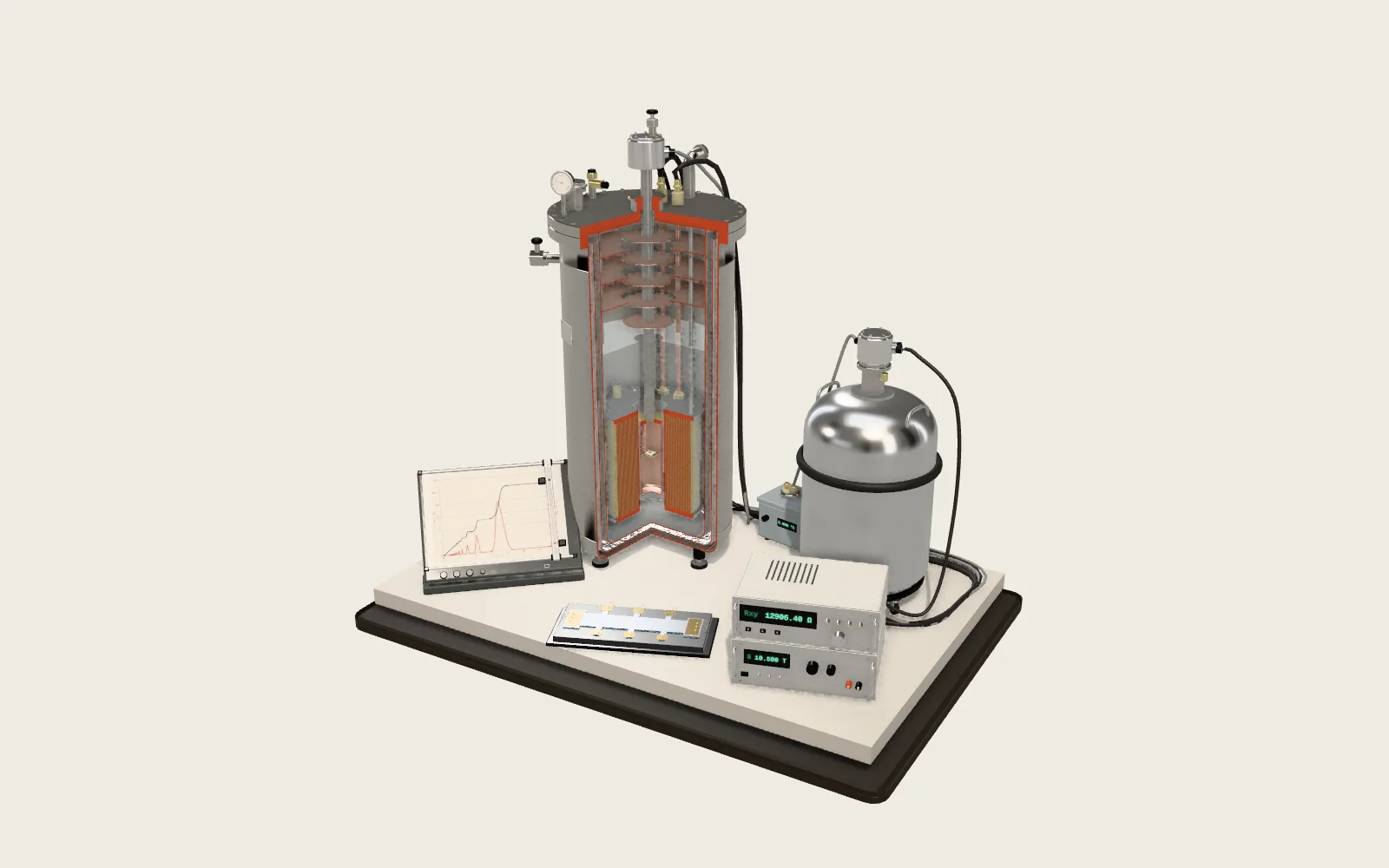 Plate F36The Quantum Hall EffectCool a sheet of electrons close to absolute zero in a strong magnetic field and its Hall resistance settles on steps set by Planck’s constant and the electron’s charge, whatever the material or shape. Metrology institutes use it to realise the ohm.
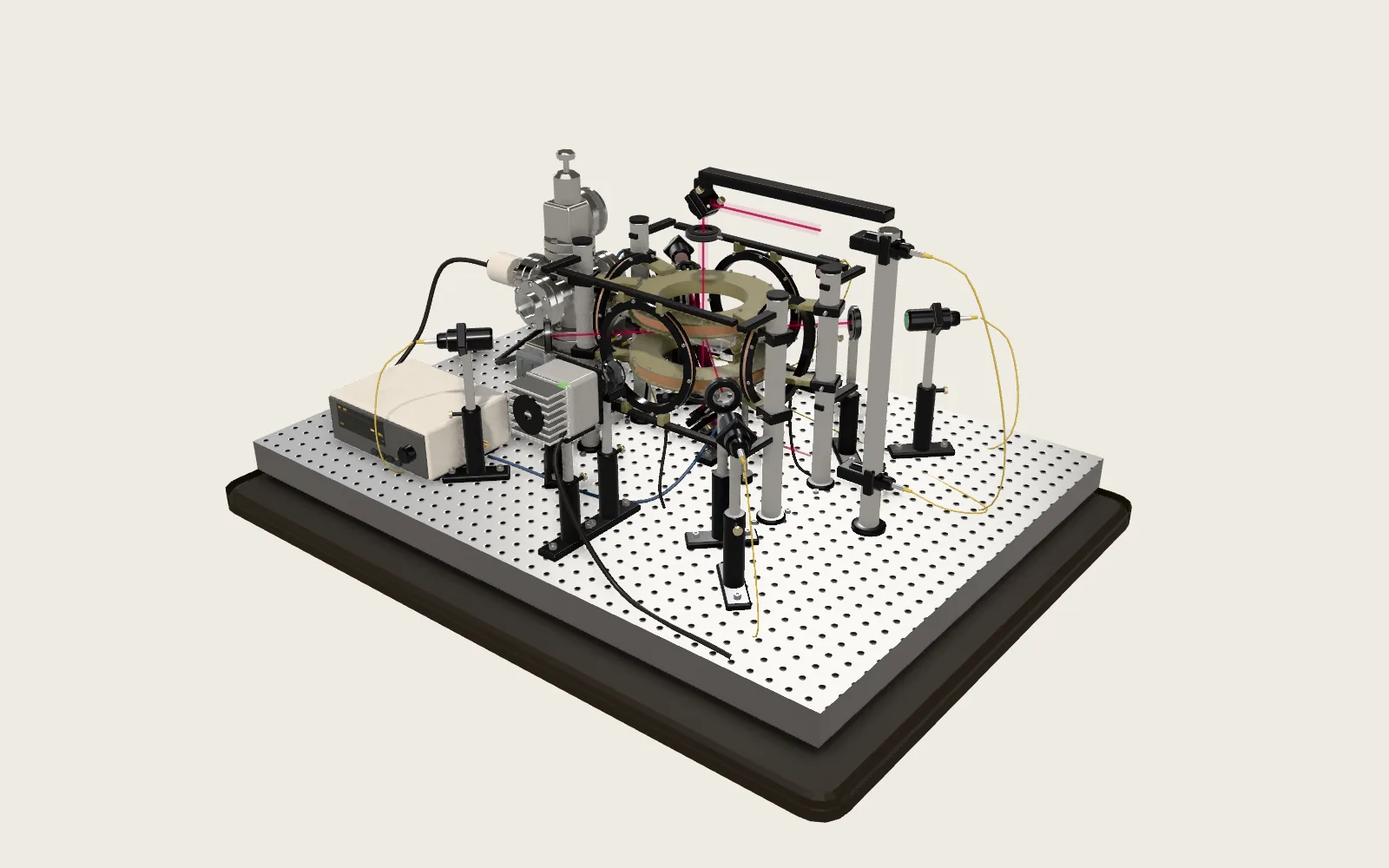 Plate F27Bose–Einstein Condensation of AtomsLasers cool atoms to some tens of microkelvin above absolute zero; a magnetic trap then lets the hottest ones “evaporate”, a few at a time. Near 170 nanokelvin, a few thousand rubidium atoms fell into the same quantum state and showed up as a peak in a picture.