Copper in Nitric Acid
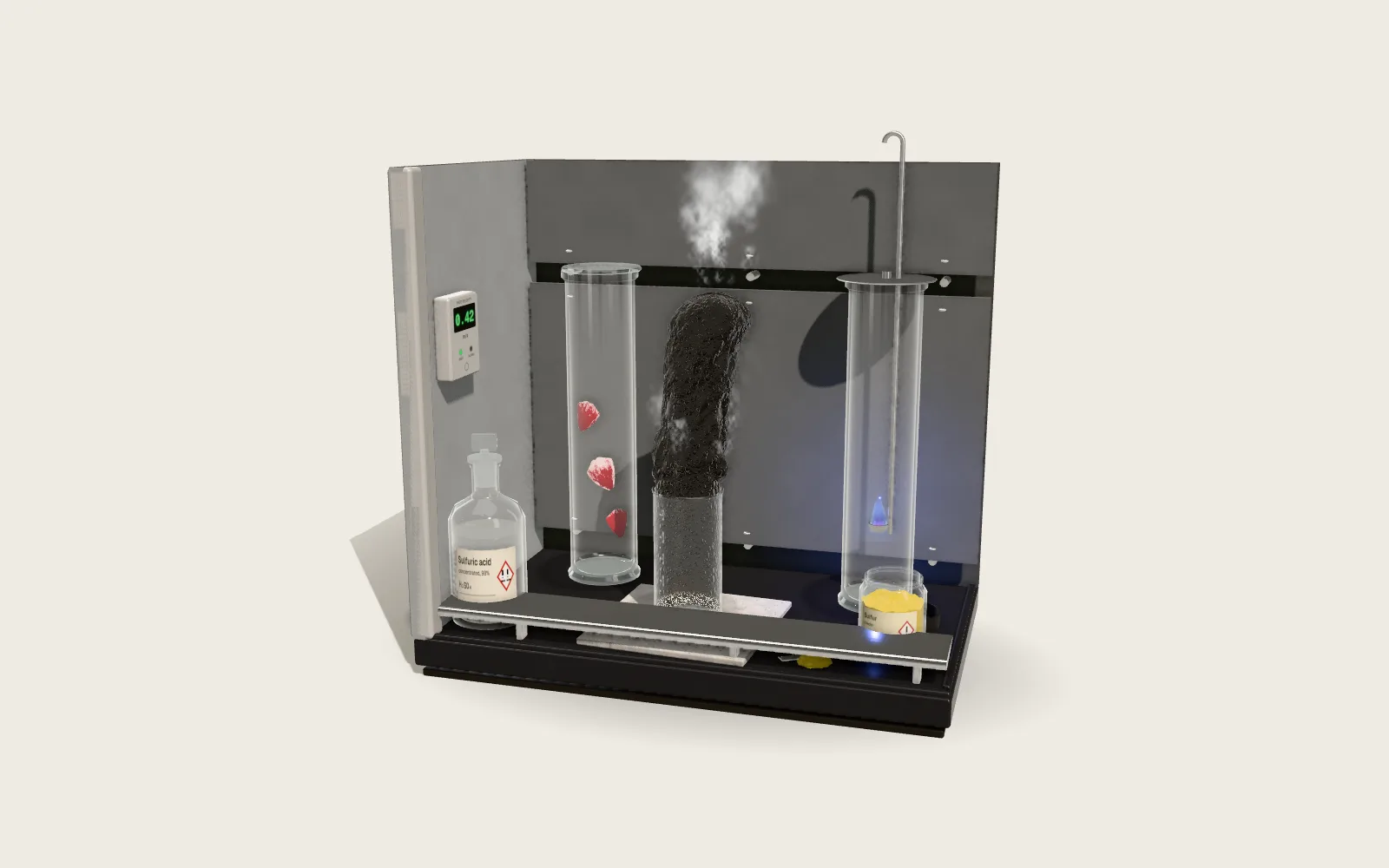
Copper turnings in concentrated nitric acid: the liquid turns green and red-brown nitrogen dioxide wells up, heavier than air, and sinks over the lip.
Scroll
Copper Meets Strong Acid
Concentrated nitric acid in a laboratory is 68 to 70% acid, about 15 mol in a litre. Copper turnings dropped in react almost at once: bubbles rise off the metal, the liquid quickly turns green, and a red-brown gas wells up in the flask.
The gas is nitrogen dioxide: Cu + 4 HNO₃ → Cu(NO₃)₂ + 2 NO₂ + 2 H₂O. The copper gives up electrons and goes into solution as copper ions; the nitrogen in the acid takes them and becomes nitrogen dioxide. No hydrogen is given off.
The Royal Society of Chemistry’s demonstration uses 5 g of copper turnings and 40 cm³ of concentrated acid, done by a teacher in a fume cupboard with the sash pulled down in front. It is fast, and slows only after about 80 s.
Cu + 4 HNO₃ → Cu(NO₃)₂ + 2 NO₂ + 2 H₂O · concentrated acid about 68–70%, about 15 mol/L
More Than the Flask Holds
By the equation, 5 g of copper makes about 0.16 mol of nitrogen dioxide: about 3.8 L at 20 °C and one atmosphere, fifteen times this 250 mL conical flask. The flask is soon full, and the gas wells out of its mouth.
Nitrogen dioxide’s vapour density is 1.58 times air’s. It does not drift up: it spills over the lip, sinks and gathers low down.
A fume cupboard draws air in at the open front and takes it away through slots in the back. For heavy vapours the slot nearest the worktop should draw the most.
5 g of copper → about 3.8 L of nitrogen dioxide (20 °C) · vapour density 1.58 (air = 1)
Red-Brown and Colourless
Nitrogen and oxygen join into several molecules. Nitrogen dioxide, NO₂, is red-brown; nitric oxide, NO, has no colour at all.
Colour is light taken out. By its measured cross sections, NO₂ absorbs most strongly at 400 nm, in the violet; blue light at 450 nm is still taken at three-quarters of that, and red at 650 nm at only about a fiftieth. With the violet and blue gone, what comes through leans to yellow and red: red-brown. NO absorbs outside the visible, so it cannot be seen.
The textbook puts NO₂’s colour down to an unpaired electron. Two NO₂ molecules can also join into colourless N₂O₄, and the colour fades in the cold; that reversible change is left to a later page on equilibrium.
Cross section: strongest at 400 nm · about a fiftieth at 650 nm · NO absorbs no visible light
Green, Then Blue
Copper going into nitric acid becomes copper(II) ions, and copper ions dissolved in water are blue. Yet in concentrated acid the solution is green at first.
The Royal Society of Chemistry’s explanation: in strong acid there are so many nitrate ions that they gather round the copper ion, and copper held that way is green; add water and the water takes their place, giving the familiar blue. When water is let into the flask in the demonstration, the green solution turns blue.
The blue belongs to the copper ions in solution: it is not the colour of copper metal, and not the colour of nitrogen dioxide.
Green while strong · blue once diluted · the blue is the copper ions in solution
A Colourless Gas from Dilute Acid
In the boiling tube beside the flask, a coil of copper wire sits in dilute nitric acid. Bubbles come off the wire too, and the liquid slowly turns blue, but the gas in the tube has no colour you can see.
Copper and dilute nitric acid give mainly nitric oxide: 3 Cu + 8 HNO₃ → 3 Cu(NO₃)₂ + 2 NO + 4 H₂O. The same 1 g of copper gives about 757 mL of nitrogen dioxide in concentrated acid, and only about 252 mL of nitric oxide in dilute.
Nitric oxide meeting the oxygen of the air becomes nitrogen dioxide: 2 NO + O₂ → 2 NO₂. So the brown shows at the mouth of the tube, where the air gets in. Real reactions always give a mixture: the stronger the acid, the more NO₂; in a 2024 study, copper dissolving in 8 to 11 mol/L acid at 80 °C still gave only about nine parts in ten NO₂.
3 Cu + 8 HNO₃ → 3 Cu(NO₃)₂ + 2 NO + 4 H₂O · 2 NO + O₂ → 2 NO₂
Hours Later
Nitrogen dioxide is toxic, and the harm can come late. The US Agency for Toxic Substances and Disease Registry writes that after breathing it in, a symptom-free period of 3 to 30 hours may be followed by pulmonary oedema.
Britain’s workplace limits are 0.5 ppm over 8 hours and 1 ppm over 15 minutes. NIOSH in the US counts 13 ppm as immediately dangerous to life or health.
So only a teacher does this demonstration, in a fume cupboard, with small amounts and the sash pulled down in front. This page only draws it; it does not say how.
Symptoms may come 3–30 hours later · UK limits 0.5 ppm (8 hours), 1 ppm (15 minutes) · NIOSH IDLH 13 ppm
Ammonia Burned into Acid
Industry makes nitric acid from ammonia, which is made as on the page “Nitrogen from the Air”. Ammonia and air pass through a pad of platinum–rhodium gauzes and burn at 810 to 940 °C to nitric oxide: 4 NH₃ + 5 O₂ → 4 NO + 6 H₂O. The gauze is about nine parts platinum to one of rhodium, and 95 to 97% of the ammonia becomes nitric oxide.
As the gas cools, the nitric oxide joins oxygen as nitrogen dioxide: the very step at the mouth of the tube. In absorption towers the nitrogen dioxide meets water and becomes nitric acid: 3 NO₂ + H₂O → 2 HNO₃ + NO, and the nitric oxide set free goes round to join oxygen again. What comes out is 50 to 65% acid.
Taken together: NH₃ + 2 O₂ → HNO₃ + H₂O. Most of the acid goes into ammonium nitrate fertiliser. The method is called the Ostwald process; Wilhelm Ostwald’s Nobel Prize in Chemistry, in 1909, was for his work on catalysis, chemical equilibria and reaction rates.
4 NH₃ + 5 O₂ → 4 NO + 6 H₂O · platinum–rhodium gauze at 810–940 °C · NH₃ + 2 O₂ → HNO₃ + H₂O
Air Made Very Hot
Air holds nitrogen and oxygen, and normally they do not join: N₂ + O₂ → 2 NO takes in a great deal of heat. From the thermodynamic tables, air at room temperature holds next to no nitric oxide at equilibrium; heated to 1500 K, about 0.13%; at 2000 K, about 0.8%; at 2500 K, about 2.3%.
The textbook says that heating nitrogen and oxygen together makes a little nitric oxide. The US Environmental Protection Agency says nitrogen dioxide gets into the air mainly from burning fuel; 90% or more of a car’s tail-pipe nitrogen oxides are nitric oxide, which in the air turns into nitrogen dioxide mainly by reacting with ozone.
Lightning does it too: the world’s lightning makes nitrogen oxides holding about 5 million tonnes of nitrogen a year (2 to 8 million), about a tenth of all sources; burning fossil fuels makes about six times as much. See the page “See the Flash, Then Hear the Thunder”. In 1785 Henry Cavendish passed spark after spark through air shut in a tube, and the alkali in the tube became a solution of nitre.
N₂ + O₂ → 2 NO · equilibrium NO in air: 1500 K about 0.13% · 2000 K about 0.8% · 2500 K about 2.3% (estimated)
In City Air
The US Environmental Protection Agency lists cars, trucks, buses, power plants and off-road equipment as the sources of nitrogen dioxide. Of US nitrogen oxide emissions in 2023, highway vehicles made about 22% and non-road mobile sources about 24%; in the 27 countries of the EU, transport made about 57% that year.
Nitrogen dioxide irritates the airways and can make asthma worse. The US standard is 100 ppb over an hour and 53 ppb over a year; the World Health Organization’s 2021 guideline is 10 µg in a cubic metre over a year, about 5.3 ppb.
A petrol car’s three-way catalyst reduces nitrogen oxides to nitrogen, provided the engine runs close to the chemically exact mixture of fuel and air; diesel exhaust is rich in oxygen, so a three-way catalyst will not do; urea is sprayed in, and selective catalytic reduction turns the nitrogen oxides into nitrogen and water.
US 2023: highway vehicles 22% · non-road mobile 24% · standard 100 ppb (1 hour) · WHO 10 µg/m³ (annual mean)
A Copper Cent
The American chemist Ira Remsen told in an address of something from his youth: reading in a book that “nitric acid acts upon copper”, he wanted to see what “acts upon” meant, so he put a copper cent on the table and poured nitric acid on it.
In his words, a greenish blue liquid foamed and fumed over the cent and over the table; the air nearby became coloured dark red, and a great coloured cloud arose, disagreeable and suffocating. Trying to throw the mess out of the window, he learned that nitric acid acts upon fingers too; he drew them across his trousers, and found that nitric acid acts upon trousers.
The account was printed in 1920, in Benjamin Harrow’s book. The green liquid and the dark red gas he saw are what the fume cupboard demonstration shows today.
Ira Remsen’s account · B. Harrow, Eminent Chemists of Our Time, 1920
Part by Part
Seven things: the conical flask, the spill tray, the retort stand, the clamp, the test-tube rack, the boiling tube and the stock bottle. What matters most: small amounts, a fume cupboard, and the sash in front.
Conical flask · spill tray · retort stand · clamp · test-tube rack · boiling tube · stock bottle
Stronger or Weaker
This is the page’s model, computed in the page from the equations above: 40 cm³ of acid, and you choose its strength, the copper’s mass and the temperature. How much of the gas is NO₂ follows the model’s own curve, which only meets the two quoted ends: about 5 mol/L gives mainly NO, 8 to 11 mol/L gives about nine parts in ten NO₂. The speed is the model’s too: the demonstration’s amounts slow after about 80 s, and every 10 °C warmer doubles the speed. The green or blue follows the acid’s strength alone.
Every change adds the copper afresh: see how much gas comes off, how much of it is NO₂, whether any copper is left and what colour the solution is. It is a model on a web page, not a way to do the experiment.
The page’s model · gas from the equations · the NO₂ share and the speed are the model’s
Try thisIn the lab, take 5 g of copper and set the acid to 5 mol/L: about how much of the gas is NO₂, and is any copper left? Then set it to 15.2 mol/L: more gas or less?
What the model leaves out
The bench is a model of a teacher’s demonstration in a fume cupboard: a 250 mL conical flask in a retort stand’s clamp, standing in a spill tray, with a boiling tube and a bottle of concentrated acid beside it; not a copy of any one set. The Royal Society of Chemistry’s demonstration uses a 1 L thick-walled round-bottomed flask. The sash is not drawn. The boiling tube holds air at first, so it browns inside for a while; the picture shows it once the air has been pushed out. The gas is counted from the equation as single NO₂ molecules; in fact some NO₂ pairs into N₂O₄ and takes up less room. How the gas wells out, runs down and is drawn to the slot under the baffle is drawn, not computed; its colour follows the measured cross sections, at strengths the picture chooses. The solution’s colours are drawn too. The heats are for the textbook’s standard states, not real concentrated acid. The equilibrium nitric oxide in hot air is an estimate from the thermodynamic tables; how much an engine really makes also depends on time and mixing. In the lab, the NO₂ share and the speed are the model’s own.
Easy to get wrong
Nitric oxide is not brown: the brown is the nitrogen dioxide it turns into in air. Concentrated acid does not give only NO₂, nor dilute acid only NO: there is always a mixture, in different proportions, and no single strength where one switches to the other. Copper and nitric acid give off no hydrogen. The blue is the copper ions in solution, not copper metal and not NO₂. For the green, this page gives the Royal Society of Chemistry’s explanation. Nitrogen dioxide is heavier than air and does not drift away. In streets, nitric oxide turns into nitrogen dioxide mainly by reacting with ozone. Lightning makes only about a tenth of the nitrogen oxides. Ostwald’s Nobel Prize was for catalysis and reaction rates, not for the acid process.
Common questions · 5
- Is nitrogen dioxide heavier than air?
Nitrogen dioxide’s vapour density is 1.58 times air’s. It does not drift up: it spills over the lip, sinks and gathers low down.
02More Than the Flask Holds ↑- What colour are nitric oxide and nitrogen dioxide?
Nitrogen dioxide, NO₂, is red-brown; nitric oxide, NO, has no colour at all.
03Red-Brown and Colourless ↑- Why does copper turn concentrated nitric acid green?
The Royal Society of Chemistry’s explanation: in strong acid there are so many nitrate ions that they gather round the copper ion, and copper held that way is green; add water and the water takes their place, giving the familiar blue.
04Green, Then Blue ↑- What gas does copper give off in dilute nitric acid?
Copper and dilute nitric acid give mainly nitric oxide: 3 Cu + 8 HNO₃ → 3 Cu(NO₃)₂ + 2 NO + 4 H₂O.
05A Colourless Gas from Dilute Acid ↑- Why is nitrogen dioxide dangerous?
Nitrogen dioxide is toxic, and the harm can come late. The US Agency for Toxic Substances and Disease Registry writes that after breathing it in, a symptom-free period of 3 to 30 hours may be followed by pulmonary oedema.
06Hours Later ↑
Sources
- OpenStax: Chemistry 2e, 18.7 (copper and dilute nitric acid give mainly nitric oxide; concentrated acid gives nitrogen dioxide; NO is colourless, NO₂’s colour comes from an unpaired electron; colourless N₂O₄ forms when cold)
- OpenStax: Chemistry 2e, 17.1 (balancing copper with concentrated and dilute nitric acid)
- OpenStax: Chemistry 2e, 17.2 (copper(II) ions give a solution its blue colour)
- OpenStax: Chemistry 2e, appendix G (standard enthalpies of formation and entropies)
- NIST-JANAF Thermochemical Tables (NO, NO₂, N₂O₄, NH₃, water)
- Royal Society of Chemistry: D. Fleming, Exhibition chemistry: Dissolving copper in nitric acid (2011, safety notes 2021; 5 g of copper turnings, 40 cm³ of concentrated acid, the sash as a screen, green then blue, slower after about 80 s)
- H. Takeda, E. Okita, T. Horie, M. Asano and M. Yasuda (2024): Amount and Composition of NOx Generated by Metal (Cu, Ni, and Fe) Dissolution Reaction with Nitric Acid, J. Chem. Eng. Japan 57 (abstract)
- MPI-Mainz UV/VIS Spectral Atlas: NO₂ cross sections, the JPL-2010 recommendation (S. P. Sander et al., JPL Publication 10-6; measurements of A. C. Vandaele et al., 1998)
- PubChem: nitrogen dioxide (HSDB, after the Merck Index, the CRC Handbook and ICSC: red-brown, boiling point, vapour density 1.58)
- Fisher Scientific: Nitric acid (65 - 70%) safety data sheet (2025)
- IUPAC CIAAW: standard atomic weights
- DePaul University Environmental Health and Safety: Fume hoods (baffles and slots; heavy vapours drawn off near the work surface)
- NIOSH Pocket Guide: nitrogen dioxide (short-term limit 1 ppm, IDLH 13 ppm)
- HSE: EH40 workplace exposure limits (nitrogen dioxide 0.5 ppm and 1 ppm)
- ATSDR: Medical Management Guidelines, nitrogen oxides (pulmonary oedema after 3 to 30 hours)
- EU Joint Research Centre: BREF, Large Volume Inorganic Chemicals – Ammonia, Acids and Fertilisers (2007, nitric acid)
- Fertilizers Europe (EFMA): BAT Booklet 2, Production of Nitric Acid (2000)
- US EPA: AP-42, 8.8 Nitric Acid (the platinum–rhodium gauze, the yield, the uses)
- nobelprize.org: the 1909 chemistry prize, Wilhelm Ostwald
- US EPA: Basic Information about NO2 (sources and health effects)
- US EPA: Overview of Nitrogen Dioxide (NO2) Air Quality in the United States (2026; 90% or more of tail-pipe NOx is NO; the 2023 shares)
- US EPA: NAAQS table (nitrogen dioxide 100 ppb and 53 ppb)
- European Environment Agency: Sustainability of Europe’s mobility systems 2025, Air pollution (transport 57.3% of EU NOx in 2023)
- WHO global air quality guidelines (2021; nitrogen dioxide 10 µg/m³ as an annual mean)
- DieselNet (W. A. Majewski): Diesel Catalysts, Selective Catalytic Reduction (three-way catalysts need a near-stoichiometric mixture; diesels use urea SCR)
- U. Schumann and H. Huntrieser (2007): The global lightning-induced nitrogen oxides source, Atmos. Chem. Phys. 7
- H. Cavendish (1785): Experiments on Air, Phil. Trans. R. Soc. 75 (read on 2 June 1785)
- B. Harrow (1920): Eminent Chemists of Our Time, the chapter on Ira Remsen (the copper cent he told of in an address)
Data
The reactions and the colours of NO, NO₂ and the copper(II) ion from OpenStax Chemistry 2e; enthalpies and entropies from OpenStax (appendix G) and the NIST-JANAF tables (M. W. Chase, 1998); NO₂’s cross sections from the JPL-2010 evaluation (S. P. Sander et al., JPL Publication 10-6) of the measurements of A. C. Vandaele et al. (1998), through the MPI-Mainz UV/VIS Spectral Atlas; vapour densities, boiling points and concentrated acid’s strength from the Merck Index, the CRC Handbook and the ICSC cards (via PubChem’s HSDB records) and a Fisher Scientific safety data sheet; atomic weights from IUPAC’s CIAAW; R and the standard atmosphere are the exact CODATA 2022 values. The gas volumes, the heats, the NO in hot air and the colours of the gas are computed here; the lab is the page’s own model. The demonstration after the Royal Society of Chemistry’s Exhibition Chemistry column by D. Fleming (2011, safety notes 2021) and its Practical Chemistry pages; fume cupboard baffles after DePaul University’s safety pages; exposure limits from NIOSH and the HSE (EH40), the delayed harm from ATSDR; the mixture of NO and NO₂ after H. Takeda et al., J. Chem. Eng. Japan (2024); the Ostwald process after the EU’s Best Available Techniques reference (JRC, 2007), Fertilizers Europe (2000) and the US EPA’s AP-42; NOx in the air after the US EPA, the EEA, the WHO (2021) and DieselNet; lightning after U. Schumann and H. Huntrieser, Atmos. Chem. Phys. (2007); H. Cavendish’s Experiments on Air (1785); Ira Remsen’s account as printed by B. Harrow (1920). The bench is this page’s model of a teacher’s demonstration in a fume cupboard: a 250 mL conical flask in a retort stand’s clamp, a spill tray, a boiling tube in a rack and a stock bottle; not a copy of any one set. Material presets and the model kit as on the site’s other model plates (public/looks/CREDITS.md).
The text, pictures and models on this page are licensed CC BY-NC 4.0: free to use and adapt for teaching and other non-commercial purposes, with credit to world.lapla.si. Third-party material listed above keeps its own licence.
Cite this plate
Laplace’s Mini World, Plate 88, “Copper in Nitric Acid”, https://world.lapla.si/en/nitric/, CC BY-NC 4.0, updated 2026-11-03.
Follow the question
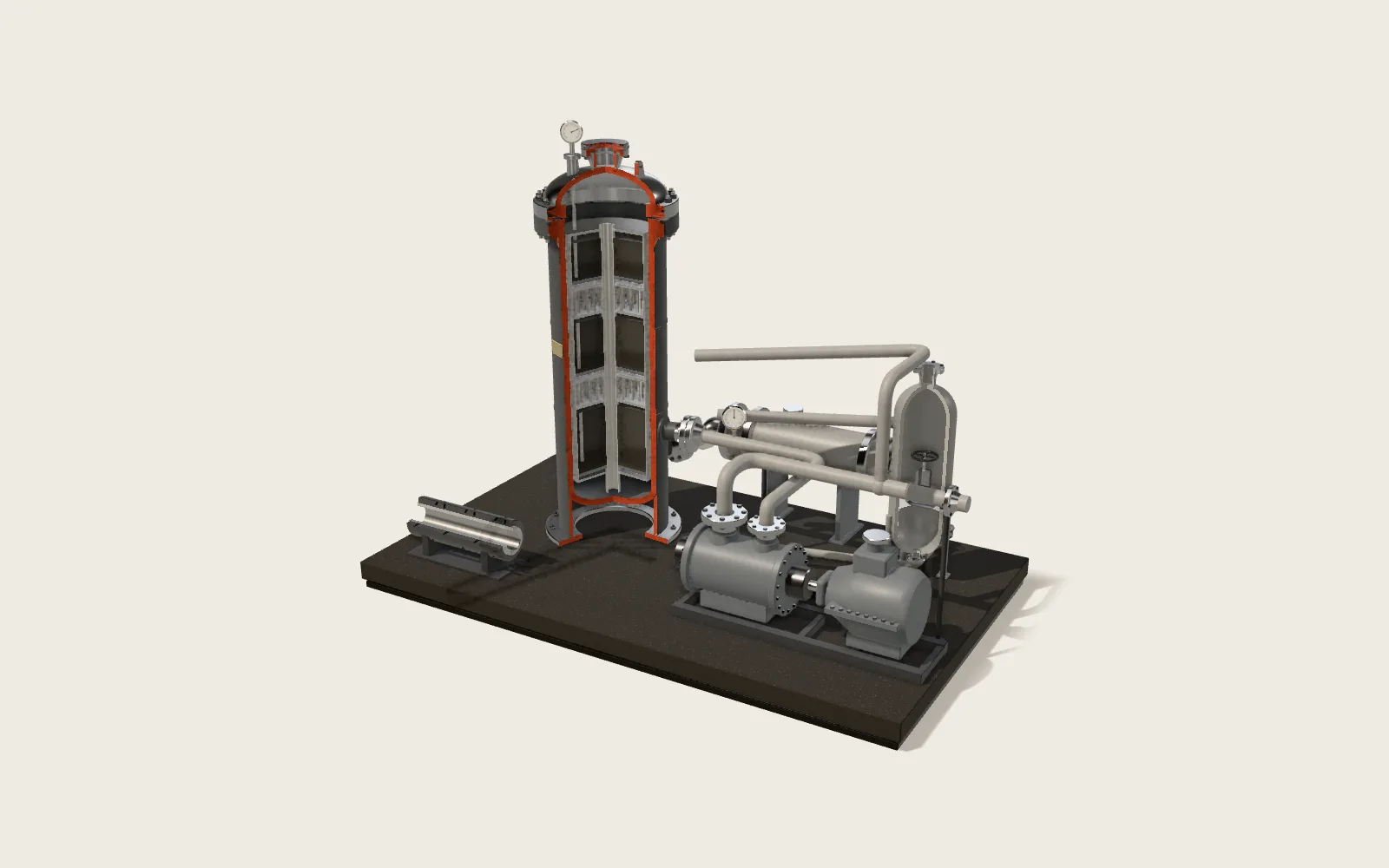 Plate 54Nitrogen from the AirAir is nearly four-fifths nitrogen, yet crops can’t use it: the nitrogen molecule’s triple bond is too strong. The Haber–Bosch process presses nitrogen and hydrogen to 100–250 bar, heats them to 350–550 °C and joins them on an iron catalyst to make ammonia. Cold, the equilibrium favours ammonia but the reaction crawls; hot, it runs fast but yields little, so plants settle on a compromise. Each pass converts only a fifth to a third, and the rest goes round again. About 70 % of the ammonia made today becomes fertiliser.
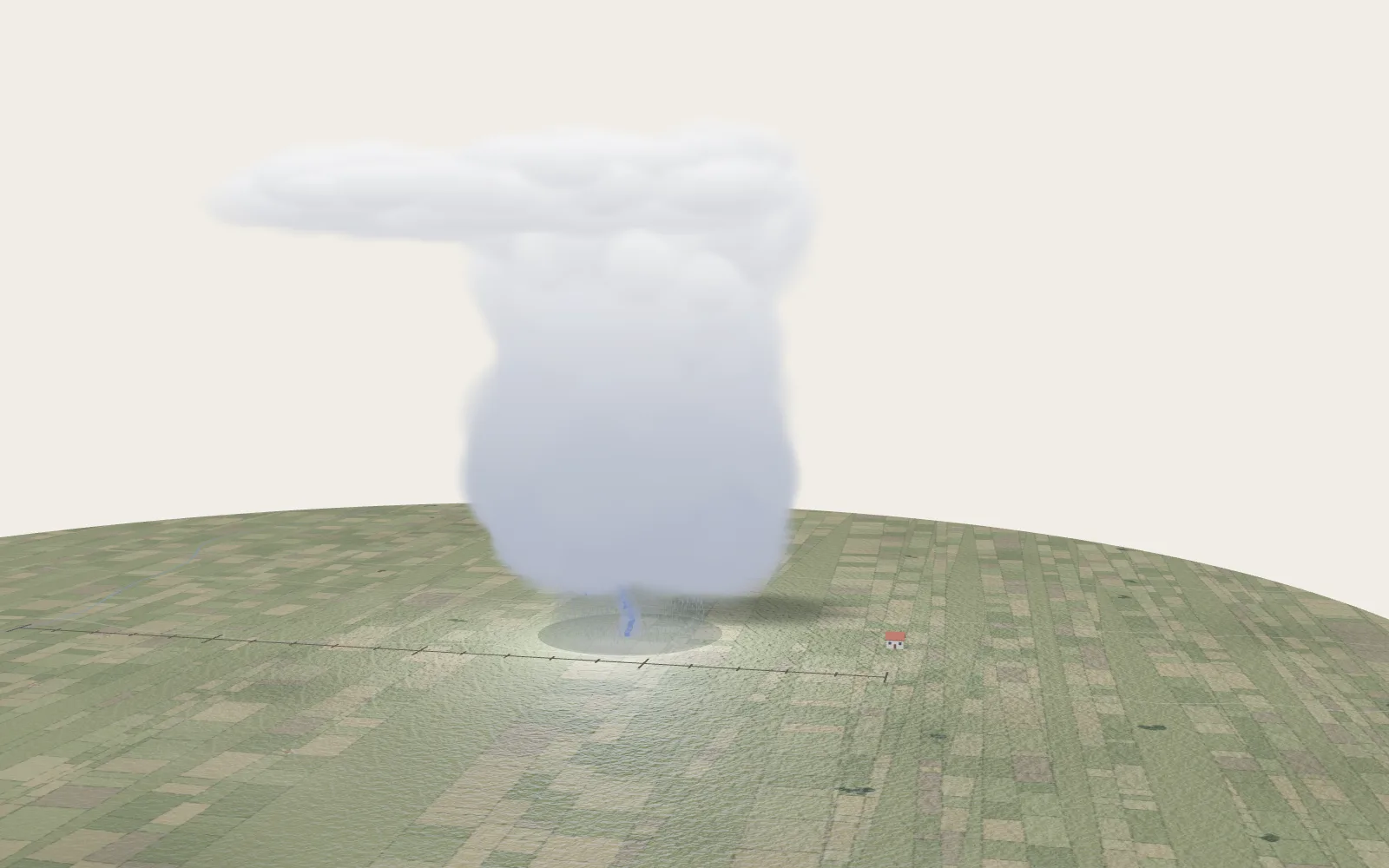 Plate 33See the Flash, Then Hear the ThunderLightning and thunder happen at the same moment, but light arrives almost at once while sound covers only about 340 metres a second. Count the seconds between them and you know how far away the storm is.