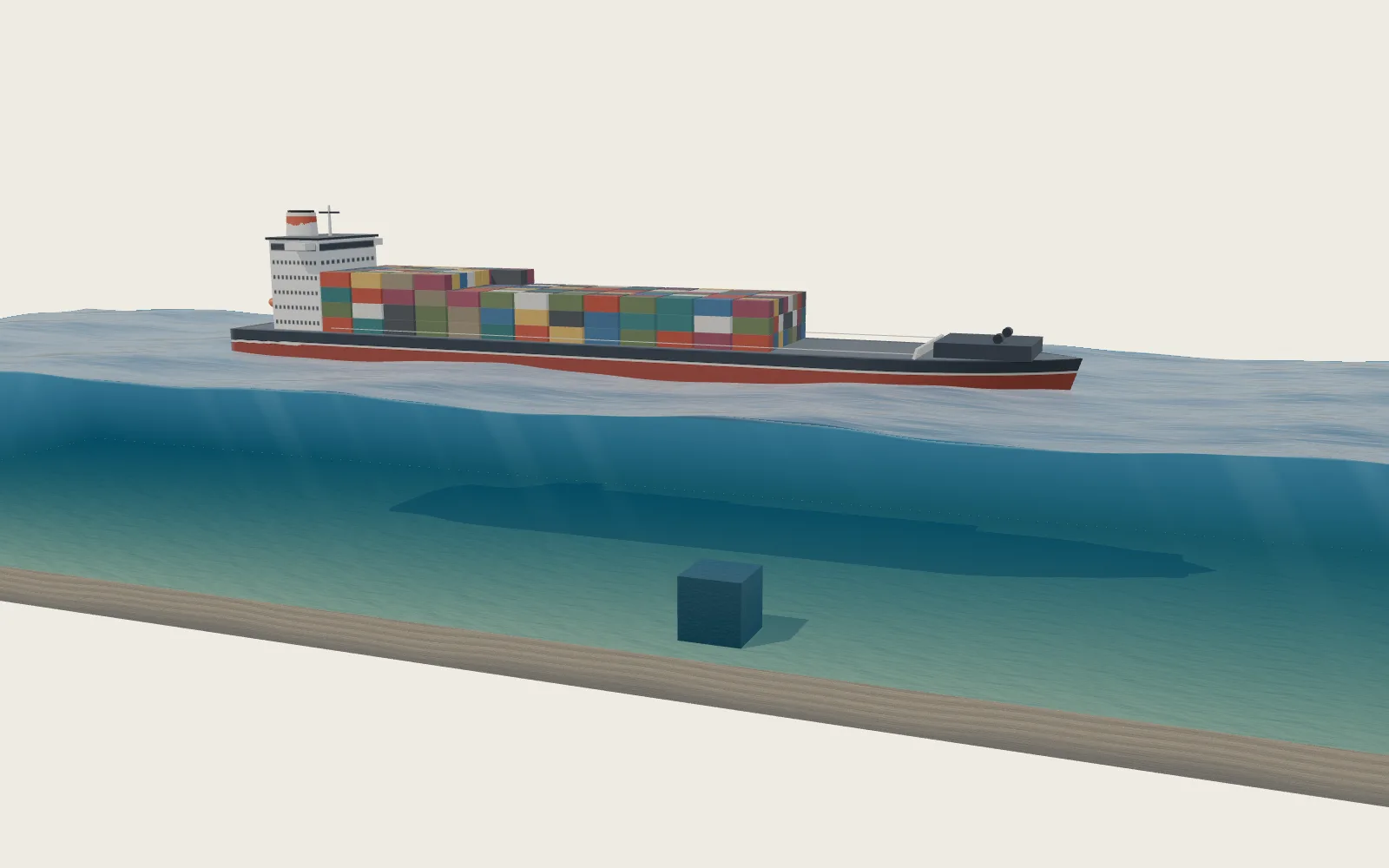
Plate 33 · Sky
See the Flash, Then Hear the Thunder
Lightning and thunder happen at the same instant, in the same place. You see the flash first and hear the thunder later because sound is far slower than light. Count the seconds in between and you can work out how far away the storm is.
Scroll
Made Together, Arriving Apart
A lightning bolt heats the air it passes through to about 30,000°C in a split second, several times hotter than the surface of the Sun. The air bursts outward with a crack: that is thunder.
Light travels 300,000 kilometres a second; from a flash 10 kilometres away it reaches your eye in a thirty-thousandth of a second. Sound moves through air at only about 343 metres a second, and needs nearly 30 seconds for the same trip.
A thunderstorm, schematic · distances to scale
Three Seconds, One Kilometre
Start counting seconds when you see the flash and stop when you hear the thunder. Sound takes about 3 seconds to travel a kilometre, so divide the seconds by 3 to get the storm’s distance in kilometres. (In miles, divide by 5.)
Count 9 seconds and the storm is about 3 kilometres away; 30 seconds, about 10 kilometres. Sound is a little slower in cold air, but not by much.
Why Thunder Rumbles
A lightning bolt is several kilometres long, and every part of it makes its bang at the same moment. The sound from the nearest part arrives first; from the farthest part, seconds later.
Those sounds reach your ears one after another and run together, so thunder isn’t a single crack but a long, rolling rumble.
Where Lightning Strikes Most
Satellites have counted lightning flashes for well over a decade. The most electric place on Earth is Lake Maracaibo in Venezuela: more than 200 flashes per square kilometre every year, with storms over the lake almost every night.
Most of the runners-up are in eastern DR Congo, and one is in Colombia.
The five places with the most lightning: flashes per square kilometre per year (Albrecht et al., 2016)
The Lighthouse of Catatumbo
Here is that corner of the world, from satellite elevation data: the south-western shore of Lake Maracaibo, where the Catatumbo River flows in, with the Andes rising to the south-east and the Sierra de Perijá to the west. Over the brightest patch of water, satellites counted about 233 flashes per square kilometre a year.
By day the land warms faster than the lake, and the breeze blows off the water. At night it turns: the mountainsides cool quickly, and air sliding down from all sides meets over the lake, which stays between 28 and 31°C all year. Pushed upwards, the warm, wet air builds storms here on about 297 nights a year. In colonial times Caribbean sailors steered by the flashes; locally they are still called the Lighthouse of Catatumbo.
Venezuela and Colombia · 9.3°N 71.8°W · 260 km across · heights × 4, the storms’ too
When Thunder Roars, Go Indoors
Thunder can usually be heard about 15 kilometres away, and lightning can strike more than ten kilometres from its storm. So if you can hear thunder, you are already close enough to be struck.
Get inside a building with walls and a roof, or a hard-topped metal car with the windows shut. Stay out of open ground and away from tall trees. Wait 30 minutes after the last thunder before going back out.
Your Turn
Set the storm at different distances, press “Strike”, and count along with the timer to see how long the thunder takes. Check whether the seconds divided by 3 match the distance.
Try thisMove the storm farther away: beyond what distance can you probably no longer hear it?
What the model leaves out
The speed of sound is taken for dry air at 20°C; in reality it shifts a little with temperature, wind and humidity. On its way, thunder is bent and soaked up by hills, buildings and layers of air, so distant thunder often goes unheard. The bolts are drawn at random, for illustration. Hotspot figures come from satellite observations between 1998 and 2013. Lake Maracaibo’s terrain comes from public elevation data with a point about every 680 metres, its heights stretched four times; the storm clouds are drawn to the same scale, but their shapes and the rhythm of the flashes are illustrative.
A common misreading
People say lightning never strikes the same place twice. It does: lightning favours tall, pointed things, and New York’s Empire State Building is struck more than twenty times a year. And lightning can strike before the rain arrives or after it stops; no rain doesn’t mean safe.
Sources
- National Weather Service: The science of thunder
- National Weather Service: Lightning safety
- National Weather Service: Lightning myths
- Albrecht et al. (2016): Where are the lightning hotspots on Earth?
- NASA: Earth’s new lightning capital revealed
- Terrain Tiles on AWS Open Data: real terrain
- ESA WorldCover 2021: land cover
Follow the question
 Plate 15How Sound Crosses the AirSound is a push passed along through the air. The air doesn’t travel to you; the push does.
 Plate 30Why Clouds Don’t FallAn ordinary cumulus cloud holds hundreds of tonnes of water, yet it floats. The secret is how astonishingly small its droplets are.