Plate 35 · Earth
The V Behind a Ship
Look down on a moving ship and you will see a V of waves trailing behind it. Strangely, for most boats, fast or slow, giant ship or duck, the V opens at nearly the same angle: about 19.5° on each side.
Scroll
A V Behind
As a ship moves, it pushes the water aside and leaves a train of waves behind. From an aircraft, the waves line up in a sharp V with the ship at its point.
It is called the Kelvin wake, after the British physicist William Thomson, later Lord Kelvin, who first worked it out in 1887.
A 140-metre cargo ship at about 18 knots
Fast or Slow, the Same
Speed the ship up and the waves get longer, but the V doesn’t narrow: each side stays at about 19.5° to the ship’s track, so the whole V opens about 39°.
The faster the ship, the longer its waves, but in Kelvin’s picture the pattern is only scaled up; its shape stays the same.
Why 19.5°
In deep water, long waves travel fast and short waves slowly. The waves left behind a ship are the ones whose crests keep pace with it.
But a wave’s energy travels at only half the speed of its crests. So the energy from waves the ship made at one spot has gone at most half as far as the ship since then, and it lies on a small circle between that spot and the ship. Draw that circle for every spot the ship has passed (the white dots and rings) and together they fill a V whose sides meet the track at an angle whose sine is 1/3: about 19.5°.
Two Kinds of Wave
Look closely and the V holds two kinds of wave: some lie across the track behind the ship, like steps; others slant along both sides of the V, like the edge of a feather.
The two meet and pile up along the edges of the V, so the waves are highest there, and brightest from the air.
Fast Boats Make Narrower Vs
Kelvin’s calculation treats the ship as a point on the water. In 2013, two French scientists studied many satellite photos of boats and found that very fast boats leave wakes that look narrower than 19.5°.
Their explanation is that boats have length: a short hull can’t easily make waves much longer than itself, so a short, very fast boat mostly makes shorter waves. Its tallest waves then sit closer to the track, though fainter ones still reach 19.5°. Other scientists have offered other explanations, and the debate goes on. For most ships, such as cargo ships, 19.5° still holds.
The same cargo ship at about 25 knots: still too long for its wake to narrow
Your Turn
Change the ship’s speed and watch whether the waves in its wake get longer or shorter, and whether the angle of the V changes.
Try thisDouble the ship’s speed: what happens to the wavelength, and to the V’s angle?
What the model leaves out
The wake is worked out Kelvin’s way: deep water, no wind waves, and the ship as a moving point; the wave heights are only illustrative. A real ship also leaves a white trail of foam churned up by its propeller, and wind waves scramble the wake. In shallow water, waves can go no faster than the depth allows. As a ship nears that limit the V widens; a boat going faster than it leaves a V that narrows as it speeds up, much like a supersonic jet. That isn’t shown here.
A common misreading
Many people think the faster a ship goes, the sharper its V, like the shock cone of a supersonic aircraft. In deep water, for ordinary ships, it isn’t so: speed changes how long the waves are, not the angle of the V. Only short, very fast boats leave wakes that look narrower.
Sources
Follow the question
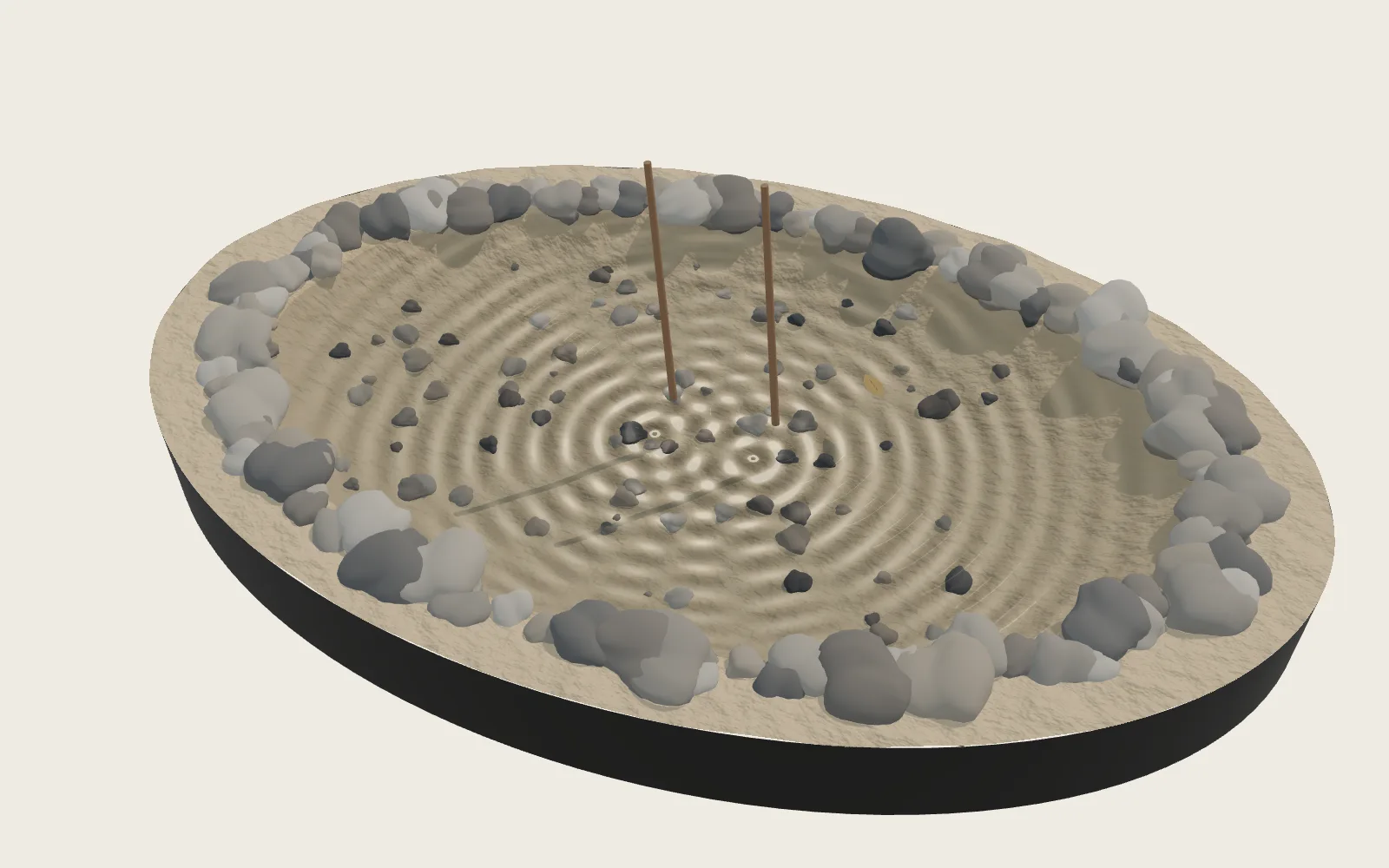 Plate 37When Two Ripples MeetDrop two stones in water and their rings of ripples pass straight through each other. In some places they cancel out, and the water there barely moves.
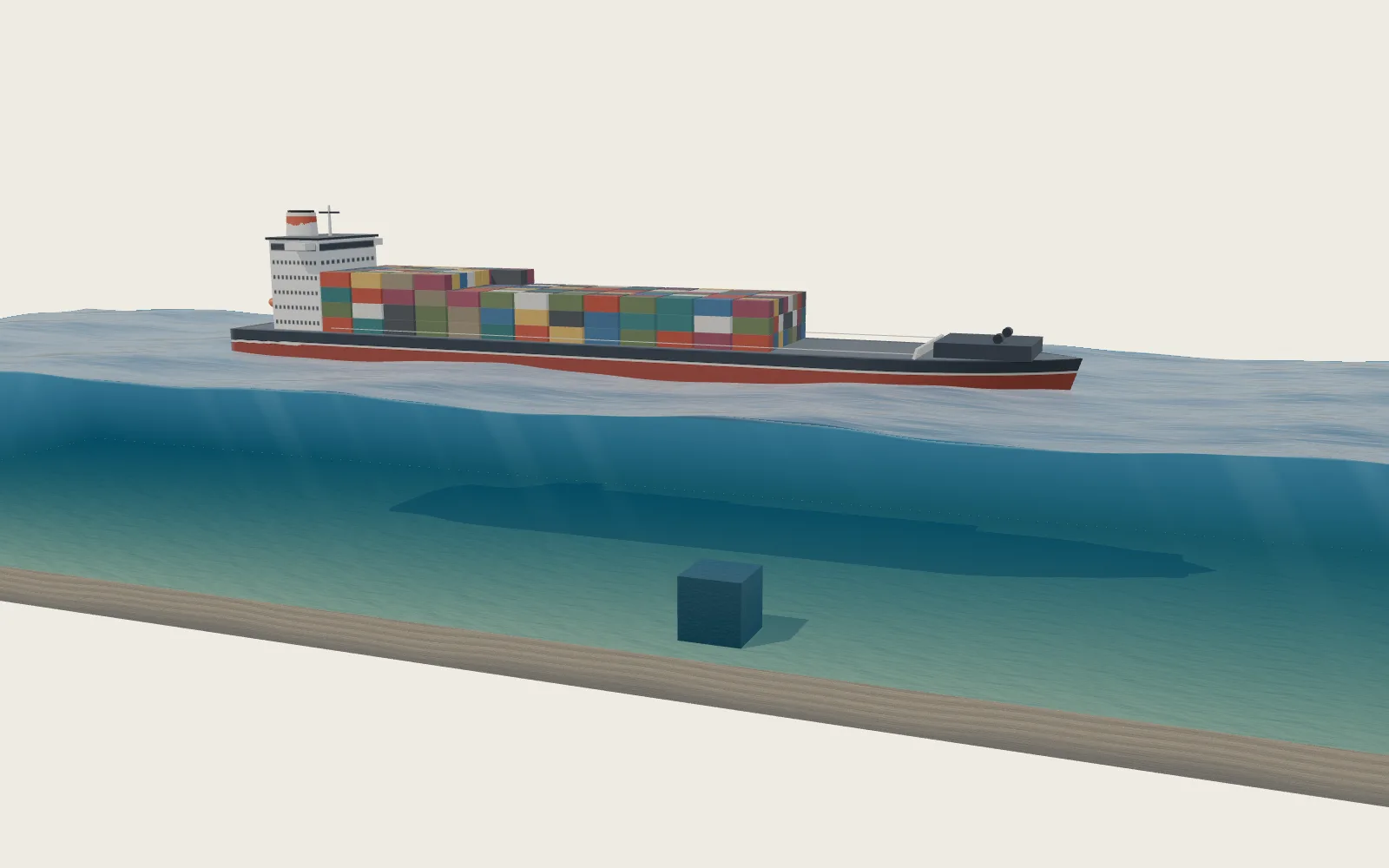 Plate 34Why a Steel Ship FloatsDrop a lump of steel in water and it sinks at once, yet the same steel built into a ship floats with ten thousand tonnes of cargo aboard. The secret is how much water the ship pushes aside.