Plate 25 · Earth
Seeing Through the Earth With Earthquakes
The deepest hole ever drilled is 12 kilometres deep — less than a five-hundredth of the way to the centre. Yet we know the Earth has a ball of liquid iron at its heart, with a solid ball inside that. Earthquake waves told us.
Scroll
Two Kinds of Wave
An earthquake sends two kinds of wave through the Earth. P waves are push waves: like sound, they squeeze and stretch as they go, travel fast, and pass through solids and liquids alike. S waves are shake waves: they shake the rock side to side or up and down, travel more slowly, and can only pass through solids.
Seismometers around the world record when each wave arrives, and from that, seismologists work out what the waves passed through on the way.
A slice through the Earth, schematic · rays traced through a simplified PREM model
Curving Paths
The deeper you go, the more tightly the rock is squeezed, the stiffer it becomes, and the faster the waves travel. So the waves don’t go in straight lines: they curve back towards the surface in long arcs.
The farther a seismometer is from the earthquake, the deeper the waves it receives have dived.
The Missing S Waves
In 1906 the British geologist Richard Dixon Oldham noticed that, far from an earthquake, some waves arrived late, and concluded that the Earth has a core. Later it became clear: more than about 100° from an earthquake, no S waves arrive directly.
The simplest explanation: Deep inside the Earth is a layer of liquid that stops the S waves, which can only travel through solids. That is the liquid outer core, which begins about 2,900 kilometres down.
The P-Wave Shadow
P waves can cross liquid, but when they enter the outer core they suddenly slow down and bend, the way light bends entering water. The result is a band from about 104° to 140° from the earthquake where almost no direct P waves arrive: the shadow zone.
Red: P waves through the mantle · orange: P waves through the outer core
Lehmann’s Inner Core
In 1936 the Danish seismologist Inge Lehmann noticed faint P waves arriving inside the shadow zone. If the core were the same all the way through, they shouldn’t be there.
She proposed that a smaller inner core sits inside the liquid one, and that P waves speed up again there and are bent into the shadow. Within a few years other seismologists confirmed it; decades later, scientists showed the inner core is solid. The inner core is about 1,220 kilometres in radius — about 70 percent of the Moon’s radius.
Blue: P waves through the inner core, landing in the shadow zone
Your Turn
Set the angle at which a wave leaves the earthquake and see where it goes and where it bends. Switch between P and S waves to see which can’t cross the liquid outer core.
Try thisSet the angle to 10°, then switch from P wave to S wave: what happens?
What the model leaves out
The rays are traced through a simplified version of the PREM Earth model: just mantle, outer core and inner core, with the two jumps in the mantle at 410 and 660 km, and no crust or finer detail. So in the model, direct P waves stop at about 95° rather than 104°. Real waves also reflect and bend around boundaries, which is why the real shadow starts a little farther out and is never completely silent.
A common misreading
The mantle is not molten magma; it is almost entirely solid, and the fact that S waves cross it proves it. The Earth’s one great liquid layer is the outer core of iron and nickel, below 2,900 kilometres. The inner core is even hotter, but the enormous pressure keeps it solid.
Sources
Follow the question
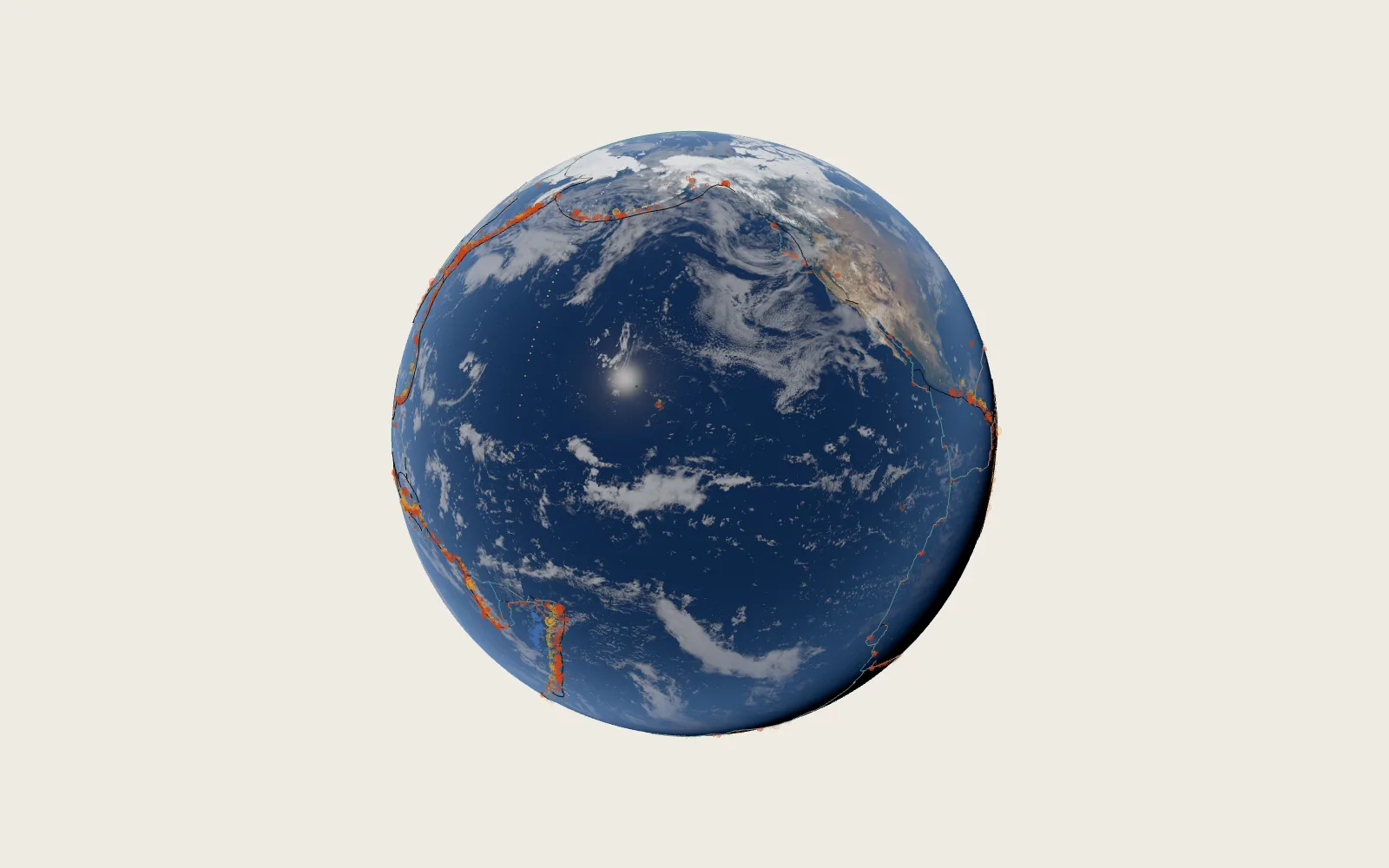 Plate 14The Cracks in the EarthA year’s 7,700 strong earthquakes fall mostly along a few lines: the edges of the pieces of the Earth’s shell.
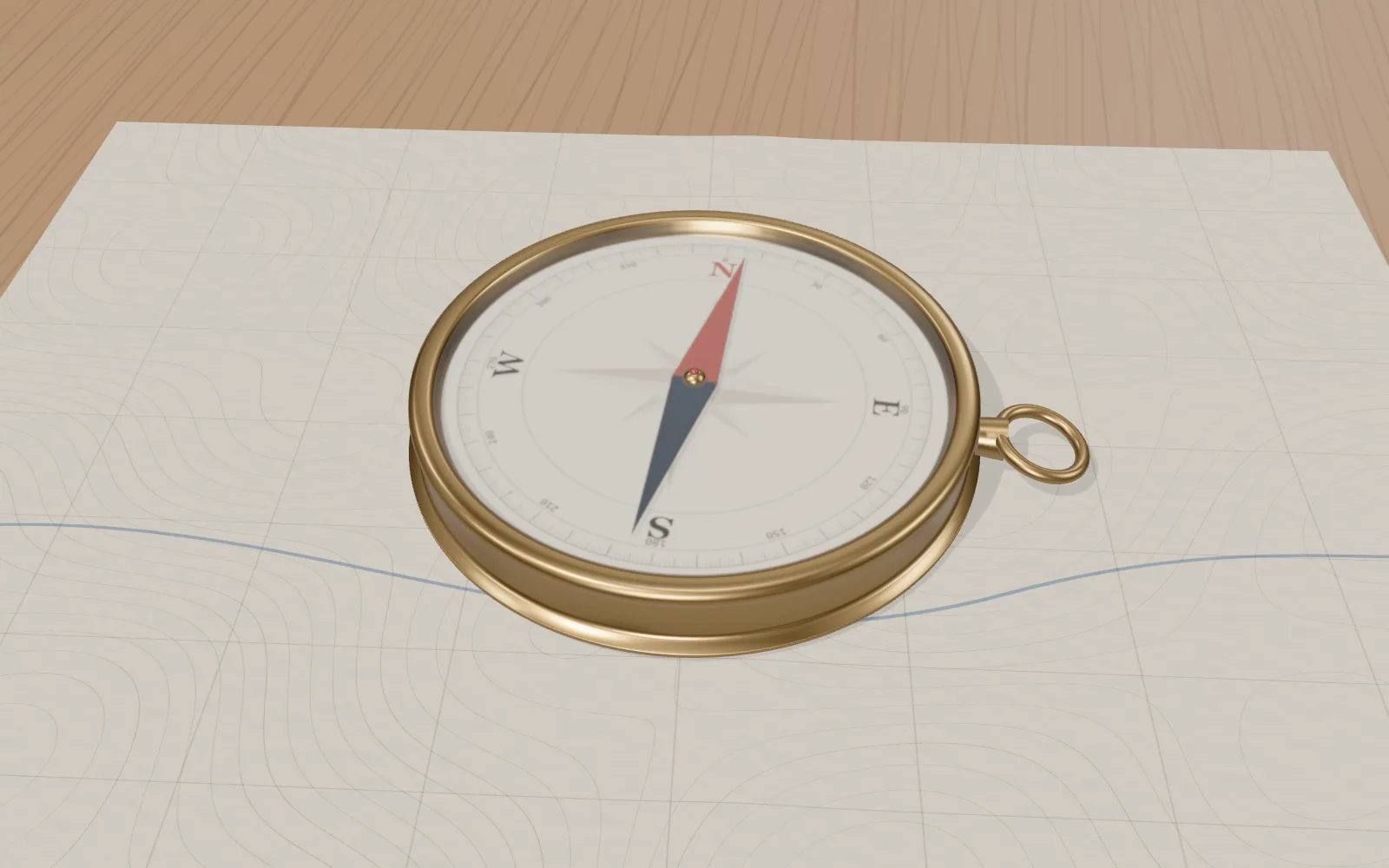 Plate 23Where a Compass PointsA compass doesn’t point at the North Pole. It lines up with Earth’s magnetic field — and the magnetic pole it heads for keeps moving.