Plate 11 · Sky
Curtains in the Sky
An aurora is light given off when electrons from space crash into the air high overhead. Why does it appear mostly near the poles, and why is it green and red?
Scroll
A Wind From the Sun
The Sun constantly flings out charged particles, a stream called the solar wind. The Earth’s magnetic field acts like an invisible shield and keeps most of them out.
But on the side facing away from the Sun, the field is drawn out into a long tail. Energy builds up there and speeds some electrons back toward the Earth along the field lines.
Earth and its magnetic field, schematic · not to scale
Only in Two Rings
Electrons slide easily along magnetic field lines but can hardly cross them. The lines that come back from the tail plunge into the atmosphere near the two magnetic poles, so the aurora appears in two oval rings around them, roughly between 60 and 75 degrees magnetic latitude.
In the north it is the aurora borealis, in the south the aurora australis, and the two usually glow at the same time, like near mirror images.
A Valley Under the Oval
This is Abisko, in Swedish Lapland, from satellite elevation data: Lake Torneträsk frozen for the winter, birch woods along its southern shore and, to the south-east, the U-shaped notch of Lapporten between two mountains. Abisko lies at 68.4° north, about 200 kilometers beyond the Arctic Circle.
Measured from the magnetic pole rather than the geographic one, Abisko sits at about 66°, inside the band from 60° to 75° where the ovals lie. Ringed by mountains, it is also in a rain shadow: from 1991 to 2020 it averaged about 350 millimeters of rain and snow a year, the least of any Swedish weather station, so its winter nights are often clear.
Abisko, Sweden · 68.35°N 18.82°E · heights × 2 · trees not to scale · the aurora is drawn far lower than its real 100 km
Curtains a Hundred Kilometers High
The electrons strike oxygen atoms and nitrogen molecules high in the air and hand over their energy, which the atoms and molecules give off again as light. Aurora usually glows 80 to 500 kilometers up — far above any airplane.
Because the electrons fall along field lines, the aurora often hangs in tall curtains that ripple and fold as the magnetic field shifts.
Auroral curtains · color changes with height
Green, Red and Pink
The color depends on which gas is struck, and how high. Between about 100 and 200 kilometers, oxygen gives off the familiar green; above about 200 kilometers, thin oxygen glows red.
Lower down, nitrogen trims the bottom of the curtain with pink. Mixed together, the colors can look purple, pink or even white.
When the Sun Is Busy
The harder the Sun’s bursts of particles strike, the more the magnetic field is disturbed, and the further the rings spread toward the equator.
Aurora is usually seen only at high latitudes, near the Arctic or Antarctic. In the most extreme geomagnetic storms it reaches much farther: in May 2024 it was seen across much of the United States and Europe, and in parts of Asia.
The Aurora Right Now
The aurora on this globe is not drawn by hand. It comes from the forecast model of NOAA’s Space Weather Prediction Center, which shows where the aurora will be, and how bright, 30 to 90 minutes ahead.
The brighter the glow, the better your chance of seeing an aurora there in the next hour or so. The forecast’s date and time are shown at top right.
Aurora forecast: NOAA Space Weather Prediction Center, OVATION model
Your Turn
Turn up the Sun’s activity and watch the rings spread toward the equator. Show the field lines and see where the electrons come down.
Try thisTurn solar activity up to stormy: how far toward the equator does the ring reach?
What the model leaves out
The magnetic field is drawn as that of an ideal bar magnet; the real magnetosphere is squashed and stretched by the solar wind, and always changing. How the electrons are accelerated is very complicated; here we show only their fall along the field lines. The Earth and its field are not drawn to scale, and over Abisko the aurora is drawn far closer to the ground than it really is. Abisko’s terrain comes from public elevation data with a point about every 80 meters, its heights stretched twice; the birches are drawn dozens of times too large, and stand only where the land-cover map shows woodland below 680 meters. The magnetic latitude is worked out for an ideal dipole. “The aurora right now” is NOAA’s model forecast, not a photograph.
A common misreading
The aurora is not sunlight reflected off polar ice, and it is not the magnetic field itself glowing. It is light given off by gases high in the air when electrons strike them — much as a neon sign glows.
Sources
- NOAA Space Weather Prediction Center: Aurora
- NOAA SWPC: Aurora 30-minute forecast (OVATION)
- NASA: Auroras
- INTERACT: Abisko Scientific Research Station
- SMHI: New precipitation normals (in Swedish)
- Wikipedia: Lapporten
- Terrain Tiles on AWS Open Data: real terrain
- ESA WorldCover 2021: land cover
Data
Aurora forecast: NOAA Space Weather Prediction Center, OVATION model. Elevation and seafloor (globe colors): Terrain Tiles on AWS Open Data; ETOPO1, NOAA; GMTED2010 and SRTM, USGS.
Follow the question
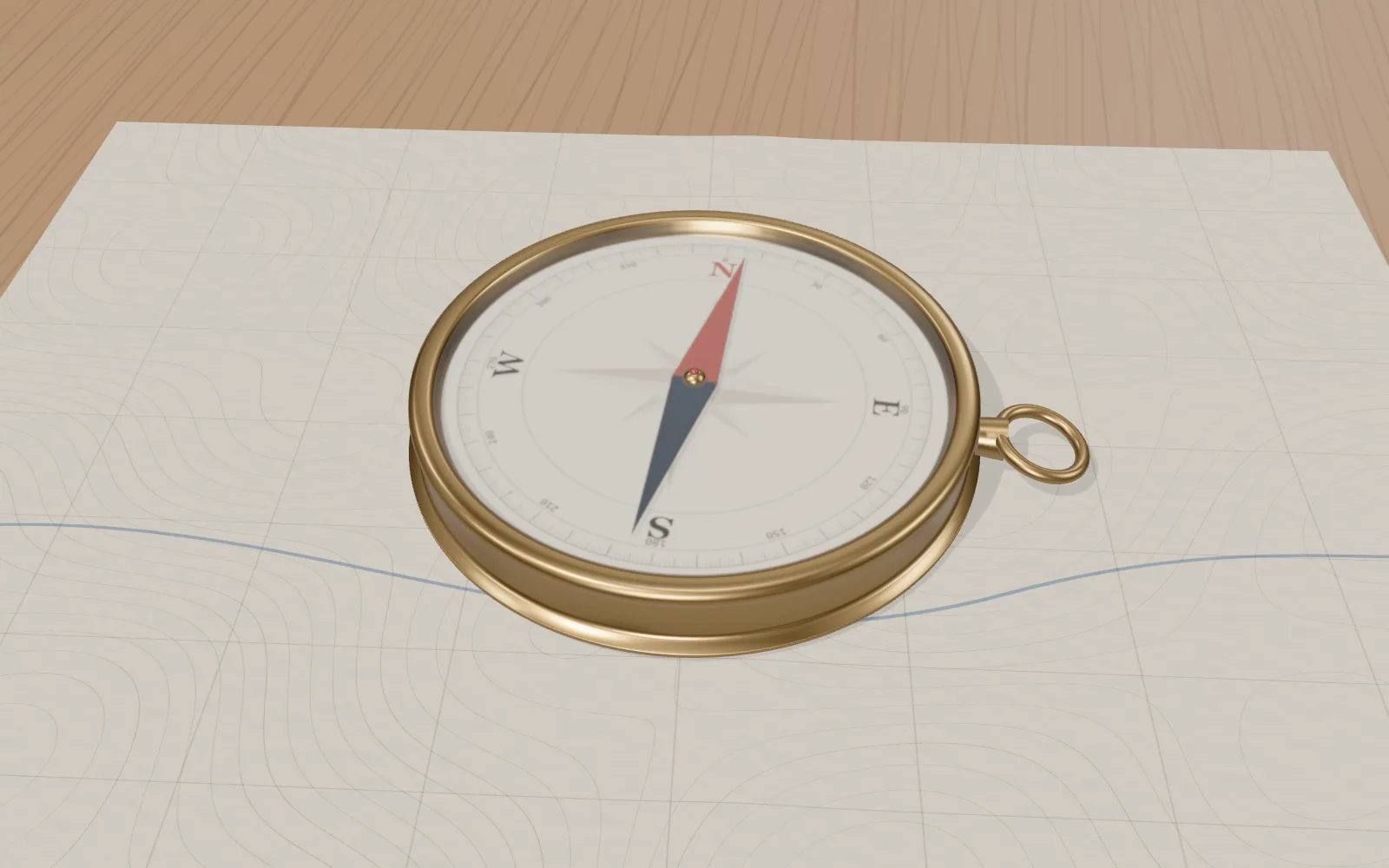 Plate 23Where a Compass PointsA compass doesn’t point at the North Pole. It lines up with Earth’s magnetic field — and the magnetic pole it heads for keeps moving.
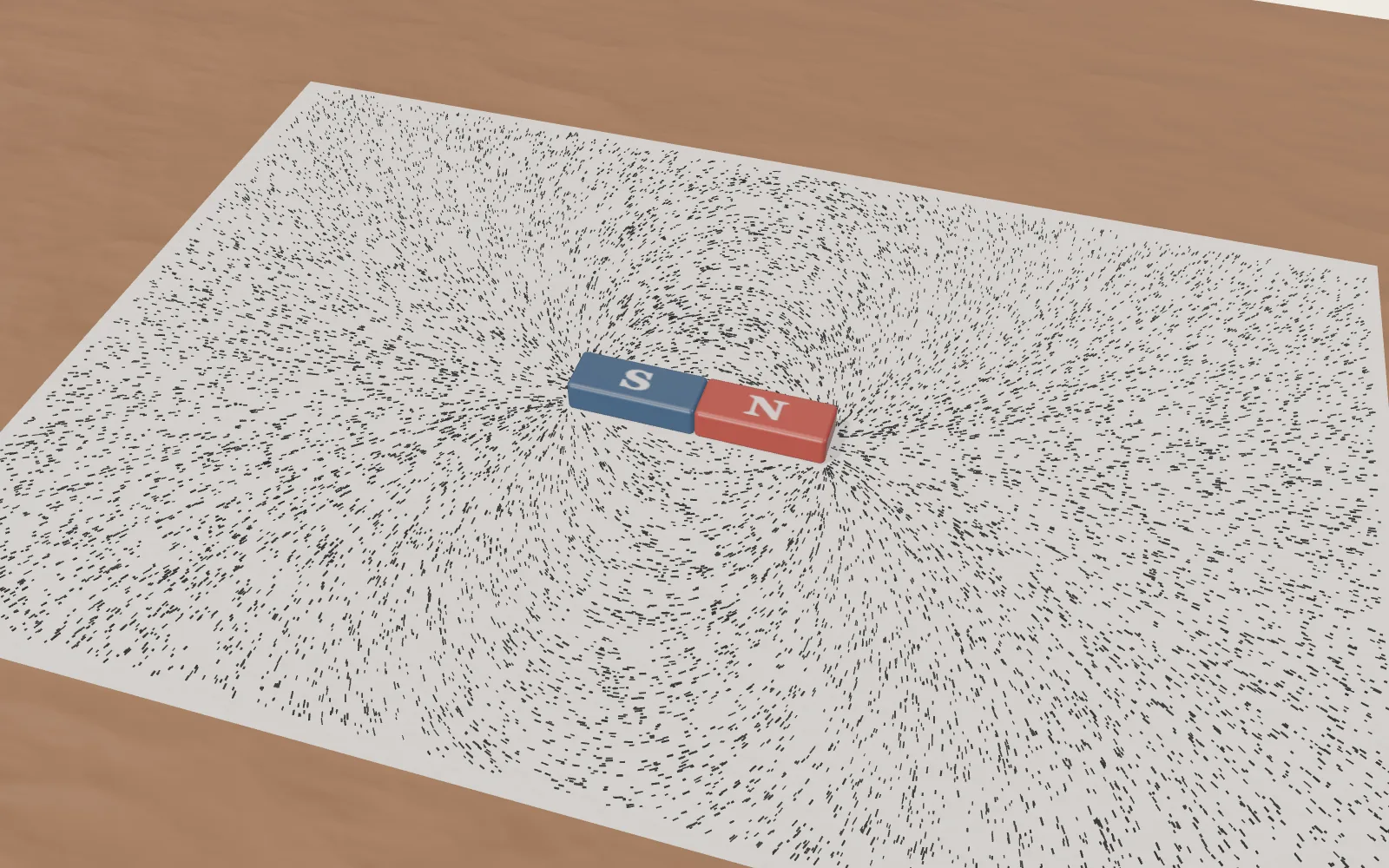 Plate 39The Invisible Lines Around a MagnetLay a sheet of paper over a magnet, sprinkle iron filings on it and tap gently: the filings line up in curves running from one end of the magnet to the other. They are drawing the shape of its magnetic field.